
Why Rubber Recycling “Looks Simple but Proves Challenging in Practice”
The core reason waste rubber (especially scrap tires) is difficult to process is that vulcanization forms a three-dimensional cross-linked network in rubber. Unlike thermoplastics, the material no longer “fully melts and reforms when heated.” Consequently, recycling pathways typically fall into two categories: physically reducing it (granulating/pulverizing) or chemically/structurally altering it to become processable (desulfurization regeneration, pyrolysis, etc.).
Additionally, tires contain composite structures like steel belts and fiber cords. The separation and cleanliness of these components directly determine the stability and usability of the resulting material.
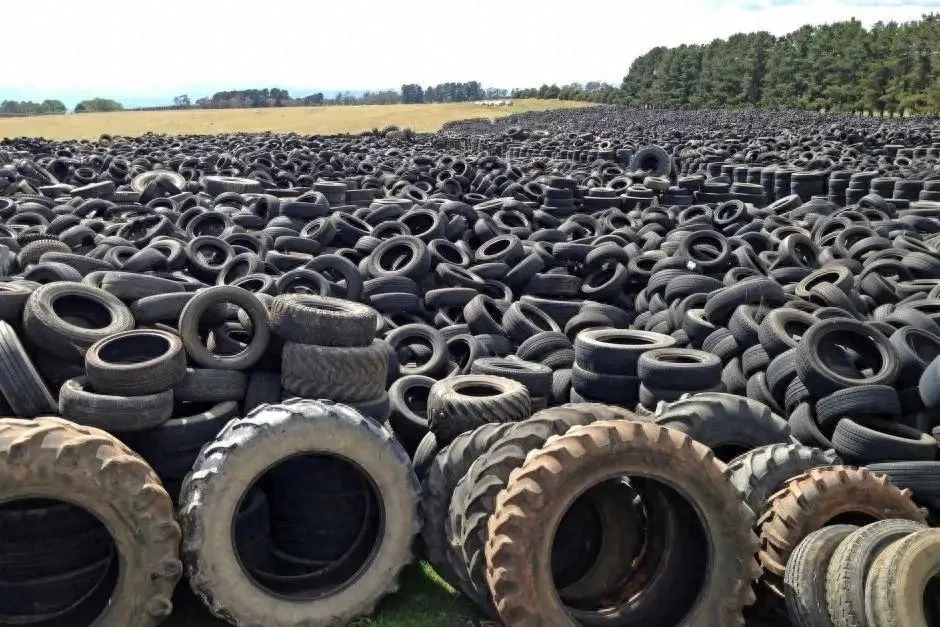
Mainstream Rubber Recycling Pathways
From an industry practice perspective, common processing/recycling routes for end-of-life tires (ELTs) include: reprocessing (recycling), pyrolysis, retreading, and energy recovery. Regional policies and supply chain maturity influence the proportion and cost of each method.
For clearer understanding, consider the “output products”:
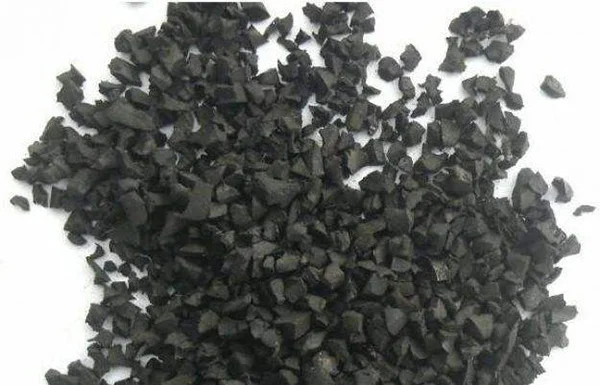
- Mechanical recycling: crumb rubber / rubber powder
- Devulcanization: devulcanized / reclaimed rubber, used for re-compounding
3) Pyrolysis: pyrolysis oil (TPO), pyrolysis gas, carbon black/carbon residue, steel cord, and other secondary raw materials
Mechanical Recycling Process
The goal of mechanical recycling is to transform waste rubber into granules or powder with controlled particle size and impurity levels for applications in road construction, building materials, re-compounding modification, etc. The typical process chain is as follows:
Collection and Sorting
Classify by source, material type, and contamination level (tires, industrial scraps, conveyor belts, seals, etc.). Earlier sorting stages reduce subsequent “uncontrollable variations.”
Pre-treatment and Separation (Steel Wire/Fibers)
Remove foreign objects like steel belts and fiber cords before entering the shredding stage; magnetic separation and air classification/grading are commonly used for auxiliary separation.
Shredding and Grinding: Ambient Shredding vs. Cryogenic Shredding
Ambient Crushing: Repeated cutting via shredders, cutter heads, or mills produces rubber particles with coarse edges. Heat generation during processing requires temperature control to mitigate risks and stabilize particle size.
Cryogenic Pulverization: Rubber is brittle-ground using liquid nitrogen, yielding finer, “cleaner” powder with superior surface integrity (typically higher purity but greater cost).
Screening and Grading
Screening separates particles into different size grades (rubber granules/fine powder), with particle size determining applications: e.g., road modification, track flooring, recompounding fillers. The commercial key to mechanical recycling lies in making “particle size distribution, impurity residue, and batch consistency” acceptable metrics.
Typical Applications
Rubber crumb/powder is commonly used in rubber-modified asphalt, building material modification, sports surfaces, etc. Tolerance levels for particle size, metal residue, fiber content, odor/volatiles vary significantly across applications.
Desulfurization Regeneration Process
If your goal is not “filling/paving” but rather re-entering the “rubber product manufacturing chain,” then focus on desulfurization and regeneration.
Key Principles
The ideal goal of desulfurization recycling is to prioritize breaking vulcanized cross-links (S–S, C–S) to restore material plasticity while minimizing main chain (C–C) breakage. In practice, both processes often occur simultaneously, requiring an engineering trade-off between “desulfurization efficiency” and “main chain damage.”
Common Technical Approaches
Thermomechanical, thermochemical, microwave, and ultrasonic methods are used to partially disrupt crosslink structures. Different approaches exhibit significant variations in energy consumption, odor, physical property retention, and batch consistency.
Implementation Recommendations
When targeting functional components (especially those subject to dynamic fatigue), focus not solely on “maximum content achievable” but first define:
- Target performance: Hardness, tensile/tear strength, compression set, dynamic modulus/fatigue life (select based on your application)
- Risk factors: Odor and volatiles, ash content and filler fluctuations, batch consistency
- Validation sequence: Pilot formulation → Prototype testing → Bench endurance/environmental aging → Small-batch release (Include “traceable batch” in acceptance criteria)
This phase typically determines whether your “environmental story” translates into a “deliverable product.”
Pyrolysis Process
Pyrolysis is often regarded as a key pathway for processing composites (e.g., tires), yielding pyrolysis oil, carbon black/char, combustible gas, and enabling steel wire recovery. However, its value heavily depends on the facility’s environmental controls, product purification, and downstream market capacity.
Industry organizations also emphasize that achieving a true closed-loop system requires parallel development of mechanical recycling and chemical recycling (including pyrolysis and desulfurization), alongside establishing clearer “end-of-waste” standards and market rules to enhance the usability and confidence in recycled materials for new products.
From “Recycled Material” to “Engineering-Grade”: 5 Critical Control Points Procurement and Engineering Teams Must Monitor
1) Source and Sorting Rules: Materials from the same supplier but different sources (tires/industrial scraps) can vary dramatically.
2) Purity: Contamination from metals, fibers, sand/gravel, and other polymers determines subsequent processing stability.
3) Particle size and distribution: Particle size distribution is more critical than “average particle size,” especially during re-compounding.
4) Application-Specific Recycling Pathway: Tolerance levels differ entirely between static gaskets, sheaths, non-safety-critical buffers, and dynamic fatigue vibration isolation components.
5) Validation and Traceability: Shift risk upstream through “batch traceability + release criteria + change management.”
Summary
If your goal isn’t “recycling for its own sake,” but rather using recycled materials for equipment stability, vibration/noise reduction, or structural protection components, the most critical step is: lock in material selection, process routes, and acceptance criteria early in the project.Similar to vista motion‘s value proposition—custom solutions, technical support, quality assurance, and global delivery—the core objective is to reduce uncertainty for procurement and engineering teams: trading verifiable process control and responsive efficiency for project delivery certainty.
A more pragmatic approach is this: You provide drawings/assembly interfaces, load and vibration conditions, target lifespan, environmental requirements (temperature/media/weather resistance), and any mandatory testing or industry standards. We then assess suitability for incorporating rubber powder/recycled rubber systems and deliver a “material recommendation + risk points + validation plan + delivery schedule.”This approach grounds environmental sustainability and cost reduction in actionable engineering pathways, rather than leaving them at the conceptual level.
FAQ
What are the primary rubber recycling methods?
Mechanical recycling (rubber granules/powder), desulfurization regeneration (reclaimed rubber), pyrolysis (pyrolysis oil/carbon black, etc.), retreading, and energy recovery.
What is the first step in recycling scrap tires?
Sorting and pretreatment (removing steel wires, fibers, and contaminants). This step determines subsequent material variability and costs.
What is the difference between ambient temperature grinding and cryogenic grinding?
Ambient grinding is more cost-effective but generates heat and produces coarser particle surfaces; cryogenic grinding yields finer, cleaner powders but is typically more expensive.
What is devulcanization?
The process of selectively breaking vulcanized cross-links (S–S, C–S) to restore plasticity; ideally minimizes damage to the main chain, though trade-offs exist in practice.
Can recycled rubber be used in shock absorption/vibration isolation components?
It can be used on an “evaluative basis,” but suitability depends on whether the application involves safety-critical or dynamic fatigue conditions. Typically, a specific proportion must be determined only after validation through bench endurance testing, aging tests, and batch stability verification.
What are the products of thermal cracking?
Typically include pyrolysis oil, combustible gas, carbon black/carbon residue, and recovered steel wire; their value depends on purification, emission control, and downstream utilization.
What are the most common applications for crumb rubber/rubber powder?
Rubber-modified asphalt, building materials, and flooring applications are common; specific uses depend on particle size and cleanliness grade.
How to assess the quality of recycled rubber materials?
Three key indicators: particle size distribution (stability), residual impurities (metals/fibers/ash content), and batch consistency (variation across multiple batches of the same specification). For functional components, physical properties and odor/volatile compounds must also be evaluated.
Why do many projects initially “plan to use recycled materials” but ultimately abandon them?
Common reasons include: failure to define acceptance criteria and change rules upfront; material property drift due to batch-to-batch supply variations; and underestimating dynamic fatigue and aging risks.
What should I prepare during the quotation/evaluation phase if I want to use recycled rubber in my product?
Minimum requirements: drawings and assembly interfaces, load and vibration frequency ranges, environmental conditions, target lifespan, mandatory tests/standards, projected annual consumption, and delivery cadence (to assess formulation and process feasibility).
