
Within the chassis system, the function of suspension bushings is not to “support weight,” but rather to isolate vibrations, absorb impacts, and maintain suspension geometry stability under dynamic loads through controlled elasticity and damping. Once suspension bushings wear out (due to rubber aging, cracking, delamination, or increased clearance), vehicles typically first exhibit abnormal noises and vibrations. This gradually evolves into unstable steering, drifting wheel alignment, uneven tire wear, and damage to associated components, ultimately leading to escalating repair costs. The core issue here isn’t merely “noise,” but rather “the continuous erosion of alignment precision caused by elastic degradation.”
Typical Symptoms of Suspension Bushing Wear
If you suspect “worn suspension bushings” are the culprit, prioritize these highly correlated symptoms (listed in order of frequency):
- Clunking/clattering/metal-on-metal knocking noises over speed bumps/potholes (more likely when bushings degrade, causing direct metal contact)
- Noticeably increased steering wheel or floor/seat vibration, resulting in a “harsher” ride quality
- Steering feels loose, pulls to one side, or requires frequent minor adjustments to maintain a straight path
- Uneven tire wear on inner/outer edges, localized “serrated” patterns that reappear quickly (caused by abnormal contact angles due to dynamic alignment drift)
- Increased body roll during cornering, more pronounced brake dive, and reduced handling stability
- Visible signs: Cracked, bulging, delaminated, or chipped rubber bushings; eccentric bushings; or signs of separation between the rubber and metal cage
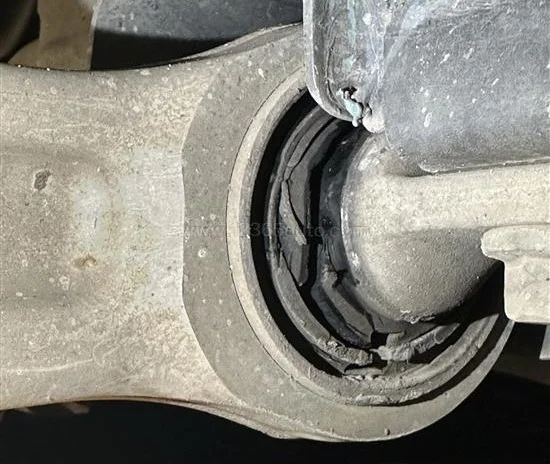
My clear stance: If any combination of “unusual noises + steering drift/uneven tire wear” is present, do not dismiss it as a mere comfort issue. Treat it as a precursor to suspension component failure and address it promptly through inspection and repair.
Why does “suspension bushing wear” escalate into a larger problem?
From an engineering perspective, bushings serve as “elastic pivot points.” They must be sufficiently soft to isolate vibrations (NVH) yet rigid enough to maintain geometric stability (preventing displacement under dynamic loads). Once bushings wear:
- Increased clearance and softening allow control arms, stabilizer bars, and other linkages to undergo “non-design displacement” under load, causing dynamic alignment drift. This results in unstable tire contact angles (especially camber/toe), accelerating uneven tire wear.
- Rubber damping decreases, allowing high-frequency vibrations that should be absorbed by the bushing to transmit more directly into the body. This manifests as steering wheel vibration and increased chassis noise.
- Load is “transferred” to other components: ball joints, control arms, shock absorber top mounts, wheel bearings, etc., become more susceptible to abnormal impacts and uneven loading (extending repair chains and costs). This is extremely common in repair practice: neglecting bushings initially leads to subsequent tire replacements, alignment adjustments, and replacement of additional parts.
What causes suspension bushing wear?
Suspension bushing wear typically results from the combined effects of “aging + operating conditions + installation/workmanship”:
1) Road impacts and potholes: Frequent shocks subject bushings to repeated shearing under large displacements, significantly shortening their lifespan.
2) Salt spray/high temperatures/UV exposure and fluids: Heat, ozone, salt, and oils accelerate rubber aging or cause swelling and hardening, leading to cracks and delamination.
3) Improper installation and tightening conditions: Many bushings require torqueing at “near normal ride height” according to specifications. If tightened while suspended, the bushing remains under pre-torsion, leading to premature failure (noise, cracking, shortened lifespan).
4) Inadequate Material/Formulation and Rubber-Metal Bonding Control: Uncontrolled formulations, vulcanization windows, metal surface treatments, and bonding systems can cause “visually identical” bushings to exhibit significant differences in fatigue resistance and media resistance (a common source of post-sale repairs).
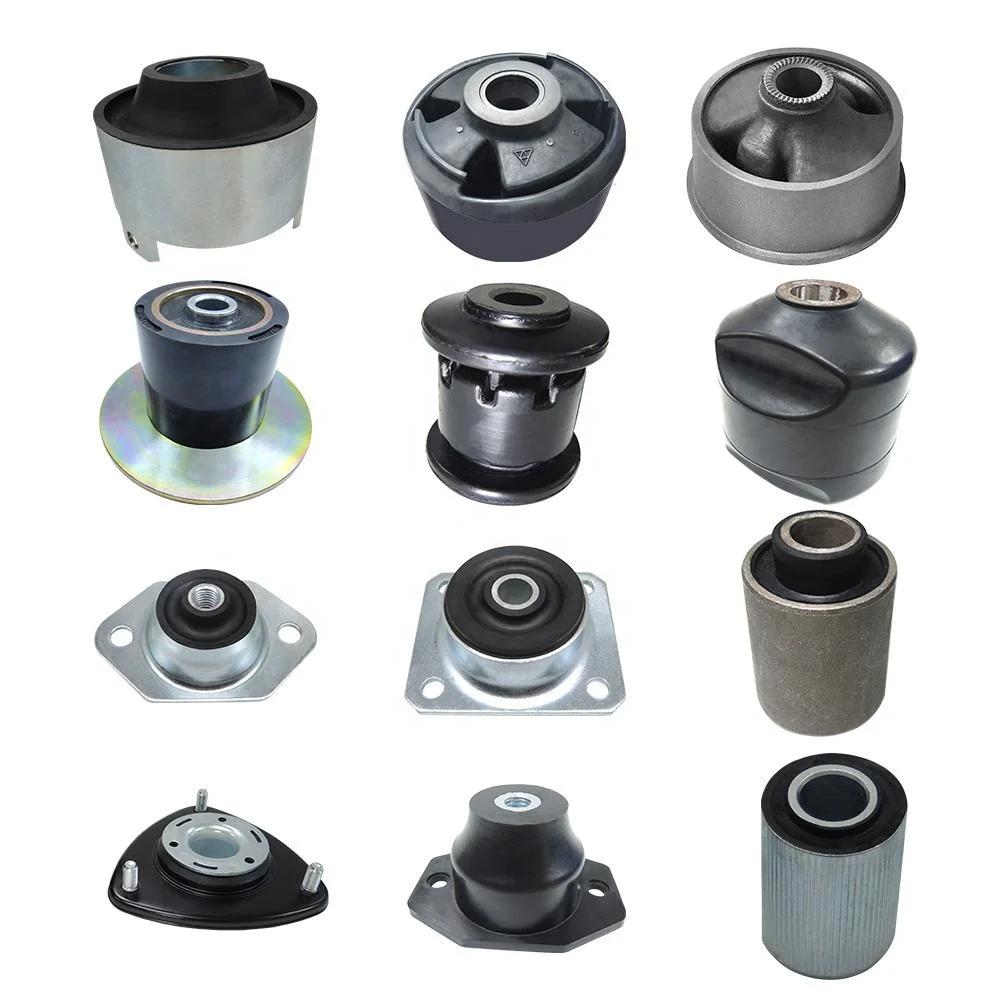
How to Inspect Suspension Bushing Wear
For vehicle owners: Follow this sequence: Symptoms → Visual inspection → Test drive to reproduce symptoms → Professional lift inspection. For repair/technical personnel: Adopt a more structured approach:
Visual inspection
Check for cracks, bulges, delamination, eccentricity, and rubber powdering. Also inspect for signs of long-term oil contamination.
Pry Bar Load Test (with vehicle lifted)
Apply slight prying force to the bushings. Observe for abnormal displacement, metallic knocking sounds, or noticeable play (focus on control arm bushings, stabilizer bar bushings, etc.).
Road Test Reproduction
Drive over small potholes at low speed, apply light braking/acceleration, and steer left/right to confirm whether abnormal noises and pulling can be consistently reproduced.
Verify with “Four-Wheel Alignment Data”
If alignment parameters consistently fail to return to specification or drift shortly after adjustment, suspect bushing elasticity degradation causing dynamic geometry instability.
Trust Notice: This document provides engineering and maintenance information. Specific diagnostics and repairs should follow vehicle service manuals and qualified technician inspections.
Suspension Bushing Repair Strategy
Conclusion first: For many vehicle models, “replacing the control arm assembly + proper tightening + four-wheel alignment” often yields more stable results and reduces rework compared to “replacing bushings only.” However, this is not universally true.
Replacing only bushings is suitable when:
When: Control arm body shows no deformation, ball joints are in good condition, individual replacement is feasible, press-fit equipment and angular positioning are reliable, and labor time/consistency is controllable.
Replacing the entire assembly is more suitable when:
When bushings and ball joints age simultaneously, higher vehicle consistency is required, or press-fit angle risks are high (resulting in costly rework).
Two critical considerations:
1) Perform four-wheel alignment after replacement (control arms/bushings directly affect alignment geometry).
2) Secure according to specified ride height/operating conditions (to prevent pre-torqueing that causes rapid re-wear of new bushings).
Material Selection: Rubber vs. Polyurethane
Many search “Which is better: rubber bushings or polyurethane bushings?” A more accurate answer is: It depends on whether you prioritize “NVH” or “geometric locking.”
Rubber Bushings
Excels at isolating noise and vibration, offering superior ride comfort.
Polyurethane Bushings
More conducive to geometric locking and handling response, but may increase vibration and potentially cause squeaking (requires proper lubrication and assembly management).
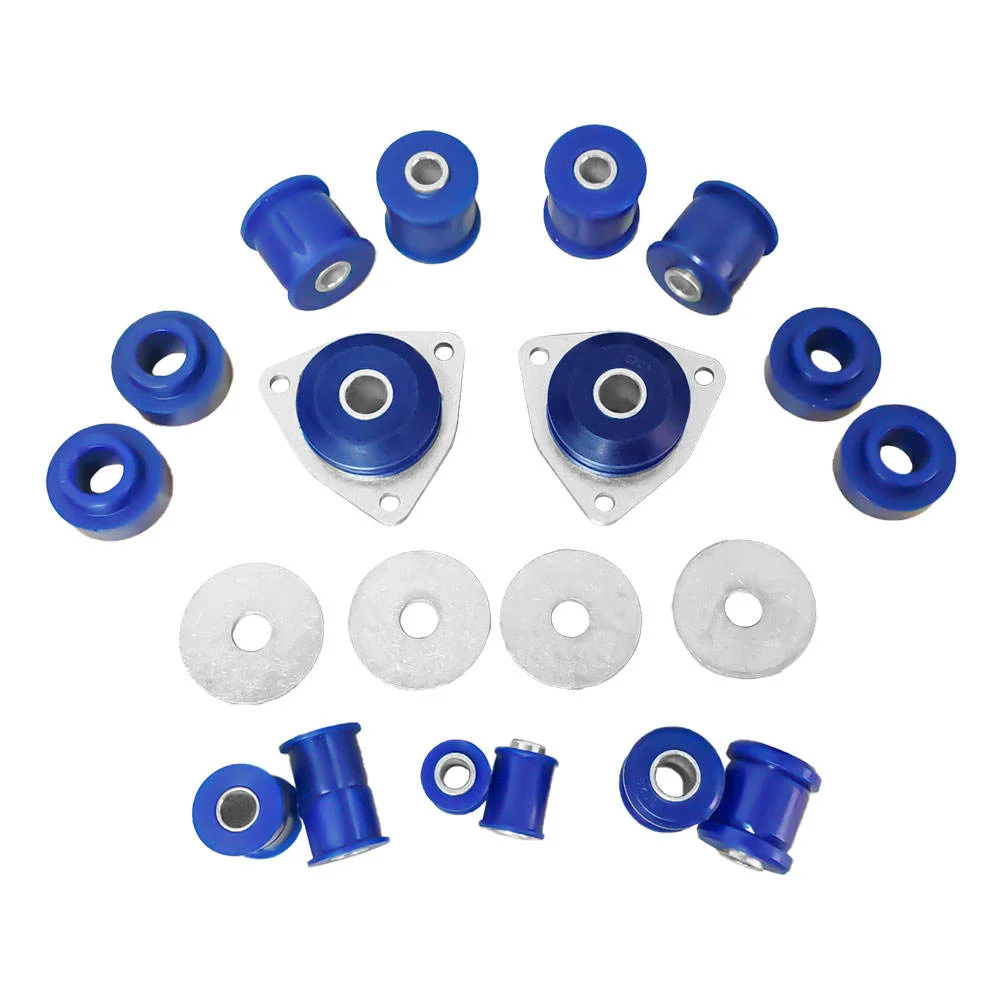
Engineering Recommendations
For vehicles prioritizing daily road use and comfort, a high-consistency rubber bushing system is recommended. For high-load/off-road/handling-focused applications, polyurethane or higher-stiffness solutions may be evaluated, but must undergo concurrent NVH and durability validation.
Suspension Bushings from Supply Chain and Manufacturing Perspectives
For OEM/Aftermarket bushing procurement or chassis component development, addressing “suspension bushing wear” should extend beyond mere “replacement” to establish a verifiable engineering closed-loop:
1) Input Definition: Load spectrum, displacement, frequency, temperature, operating fluid, target service life, NVH objectives.
2) Materials and Structure: Compound systems (NR/NBR/EPDM/HNBR, etc.), hardness window, cavity/stop design, metal skeleton corrosion protection and surface treatment.
3) Critical Process Controls: Compound mixing consistency, vulcanization window, rubber-to-metal bonding system and peel strength, assembly angle control.
4) Validation Testing: Static/dynamic stiffness, fatigue life, media resistance, salt spray/corrosion, extreme temperature performance; link test results to batch traceability.
Real-world experience: Many repairs for bushing components stem not from “design flaws” but from “batch consistency issues.” The key to reducing after-sales service and claims lies in upgrading from “capable of producing” to “consistently producing every batch.”
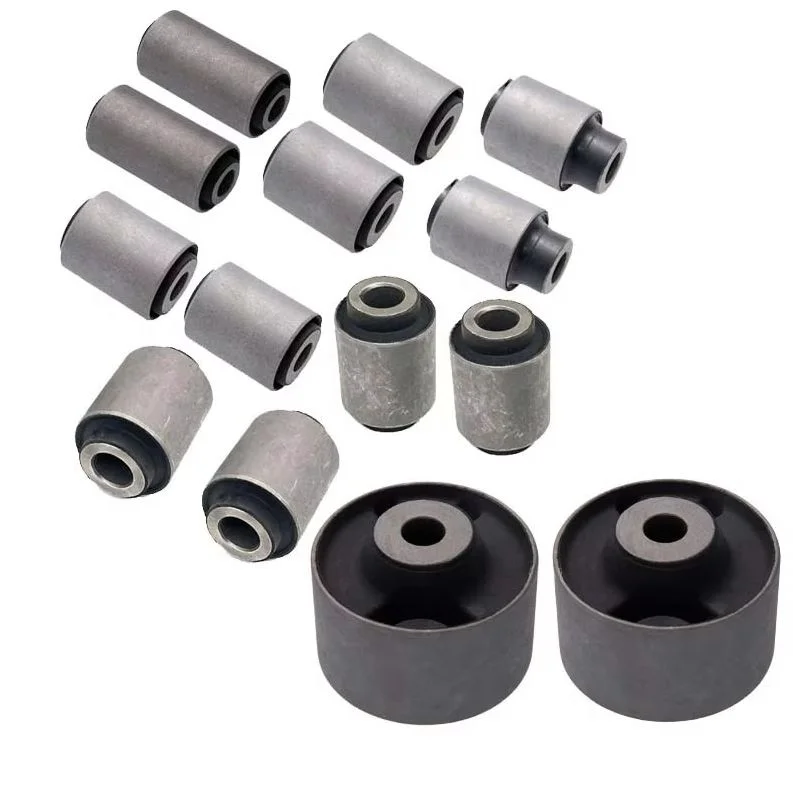
Summary
If you repeatedly encounter suspension bushing wear, noise-related repairs, positioning drift, or uneven tire wear for a specific vehicle model or operating condition, we recommend treating the issue as a systematic engineering challenge involving “load spectrum + material system + bonding and process consistency.”Simply provide drawings/assembly space, load/displacement data, environmental temperature/media, target lifespan, and NVH objectives. We typically deliver within a short cycle: material/hardness recommendations, structural optimization directions, prototype validation checklists (including fatigue/stiffness/media resistance/corrosion resistance), and establish traceable inspection records with process control points per batch.For applications demanding “greater oil resistance, temperature tolerance, and fatigue endurance,” we concurrently evaluate systems like HNBR and adhesive-metal bonding strategies to prevent recurring failures.
We are the manufacturing and engineering team at Evergreen Machinery, specializing in providing overseas OEMs and system integrators with customized metal and vibration damping component development, prototyping, and mass production delivery. We can transform validation testing and quality system documentation into a “deliverable chain of evidence”—the true risk mitigation tool procurement teams need.
FAQ
Can I keep driving with a damaged control arm bushing?
We do not recommend continued long-term driving. Worn suspension bushings can cause steering drift, unstable alignment, and reduced braking/cornering stability, potentially accelerating tire uneven wear and damaging other components.
What are the most common sounds indicating worn suspension bushings?
Common sounds include “thumping/clunking/metal knocking” over bumps, or squeaking/rattling noises that vary with acceleration/deceleration or steering input.
Can worn suspension bushings cause steering wheel vibration?
Yes. Reduced vibration damping and increased clearance allow vibrations to transmit more noticeably through the steering wheel, potentially accompanied by wheel shimmy.
Can worn suspension bushings cause uneven tire wear?
Yes. Degraded bushings allow suspension geometry to drift under load, destabilizing camber/toe angles and causing uneven or accelerated wear.
How much does replacing suspension bushings cost?
Cost varies based on vehicle architecture, whether press-fitting is required, if the entire assembly is replaced, and whether four-wheel alignment labor is included. Request a breakdown quote (parts + labor + alignment) from your repair shop and factor in “risk of future repairs” (replacing only the bushings may not be cheaper).
Is wheel alignment mandatory after bushing replacement?
Generally recommended. Control arms/bushings are critical alignment components; failure to recalibrate increases the likelihood of recurring drifting and uneven tire wear.
Which is more durable: rubber bushings or polyurethane bushings?
This depends on operating conditions and maintenance. Polyurethane leans toward “geometric locking/handling,” may require lubrication maintenance, and offers stiffer NVH characteristics; rubber prioritizes comfort and vibration isolation. Define your objectives (NVH vs. handling vs. environmental exposure) before selection and validate performance.
Why do newly replaced bushings fail quickly (or develop abnormal noises)?
Common causes include improper clamping conditions during installation (pre-torsion from suspended clamping), incorrect press-fit angles, or material/bonding inconsistencies leading to premature fatigue failure.
Must bushings with surface cracks be replaced immediately?
If cracks are accompanied by abnormal noise, misalignment, vibration, delamination, or noticeable gaps, prompt replacement is recommended. For minor aging without symptoms, assess risk using lift-and-pry tests combined with positioning data.
How can one quickly determine whether the issue lies with the bushing or the shock absorber/ball joint?
Combining “symptoms + visual inspection + pry gap measurement + road test replication + four-wheel alignment data” is more reliable than relying solely on abnormal noise. Many similar noises may originate from ball joints, stabilizer linkages, or top mounts, necessitating thorough troubleshooting.
