
This article won’t just throw a bunch of specs and theories at you. Drawing on the pitfalls I’ve encountered and the experience I’ve gained over the years, I’ll explain in plain language: how to choose the right small industrial engine mount, how to install it securely, and how to make it last. After reading this, you should be able to avoid the mistakes I made back then.
What Exactly Are Small Industrial Engine Mounts?
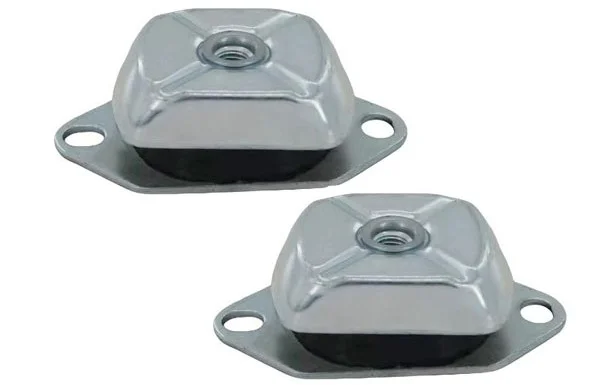
Simply put, a small industrial engine mount is the set of “support blocks” that connects the engine to the chassis (or base). It’s not just a simple piece of metal—it performs three critical functions: supporting the engine’s weight, absorbing vibrations generated during operation, and ensuring the engine remains properly aligned at all times.
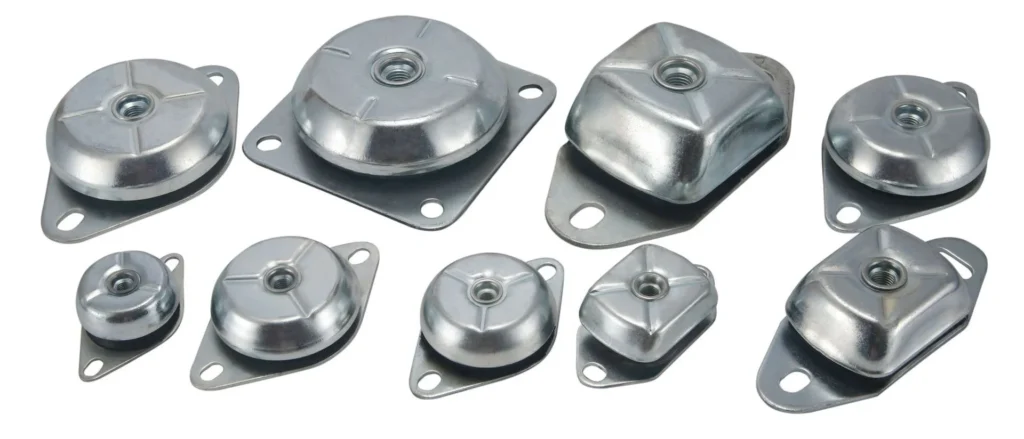
Why are small industrial engine mounts so important?
Let me share a real-life example. Last year, a client at a water pump factory installed a new batch of diesel-powered water pumps. Within two weeks, they started vibrating violently—the entire machine was “dancing” on the floor. At first, the client suspected a quality issue with the engines and spent several days troubleshooting. Eventually, they discovered the problem lay with the mounts—they had used a rigid, direct connection, which allowed the engine’s vibrations to be transmitted directly to the entire structure, causing the base to resonate.
Engine mounts directly determine the stability, noise level, and component lifespan of industrial equipment. A good mount ensures smooth machine operation and keeps operators happy; an unsuitable mount, however, can lead to daily complaints and skyrocketing maintenance costs.
With four mainstream engine mounts available, how should you choose?
There are four main types of industrial engine mounts commonly available on the market, each with its own strengths and weaknesses. I’ve compiled their characteristics into a comparison chart to help you make a quick decision:
| Type | Key Features | Vibration Absorption | Durability | Cost | Recommended Applications |
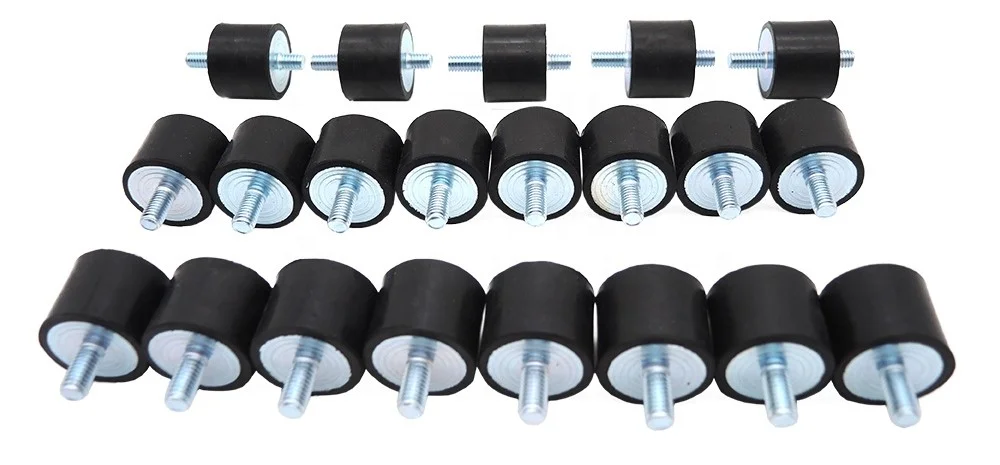
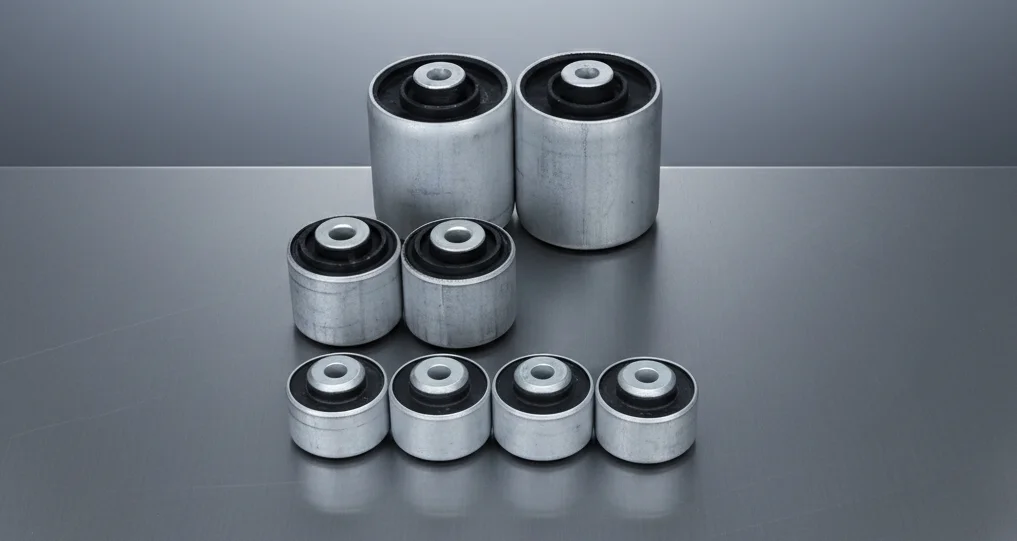
| Rubber Mounts | Made primarily of synthetic rubber, with a simple structure and high cost-effectiveness | ★★★★★ | ★★★ | Low | General industrial equipment, pump units, generators, and routine operating conditions |
| Polyurethane Mount | High-performance elastomer, oil-resistant and weather-resistant, wide temperature range | ★★★ | ★★★★★ | Medium to high | Mining equipment, agricultural machinery, outdoor construction equipment, harsh environments |
| Hydraulic supports | Filled with damping fluid to actively counteract vibrations | ★★★★★ | ★★★★ | High | High-precision machining equipment, precision instrument platforms, high-vibration environments |
| Rigid mounting | Metal rigid connection, virtually no cushioning | ★ | ★★★★★ | Medium | Test benches, racing engines, specialized industrial testing |
Rubber mounts
Rubber mounts are the most widely used type in the industrial sector. Their advantages are clear: excellent vibration damping and low cost. The damping properties of synthetic rubber are naturally suited to absorbing mid-to-high-frequency vibrations from engines, allowing machinery to operate more quietly and smoothly.
However, rubber mounts also have their drawbacks. Their lifespan is limited under extreme operating conditions; over time, they can age, harden, or even crack. If exposed to chemicals such as engine oil or diesel, the aging process accelerates. If your equipment is left outdoors in direct sunlight year-round, the lifespan of the rubber mounts will also be significantly reduced.
My experience: For general equipment like water pumps, small generators, and air compressors, rubber mounts are perfectly adequate. However, be sure to choose products from reputable manufacturers—don’t be tempted by cheap alternatives made from recycled rubber, as low-quality rubber will fail within three months.
Polyurethane Mounts
Polyurethane mounts have become increasingly popular in the industrial sector in recent years. Their key advantage is that they are more durable than ordinary rubber, offering excellent resistance to engine oil, diesel, and UV rays, and can operate normally within a temperature range of -40°C to +100°C.
The downside is that their vibration-damping effect isn’t as “soft” as rubber’s, and they are slightly more expensive. However, in environments such as mining machinery, agricultural equipment, and outdoor construction machinery, the overall cost of polyurethane mounts is actually lower—because they require fewer replacements.
Hydraulic Mounts
Hydraulic mounts contain internal fluid damping chambers that actively adjust damping characteristics based on engine load, providing effective attenuation for both large-amplitude low-frequency vibrations and small-amplitude high-frequency vibrations.
However, hydraulic mounts are costly, structurally complex, carry a potential risk of fluid leakage, and require more stringent installation standards. They are better suited for applications with stringent vibration control requirements, such as precision machining equipment and high-end testing instruments. For most general industrial applications, hydraulic mounts are actually overkill.
Rigid Mount
Rigid mounts consist of a rigid metal connection with virtually no cushioning. The advantage is that the engine is secured very firmly and will not shift. The disadvantage is also obvious—all engine vibrations are directly transmitted to the entire structure, significantly increasing noise and operator discomfort.
My recommendation: Unless your equipment has an additional vibration damping system or is mounted on a specialized test stand, I do not recommend using rigid mounts on standard industrial equipment.
Guide to Avoiding Pitfalls in Selection
Focusing Only on Dimensions, Not Load Capacity
This is a pitfall I frequently encountered in my early days. Many customers are only concerned with whether the mount can be installed, without considering whether its load-bearing capacity matches the engine’s weight and torque. The mount must not only support the engine’s static weight but also withstand the impact loads during startup, acceleration, and shutdown.
How to avoid it: When selecting a mount, ensure its rated load capacity is at least 25%–30% higher than the engine’s weight. If the equipment frequently experiences shock loads, this margin of safety should be even greater.
“Close Enough” Hole Alignment
For starter motor mounts or engine mounting brackets, even a dimensional deviation of just one or two millimeters can cause major problems. Misaligned holes or incorrect spacing can lead to the bracket twisting and deforming if forced into place. This results in a skewed engine mounting position, misaligned pulleys, rattling noises during startup, and abnormal wear on gears and bearings.
How to avoid it: Before purchasing a mount, you must verify that the mounting hole dimensions, bolt spacing, and flange specifications perfectly match your engine. If you’re unsure, take a photo and send it to the supplier for confirmation. Never take a chance by thinking, “It’ll probably fit.”
Cutting corners with low-quality parts
Some customers, in an effort to save a few dozen dollars, purchase cheap mounts from unknown sources. The result? After just over a month, the rubber ages and cracks, causing severe vibration at idle—a symptom that actually lessens when accelerating—which is a classic sign of deterioration. Ultimately, they end up spending more money to replace the mount with a quality product, resulting in higher overall costs and delayed project schedules.
How to avoid it: Choose suppliers with established brands, proper certifications, and the ability to provide test reports. High-quality mounts adhere to strict standards in material composition, manufacturing processes, and durability testing—this is reflected in both their price and their service life.
Installation Tips
Selecting the right mount is crucial, but proper installation is equally critical. Here are a few tips I’ve gathered from hands-on experience on the shop floor:
- The mounting surface must be flat and clean: If the base surface where the bracket is installed has weld slag, burrs, or rust, it will cause uneven stress distribution on the bracket and accelerate aging. Clean the mounting surface thoroughly before installation.
- Tighten bolts symmetrically to the specified torque: Do not tighten the bolts all the way at once. Instead, tighten them gradually in a diagonal sequence over 2–3 passes until the specified torque is reached. Over-tightening causes excessive compression of the rubber, causing it to lose elasticity, while under-tightening leads to loosening and vibration.
- Check that all four support points are in the same plane: When installing the engine, the support points of all four mounts must be in the same plane. If one support point is “suspended,” it will generate additional torsional forces during engine operation, resulting not only in excessive vibration but also potentially causing damage to the mounts or the engine block.
- Regular inspections: It is recommended to inspect the condition of the mounts quarterly. Pay particular attention to whether the rubber components have cracks or have hardened, whether the bolts are loose, and whether hydraulic mounts are leaking fluid.
2026 Trends: New Materials Are Transforming the Industry
The engine mount industry, though seemingly traditional, is quietly undergoing transformation. Traditional mounts are primarily made of steel, cast iron, or aluminum alloy, but recent trends point toward lightweight and sustainable solutions.
On one hand, engineering plastics and composite materials are gradually replacing some metal components. For example, mounts made from glass-fiber-reinforced nylon (PA66-GF) or carbon-fiber-reinforced thermoplastic composites can achieve weight reductions of over 30% while maintaining sufficient strength. On the other hand, smart active control mounts are also under development, capable of adjusting damping characteristics in real-time based on engine operating conditions.
That said, for most small and medium-sized industrial equipment, mature rubber and polyurethane mounts will remain the most cost-effective choice for the foreseeable future. New technologies are more likely to be adopted first in high-end automotive and precision equipment sectors before gradually trickling down to the industrial sector.
Summary
Selecting the right small industrial engine mount is neither particularly difficult nor particularly simple. The key principles are as follows: understand your equipment’s operating conditions and vibration requirements, choose the correct mount type and size, pay attention to details during installation, and perform regular inspections during use. As long as you follow this process, you’ll generally avoid major issues with your engine mounts.
Vista Motion has specialized in the R&D, production, and sales of various industrial engine mounts for over a decade. If you have any questions regarding the selection of industrial engine mounts, or if you need a customized solution tailored to your specific equipment conditions, please feel free to contact us. Our technical team will provide free, one-on-one technical support and selection recommendations based on your engine model, operating environment, and usage requirements, ensuring you purchase the most suitable product.
Frequently Asked Questions
How long do small industrial engine mounts typically last?
Under normal operating conditions, high-quality rubber mounts have a service life of approximately 3–5 years, while polyurethane mounts can last 5–8 years. Service life will be shortened if used in high-temperature, oily, or prolonged sun exposure environments. We recommend conducting a visual inspection every quarter and addressing or replacing the mounts promptly if you notice rubber cracking, hardening, or loose bolts.
How do I choose between rubber mounts and polyurethane mounts?
If the equipment is operated indoors or in mild environments and cost is a concern, rubber mounts are a good choice; if the equipment operates in harsh environments such as outdoors, mines, or farm fields and requires longer replacement intervals, polyurethane mounts are recommended, as they offer superior oil and weather resistance and are more cost-effective in the long run.
The engine vibrates heavily at idle but stops when I accelerate. What could be the cause?
This is a typical sign of aging or cracking in the engine mounts. Over time, the rubber material loses its elasticity, preventing it from effectively absorbing the engine’s low-frequency vibrations during idle, which causes resonance. When you accelerate, the engine’s frequency increases, temporarily alleviating the symptoms. We recommend replacing the mounts as soon as possible.
What should I do if the engine mount bolts keep coming loose?
First, check whether the bolts were tightened to the specified torque; over-tightening or under-tightening can both cause loosening. Second, check whether the mounting surface is level and whether all four mounting points are on the same plane. If the problem persists, you can install lock washers or threadlocker, but the most fundamental solution is to ensure that the mount selection and installation comply with specifications.
How do I determine if the engine mounts need to be replaced?
The following conditions indicate that the mount needs to be replaced: ① Visible cracking, crazing, or deformation of the rubber; ② Abnormal vibration or unusual noise during engine startup or operation; ③ Noticeable sinking or displacement of the engine; ④ Noticeable vibration in the steering wheel or dashboard during idle. If any of the above conditions occur, replacement should be arranged as soon as possible.
Are there international standards for industrial engine mounts?
Yes. The SAE (Society of Automotive Engineers) has established relevant standards. For example, SAE J609 specifies dimensional standards for small engine mounting flanges and power take-off shafts, while SAE J615 and J616 cover installation dimensions and standardization requirements for engine mounts. When purchasing, you can ask the supplier if the product complies with these standards.
Can I replace the engine mounts myself?
If you have basic mechanical experience and the appropriate tools (such as a jack and torque wrench), replacing the mounts is feasible. However, please note: Before replacement, the engine must be securely supported with a jack. When removing and installing bolts, tighten them in a diagonal sequence in stages to ensure the specified torque is achieved. If you are unsure of the procedure, it is recommended to have a professional mechanic handle the task.
Are engine mounts from different brands interchangeable?
It cannot be simply stated that they are compatible or incompatible. Different engines have varying mounting hole positions, flange specifications, and load requirements; the correct mount must be selected based on the specific model and specifications of the engine. Forcing the use of an incompatible mount may result in failure to install at best, or damage to the engine block or serious safety hazards at worst.
What are the consequences of not replacing a damaged engine mount?
Once a mount fails, it accelerates wear on the remaining mounts because the load distribution becomes uneven. Failure to replace them over time may result in: ① engine misalignment, affecting the alignment of the drivetrain; ② vibration transmission to other components, accelerating overall equipment aging; ③ in severe cases, engine block cracking or detachment, leading to safety incidents.
Are there differences between mounts for small diesel engines and water pump engines?
The basic principles are the same, but the selection criteria differ. Due to their high compression ratios and high torque, diesel engines typically require mounts with greater load-bearing capacity and impact resistance; for water pump engines, waterproofing and moisture resistance are key considerations. When selecting mounts, it is essential to determine the appropriate type based on the specific engine model and operating conditions.
