
Understanding how a lower control arm works and why its rubber components matter can help engineers, manufacturers, and vehicle owners make better decisions for suspension performance.
What Is a Lower Control Arm?
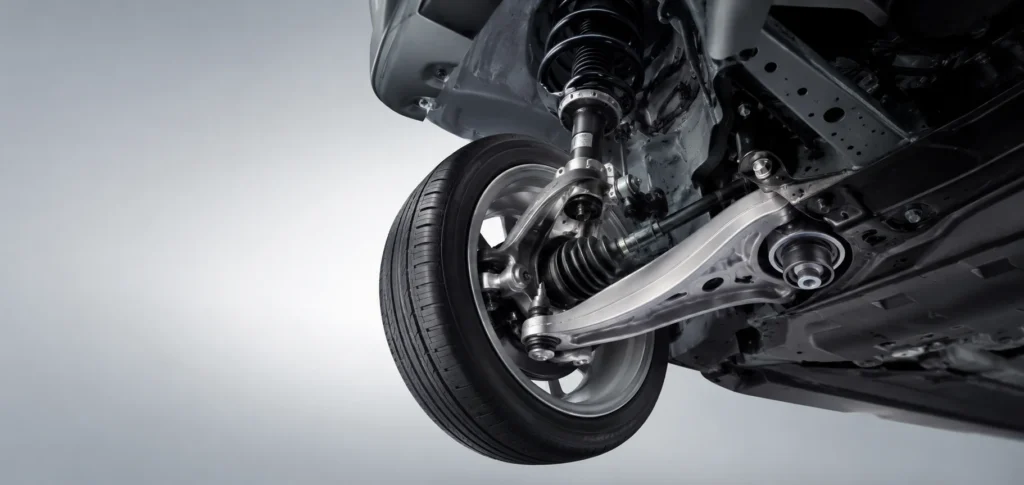
A lower control arm is a key component in an independent vehicle suspension system. It is a suspension link that connects the wheel hub assembly to the vehicle frame or subframe.
Its main purpose is to:
- Maintain correct wheel alignment
- Control vertical wheel movement
- Support suspension loads
- Improve steering stability
- Reduce vibration transferred to the vehicle body
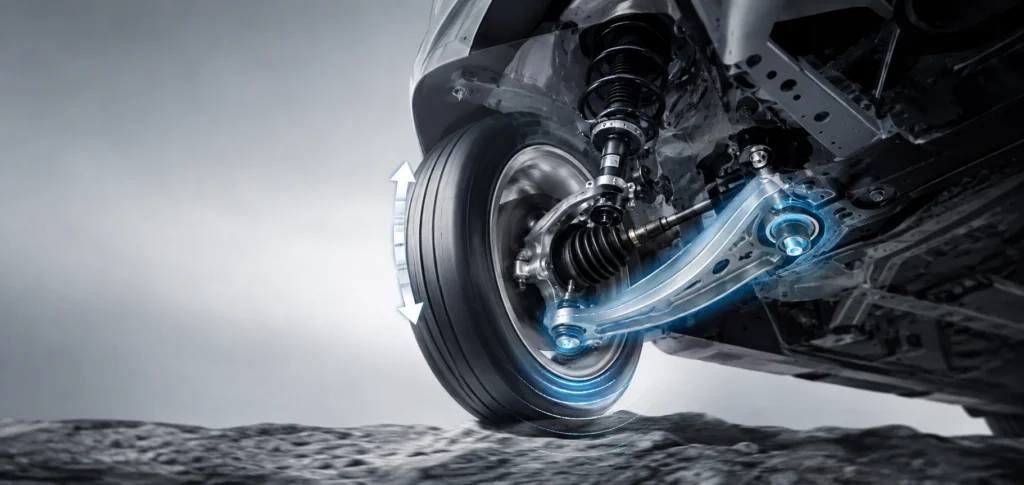
During vehicle operation, the lower control arm allows the wheel to move up and down when passing uneven roads while keeping the wheel positioned correctly.
Without a properly functioning lower control arm, the suspension system cannot maintain accurate wheel geometry, which directly affects handling performance and driving safety.
How Does a Lower Control Arm Work?
The lower control arm operates as a mechanical connection between the vehicle body and the wheel assembly.
When the vehicle encounters road impacts:
- The wheel moves vertically due to road conditions.
- The lower control arm guides this movement.
- The rubber bushing absorbs vibration and limits excessive movement.
- The suspension system maintains proper wheel alignment.
This process happens continuously during driving. Therefore, the lower control arm must withstand repeated loads, vibration, and changing road conditions.
For automotive manufacturers, the challenge is not only producing a strong metal arm but also ensuring the rubber components provide the correct balance between flexibility and stability.
What Are the Main Components of a Lower Control Arm?
A typical lower control arm assembly consists of several important components:
| Component | Function |
|---|---|
| Control Arm Body | Provides structural support and connects suspension parts |
| Rubber Bushing | Absorbs vibration and reduces noise |
| Ball Joint | Allows controlled steering and suspension movement |
| Mounting Points | Connects the arm securely to chassis and wheel assembly |
Each component affects suspension performance. Among them, the lower control arm bushing is especially important because it directly influences vibration isolation and driving comfort.
Why Is Lower Control Arm Bushing Important?
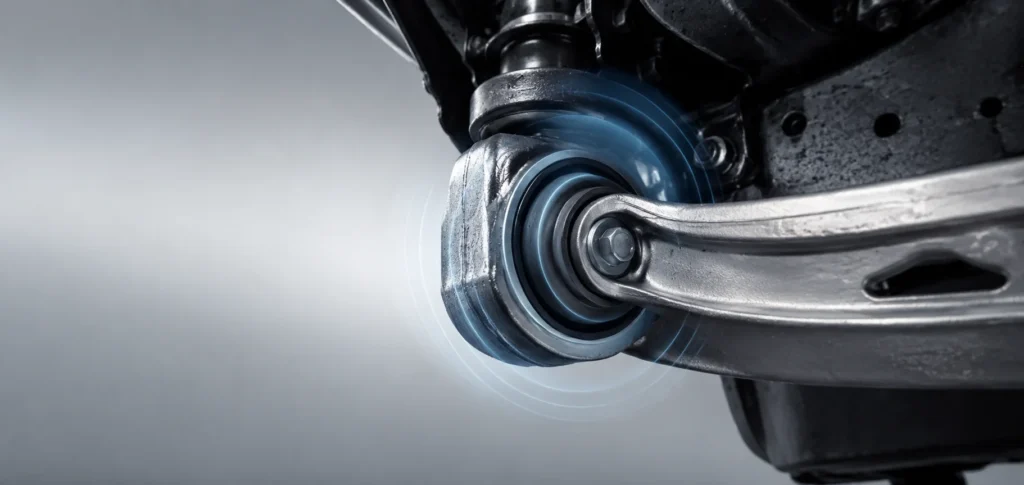
The lower control arm bushing is a rubber or elastomer component installed between the control arm and vehicle frame.
Although it appears simple, it performs several critical functions:
Vibration Absorption
Road impacts generate vibration and shock forces. Rubber bushings absorb these forces before they transfer into the vehicle cabin.
High-quality rubber materials help reduce:
- Road vibration
- Suspension noise
- Harsh driving feeling
Suspension Movement Control
The bushing allows controlled movement of the lower control arm while preventing excessive displacement.
A properly designed rubber bushing provides:
- Proper stiffness
- Controlled flexibility
- Stable suspension response
Improved Driving Comfort
The balance between rubber hardness and elasticity directly affects vehicle comfort.
A bushing that is too soft may reduce handling precision, while a bushing that is too hard may increase vibration transmission.
Therefore, selecting the correct rubber compound is essential for different vehicle applications.
What Causes Lower Control Arm Bushing Failure?
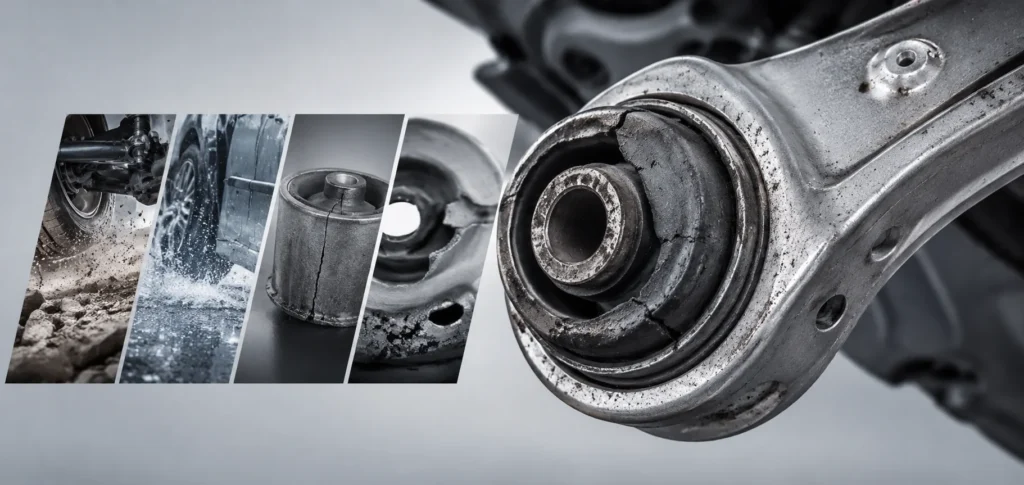
Lower control arm bushings experience continuous stress during vehicle operation. Common failure causes include:
Aging and Rubber Degradation
Over time, rubber materials may lose elasticity due to:
- Temperature changes
- UV exposure
- Environmental conditions
- Long-term compression
Excessive Mechanical Load
Heavy loads, aggressive driving, and poor road conditions can accelerate bushing wear.
Incorrect Material Selection
Different applications require different rubber properties.
For example:
- Passenger vehicles require comfort and noise reduction.
- Commercial vehicles require higher durability and load resistance.
Poor Manufacturing Quality
Improper rubber formulation, bonding defects, or dimensional errors can reduce service life.
For suspension components, manufacturing consistency is critical because small variations can affect vehicle performance.
Signs of a Damaged Lower Control Arm Bushing
Common symptoms include:
Abnormal Suspension Noise
A worn bushing may create:
- Clunking sounds
- Squeaking noises
- Knocking during braking or acceleration
Steering Instability
Drivers may experience:
- Vehicle pulling
- Reduced steering response
- Poor cornering stability
Uneven Tire Wear
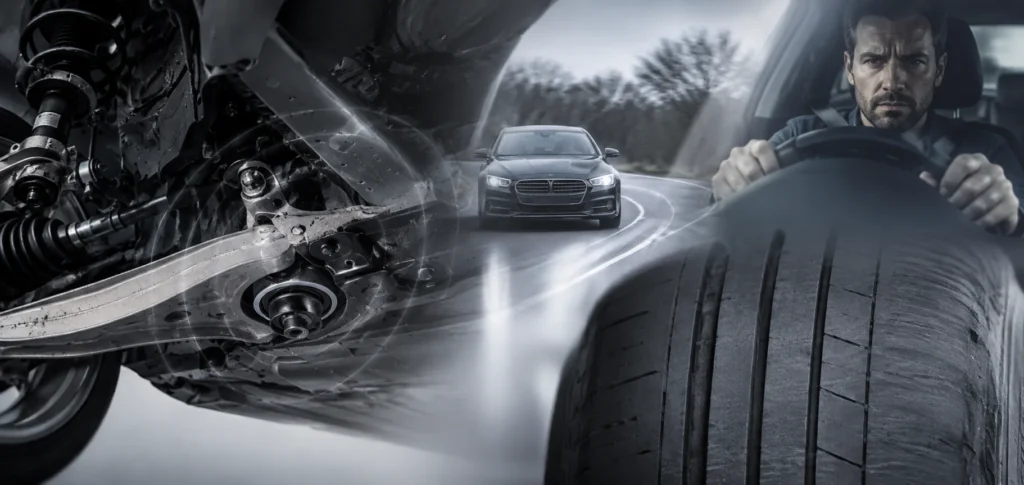
A damaged control arm bushing can affect wheel alignment and cause irregular tire wear.
How to Choose the Right Lower Control Arm Bushing?
For automotive manufacturers and aftermarket suppliers, selecting the right bushing requires consideration of several factors.
Rubber Material
Common elastomer materials include:
| Material | Characteristics |
|---|---|
| Natural Rubber (NR) | Excellent elasticity and vibration absorption |
| EPDM | Good weather and temperature resistance |
| NBR | Strong oil resistance |
| CR Rubber | Balanced durability and environmental resistance |
Hardness
Rubber hardness affects:
- Ride comfort
- Handling response
- Suspension stability
The correct hardness depends on vehicle design requirements.
Manufacturing Accuracy
High-quality bushings require precise control of:
- Rubber compound
- Mold design
- Bonding process
- Dimensional tolerance
- Performance testing
How Are Lower Control Arm Bushings Manufactured?
A reliable rubber bushing requires professional manufacturing processes.
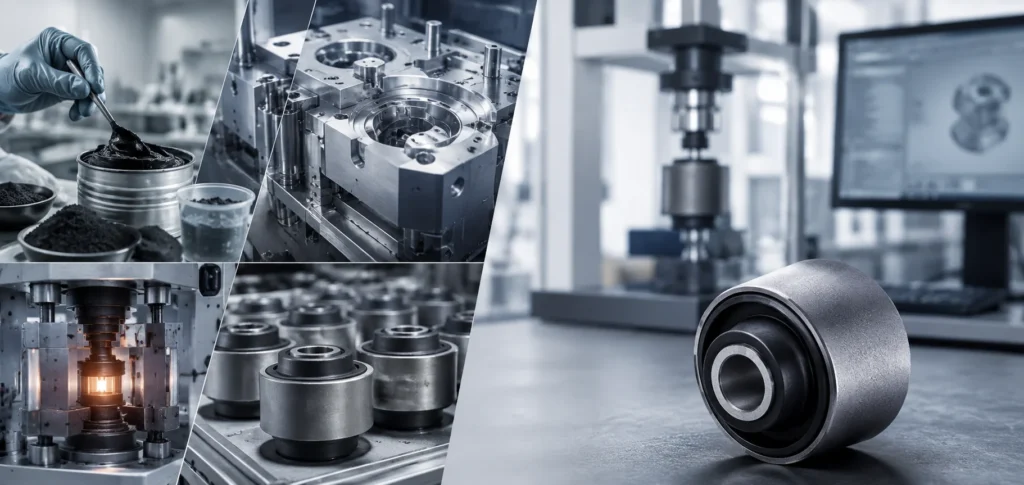
Typical production steps include:
Rubber Compound Development
Engineers select and adjust rubber formulations based on:
- Load requirements
- Temperature range
- Chemical exposure
- Service life expectations
Mold Design and Rubber Molding
Precision molds ensure:
- Consistent dimensions
- Stable mechanical performance
- Reliable production quality
Metal-Rubber Bonding
Many control arm bushings require rubber bonded with metal sleeves.
The bonding quality directly affects:
- Durability
- Fatigue resistance
- Structural reliability
Performance Testing
Professional manufacturers evaluate:
- Compression performance
- Tensile strength
- Fatigue resistance
- Aging resistance
- Dynamic durability
Why High-Quality Control Arm Components Matter?
A suspension system is not only about strength. It requires a precise balance between:
- Load capacity
- Flexibility
- Vibration control
- Long-term durability
A high-quality lower control arm bushing helps manufacturers achieve:
- Better driving comfort
- Longer suspension service life
- Reduced maintenance costs
- Improved vehicle reliability
For OEM and aftermarket automotive applications, consistent rubber performance is a key factor in achieving stable vehicle quality.
Vista Motion: Your Reliable Rubber Suspension Solution Partner
Vista Motion specializes in developing and manufacturing rubber vibration control components for industrial and automotive applications.
With expertise in rubber material development, molding processes, and performance testing, Vista Motion provides customized rubber solutions including:
- Lower control arm bushings
- Rubber suspension components
- Vibration isolation products
- Custom rubber-metal bonded parts
From material selection and tooling development to production and quality inspection, Vista Motion focuses on delivering stable and reliable rubber components for global customers.
Conclusion
The lower control arm is a fundamental component of modern vehicle suspension systems. While the metal structure provides strength and support, the rubber bushing determines how effectively the suspension controls vibration, movement, and driving comfort.
Choosing high-quality lower control arm bushings is not only about replacing a worn component. It is about improving vehicle reliability, reducing vibration, and ensuring consistent suspension performance.
For automotive manufacturers seeking durable rubber suspension solutions, professional rubber component engineering and manufacturing capability are essential.
What does a lower control arm do?
A lower control arm connects the vehicle chassis with the wheel assembly and controls wheel movement while maintaining suspension stability.
What is a lower control arm bushing?
A lower control arm bushing is a rubber component that connects the control arm to the vehicle frame while absorbing vibration and reducing noise.
How long do lower control arm bushings last?
Service life depends on vehicle type, driving conditions, rubber material, and load conditions. High-quality bushings can provide long-term durability under proper operating conditions.
Can bad control arm bushings affect driving safety?
Yes. Damaged bushings can affect wheel alignment, steering stability, and suspension performance.
Why are rubber bushings used in suspension systems?
Rubber provides excellent vibration absorption and allows controlled movement between suspension components.
What rubber material is best for control arm bushings?
The best material depends on application requirements. EPDM, NR, NBR, and CR rubber are commonly selected based on temperature, durability, and environmental conditions.
What causes control arm bushings to wear out?
Common causes include aging, repeated loads, extreme temperatures, poor road conditions, and improper material selection.
Can Vista Motion customize lower control arm bushings?
Yes. Vista Motion provides customized rubber component solutions based on customer specifications, application requirements, and performance targets.
How are rubber bushings tested?
Testing may include hardness testing, tensile testing, compression testing, fatigue testing, and environmental aging tests.
Why choose a professional rubber bushing manufacturer?
Professional manufacturers provide better material control, production consistency, engineering support, and reliable performance.
