
Based on real-world engineering applications, this article explains the causes of noise and vibration in wind farms, common control techniques, and how to improve equipment performance through the use of appropriate rubber vibration isolators and flexible couplings.
Why Do Wind Farms Generate Noise and Vibration?
To solve the problem, we must first distinguish between two concepts: noise is the sound we hear, while vibration is the mechanical motion of equipment or structures.
The two often occur simultaneously, but they are not exactly the same.
Noise in wind farms is typically classified as aerodynamic noise and mechanical noise, while vibrations generated by mechanical equipment can also propagate through supports, nacelles, and towers, further creating structure-borne noise.
Blade Aerodynamic Noise
Blade noise is one of the major sources of noise in modern wind turbines.
When the blades rotate, air flows along their surfaces, creating complex turbulence at the edges. The interaction of these airflows with the blades produces the “whooshing” or “hissing” sounds that people often hear.
Blade noise is primarily related to the following factors:
- Blade rotational speed and tip speed: Changes in speed affect the generation of aerodynamic noise.
- Blade aerodynamic geometry: Airfoil shape, trailing edge configuration, and surface condition all affect airflow.
- Wind speed and turbulence: Unstable airflow can increase noise fluctuations.
- Blade surface damage: Erosion, contamination, and localized defects can alter aerodynamic performance.
- Yaw and pitch conditions: Inappropriate operating conditions may introduce additional aerodynamic loads and noise.
Among these, trailing edge noise is an important area of research.
Turbulence in the blade boundary layer generates broadband noise as it passes over the trailing edge. Therefore, improving the trailing edge design and surface condition is a key measure for aerodynamic noise reduction in wind turbines.
Mechanical Noise
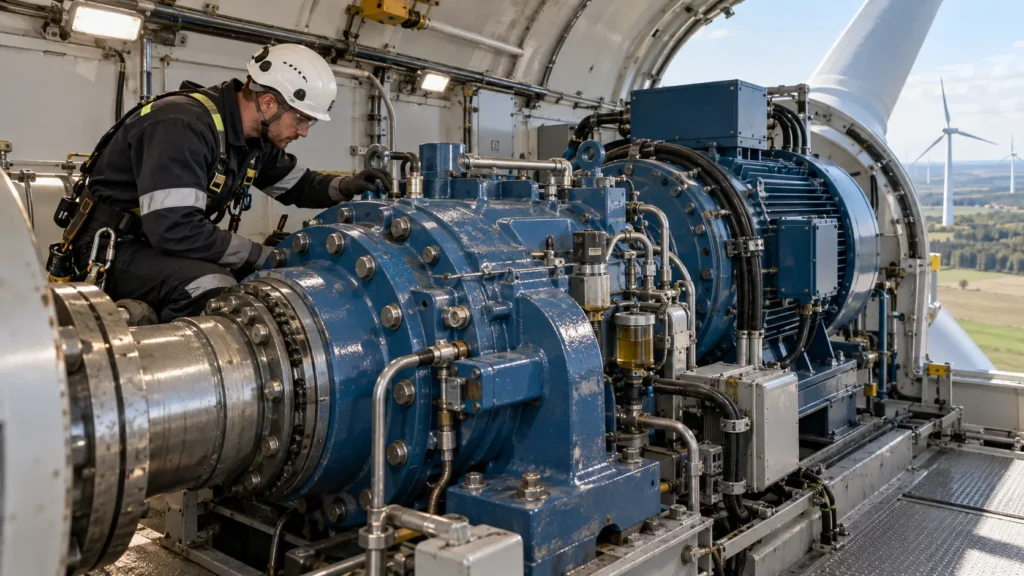
Unlike aerodynamic noise generated by the blades, mechanical noise primarily originates from moving parts inside the wind turbine.
Common sources include:
Gearbox
In fans that use gear drives, gear meshing generates periodic vibrations. If the gears are worn, lubrication is inadequate, or the drive system is misaligned, more pronounced vibrations and whining noises may occur.
Generator
During operation, the generator experiences vibrations caused by electromagnetic excitation and mechanical rotation. Rotor imbalance, bearing issues, or structural installation problems can all affect operational performance.
Bearings
Bearings are subjected to continuous loads and rotational motion. If lubrication is insufficient, there is localized damage, or the bearings are improperly installed, vibration characteristics may change over time.
Auxiliary Equipment
Cooling fans, hydraulic pumps, lubrication systems, and other auxiliary equipment within the engine compartment may also serve as localized noise sources.
Mechanical noise sometimes manifests as sounds with a distinct pitch. Compared to continuous airflow noise, such abnormal sounds warrant more thorough investigation in conjunction with the equipment’s condition.
Structural Vibration and Structure-Borne Noise
Vibrations within the fan do not always remain confined to the vicinity of the vibration source.
When vibrations propagate through rigid connections, they may travel along the equipment base, mounting brackets, nacelle structure, and tower.
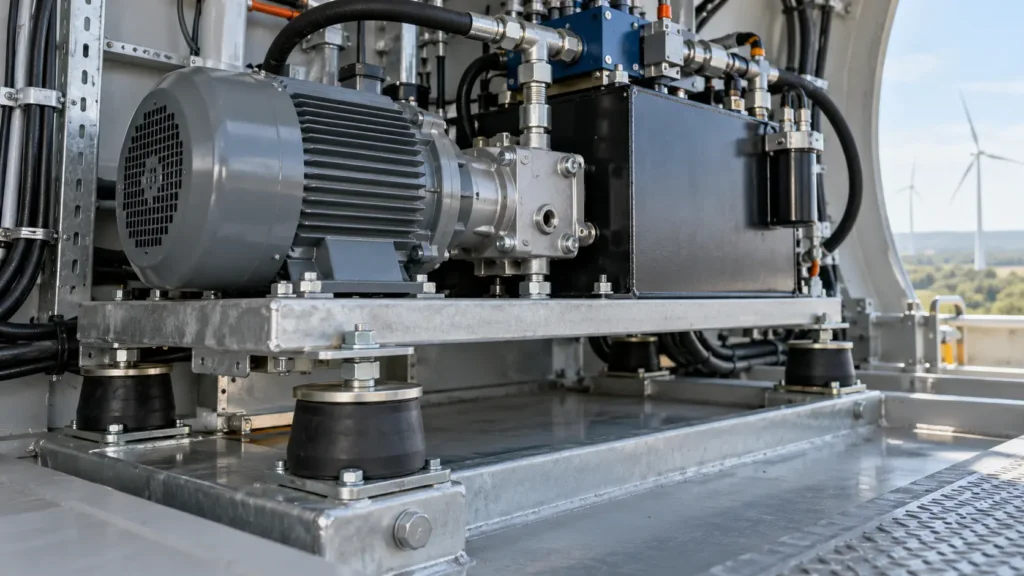
For example, vibrations generated by an auxiliary device may be transmitted through a metal bracket to adjacent structures, causing local components to emit sound.
In such cases, even if the equipment itself emits only minimal airflow noise, noticeable structure-borne noise may still occur.
This is precisely where **vibration isolation and rubber vibration damping** come into play.
However, it is important to note that rubber vibration dampers are primarily used to control mechanical vibrations along specific connection paths and cannot directly eliminate the aerodynamic noise generated by the blades in the air.
How can we identify the true sources of noise and vibration in wind farms?
The first step in addressing noise in wind farms is not to rush to replace equipment, but to conduct proper testing and diagnostics.
Without identifying the source of the noise, significant costs may be incurred without resolving the actual problem.
Record the operating conditions under which noise occurs
We recommend first determining:
- Is the noise constant, or does it occur only at specific wind speeds?
- Does the sound resemble airflow noise, a low-pitched hum, or a sharp mechanical screech?
- Is it more noticeable during startup, shutdown, or when the rotational speed changes?
- Does the noise change with wind direction, wind speed, or weather conditions?
- Is it accompanied by abnormal equipment temperature, vibration, or other operating parameters?
This information can help engineers narrow down the scope of their investigation.
For example, if a mechanical screech is highly correlated with gearbox speed, the transmission system should be inspected first, rather than modifying the blades.
Conducting Noise Measurements
A professional wind farm noise assessment typically requires the use of acoustic measurement equipment that meets the relevant standards.
During testing, it is important not only to record the sound pressure level but also to pay attention to sound frequency, background noise, wind conditions, and operating status.
Commonly used analytical indicators include:
- A-weighted sound pressure level, dB(A): Used to describe sound levels in common environmental noise assessments.
- Spectral analysis: Used to identify noise characteristics at different frequencies.
- Narrowband or octave-band analysis: Used to further distinguish mechanical tones from broadband noise.
- Time-varying characteristics: Used to analyze periodic variations in sound intensity.
In terms of international standards, IEC 61400-11 provides methods for measuring acoustic emissions from wind turbines; IEC TS 61400-11-2:2024 covers the measurement of wind turbine acoustic characteristics at the receiving location.
The test objectives and measurement locations of the two standards differ; the appropriate method should be selected for actual projects based on assessment requirements.
Locating Mechanical Problems Through Vibration Monitoring
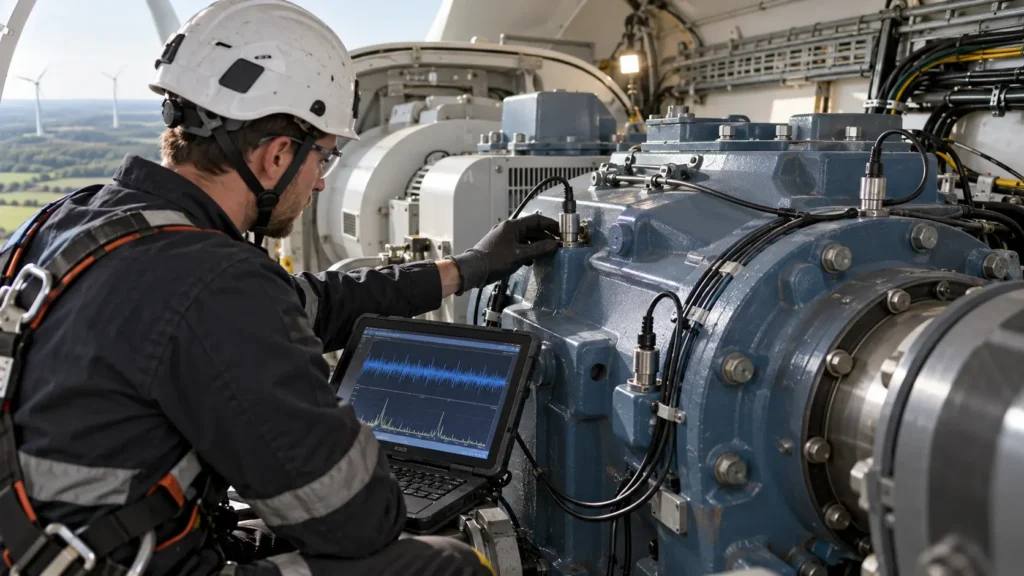
Vibration analysis is of great value for gearboxes, generators, bearings, and other rotating equipment.
Engineers can analyze vibration changes by combining data from accelerometers, rotational speed information, and equipment operating data.
Key points include:
Vibration amplitude: Observing whether there is an abnormal increase in equipment vibration.
Vibration Frequency: Determine whether the anomaly is related to rotational speed, gear meshing, bearing natural frequencies, or structural resonance.
Long-term trends: Compare vibration changes in the same equipment under similar operating conditions, rather than relying solely on a single data point.
Operational Correlations: Analyze vibration data in conjunction with information such as wind speed, power, rotational speed, and temperature.
For wind turbines, ISO 20816-21:2025 provides guidance on mechanical vibration measurement and evaluation. However, vibration severity assessment cannot directly replace specific fault diagnosis; bearing and gearbox failures require more targeted analytical methods.
Only by following these steps can one determine whether the problem stems from aerodynamic design, mechanical failure, installation structure, or vibration transmission paths.

Optimizing Wind Turbine Blades to Reduce Noise
If the primary noise originates from the blades, aerodynamic design and maintenance are typically more effective than installing mechanical vibration isolators.
Optimizing the Blade Trailing Edge Design
One common technique is trailing-edge serrations.
This technique reduces aerodynamic noise across a specific frequency range by altering how the blade’s trailing edge interacts with turbulence.
You can think of it this way: by adjusting the shape of the blade’s trailing edge, the sound generated as air flows past is reduced.
However, the actual effect depends on the blade design, the serrations’ geometry, and operating conditions.
Not all serration designs can reduce noise across the entire frequency range. Some designs may also affect aerodynamic performance, so they require calculation, testing, and engineering validation.
Improving Blade Surface Condition
Fan blades are constantly exposed to rain, dust, salt spray, and other environmental factors, which can cause erosion or surface damage to the blade leading edge.
These issues can alter the airflow conditions on the blade surface and affect aerodynamic performance.
Regularly inspecting the blade surface, repairing damage, and maintaining the leading-edge protective coating helps preserve the blades in their intended design condition.
It is important to note that blade maintenance should first and foremost be based on equipment safety and manufacturer requirements. Noise reduction effects should be confirmed through actual measurements and cannot be inferred solely from the repair work itself.
Optimizing Operating Speed and Pitch Control
Tip speed is a key factor affecting the aerodynamic noise of wind turbines.
Under certain operating conditions, appropriately reducing the rotational speed or adopting a low-noise operating mode can reduce noise emissions.
However, noise control typically requires simultaneous consideration of power generation, mechanical loads, and equipment operating limits.
Therefore, adjustments to operating parameters should be evaluated and implemented by the fan manufacturer or a qualified professional team, rather than simply assuming that “the slower it runs, the better.”
Reducing Gearbox and Generator Noise Through Mechanical Maintenance
When the problem originates from the drive system, addressing mechanical abnormalities is generally a more reasonable priority than simply adding sound-insulating materials.
Inspect the gearbox and lubrication system
During operation, gearboxes are subjected to continuous torque and dynamic loads.
Gear wear, lubrication issues, bearing damage, and alignment problems can all cause changes in vibration.
It is recommended to inspect the condition of the lubricating oil, bearing operation, temperature, and vibration data in accordance with equipment requirements.
If the abnormality originates from inside the gearbox, the root cause of the failure should be eliminated first. Vibration dampers can control some vibration propagation, but they cannot repair damaged gears.
Check the Balance and Alignment of Rotating Components
Imbalance in rotating components can produce periodic vibrations related to rotational speed.
Misalignment of rotating shafts, couplings, or other transmission components can also increase the load on bearings and connecting structures.
To address these issues, appropriate balancing tests, alignment checks, or related maintenance work must be performed.
Proper equipment condition is the foundation for subsequent vibration isolation measures to be effective.
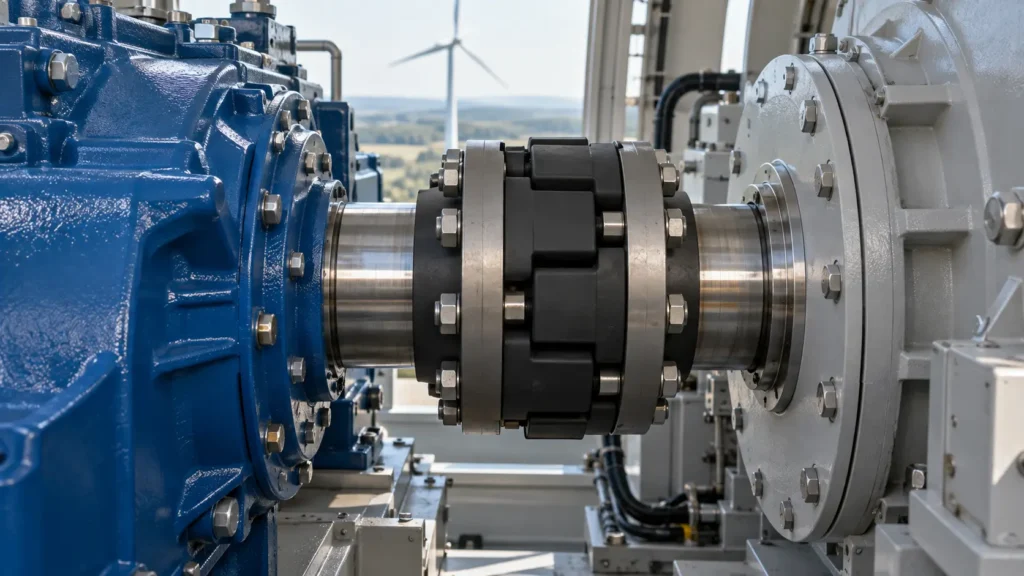
Selecting the Appropriate Flexible Coupling
Elastic couplings can transmit torque under specific design conditions and improve the dynamic characteristics of the transmission system through elastic elements.
In a suitable drive system, they help control torsional vibrations, mitigate impacts to a certain extent, and allow for relative displacement within a specified range.
However, couplings cannot be replaced arbitrarily.
The following factors must be considered during selection:
- Rated torque and peak torque
- Operating speed
- Torsional stiffness and damping characteristics
- Shaft alignment requirements
- Fatigue life and environmental conditions
For the main drive system of wind turbines, any coupling modification must also undergo dynamic analysis and safety verification approved by the original equipment manufacturer.
Use Rubber Vibration Isolators to Reduce Structure-Borne Vibration
For auxiliary equipment inside the wind turbine, certain mounting brackets, and mechanical systems suitable for flexible connections, rubber vibration isolators are a passive vibration isolation solution worth considering.
Their value lies not only in making the vibrations felt during equipment operation less noticeable, but also in reducing the likelihood of vibrations being transmitted along specific structural paths.
Why do rubber vibration isolators reduce vibration?
Conventional rigid metal connections typically have high connection stiffness.
If equipment generates mechanical vibrations, these vibrations can be transmitted to the supporting structure through the mounting points.
Rubber vibration isolators, on the other hand, utilize the elastic and viscoelastic properties of rubber to form a designed elastic connection between the equipment and the supporting structure.
When force is applied to the rubber, it deforms and generates damping through energy dissipation within the material.
In a properly designed vibration isolation system, this structure can reduce vibration transmission within a certain frequency range.
However, damping and vibration isolation are not exactly the same.
Damping primarily helps dissipate vibration energy and control resonance response, while vibration isolation focuses on how much vibration is transmitted from the vibration source to other structures.
If the stiffness, load, or operating frequency of the vibration isolator is mismatched, the actual vibration isolation effect may be poor, or it may even amplify vibrations near the resonance frequency.
Therefore, the most suitable vibration isolator is neither the softest nor the hardest, but one that is matched to the dynamic conditions of the equipment.
In wind power equipment, which locations might be suitable for rubber vibration isolators?
The application of rubber vibration isolation components must be evaluated in conjunction with the specific wind turbine structure. Common potential applications include:
Installation of auxiliary power equipment
Hydraulic power units, lubrication pumps, and certain auxiliary mechanical equipment inside the wind turbine may generate continuous vibrations.
If the structural design permits, suitable rubber-to-metal vibration isolators may be installed at these locations to control the transmission of vibrations to the supporting structure.
Cooling and Ventilation Equipment
Cooling fans, motors, and related auxiliary equipment may generate mechanical vibrations.
Appropriate flexible supports can help mitigate local vibration transmission, but equipment alignment, piping connections, and operational safety must still be ensured.
Electrical Equipment and Control Cabinets
Some switchgear, electrical components, or internal mounting structures may require cushioning or vibration isolation designs.
In such cases, impact resistance, insulation requirements, mounting reliability, and relevant safety standards should all be considered simultaneously.
Auxiliary Device Connection Points
At connection points where mechanical vibration transmission needs to be reduced, the use of decoupling elements or specially designed rubber-metal components can be evaluated.
It must be emphasized that ordinary rubber vibration isolators must not be installed on main bearings, critical load-bearing structures, tower connections, or other safety-critical locations without verification through a complete system design.

How to Select the Right Vibration Dampers for Wind Turbines?
What truly affects vibration damping performance is not just the product’s shape or rubber hardness, but whether the overall selection meets the equipment’s requirements.
First, confirm the load.
It is necessary to understand the total mass of the equipment, the actual loads at each support point, and the dynamic loads that may occur during startup, shutdown, and abnormal operating conditions.
Simply distributing the load evenly based on the equipment’s total weight is often insufficient for the final design.
Second, determine the vibration frequency.
Rotational speeds and excitation frequencies vary by equipment, and the dynamic stiffness of vibration isolators may also change with frequency, temperature, and load.
In common simplified vibration isolation models, the excitation frequency should be approximately 1.41 times higher than the system’s natural frequency for vibration isolation to meet basic requirements. Actual engineering applications typically require a higher frequency ratio and a sufficient safety margin.
This assessment cannot directly replace a complete multi-degree-of-freedom dynamic analysis.
Third, confirm environmental requirements.
Since fans operate outdoors for extended periods, vibration isolators may be exposed to temperature fluctuations, humidity, ozone, oils, and corrosive environments.
When selecting materials, consider:
- Rubber compounds such as EPDM that meet specific weather resistance requirements.
- Materials such as NBR that are suitable for environments involving contact with specific oils.
- Elastic materials with defined fatigue performance requirements.
- Metal fasteners treated with appropriate corrosion protection.
The durability of different materials depends on their specific formulations and operating media; suitability for offshore wind power or extreme temperature environments cannot be determined solely by the material name.
Fourth, focus on long-term performance.
Rubber may age, creep, or undergo performance changes over time and under certain environmental conditions.
Therefore, in addition to initial stiffness, attention should also be paid to dynamic performance, compression set, the quality of the bond between rubber and metal, fatigue life, and the ability to maintain safety after failure.
For wind power equipment operating continuously over the long term, these factors are often more important than simply comparing purchase prices.
What vibration-damping products does Vista Motion offer?
Vista Motion specializes in rubber vibration isolation components and customized vibration isolation solutions.
Based on its existing renewable energy product portfolio, the types of products available for evaluation include:
- Vibration Isolation Components for Equipment and Auxiliary Unit Mountings
- Elastic Couplings
- Conical Mountings
- Buffers for Switchboard Mountings
- Decoupling Elements
For fan manufacturers and equipment purchasers, it is more important to verify that these products meet the actual installation and dynamic performance requirements when selecting them, rather than simply choosing standard models based on their dimensions.
If your equipment experiences persistent vibration, has limited installation space, or requires special environmental conditions, you can provide Vista Motion with drawings, load data, vibration frequencies, and operating conditions so that we can further evaluate the suitability of standard products or custom solutions.
Learn More: Vista Motion Renewable Energy Solutions
How do vibration control requirements differ between offshore and onshore wind power?
Onshore and offshore wind power employ similar basic principles of mechanical vibration control, but there are significant differences in their actual operating environments.
Onshore Wind Power
Onshore wind power equipment may face significant diurnal temperature variations, dust, rainfall, and seasonal environmental changes.
For rubber vibration isolation components, attention must be paid to temperature adaptability, material aging, and performance stability under sustained dynamic loads.
If a wind farm is located in a cold region, it is also necessary to evaluate the impact of changes in rubber stiffness under low-temperature conditions on vibration isolation performance.
Offshore Wind Power
Environmental conditions for offshore wind power are typically more severe.
Salt spray, humidity, and corrosive environments may affect the long-term performance of metal fasteners, surface coatings, and certain materials.
Therefore, in marine applications, shock absorbers typically require greater attention to:
- Corrosion protection for metal components
- Reliability of rubber-to-metal bonding
- Long-term fatigue and environmental aging
- Ease of inspection and replacement after installation
In addition, offshore wind power involves specific structural vibration and underwater sound propagation issues. Internal vibration dampers in equipment cannot be regarded as a universal solution to all noise problems in the marine environment.
Whether applied to onshore or offshore wind power, material and structural selection should be based on the specific conditions of the equipment.
Which noise reduction method is more effective for wind farms?
Different noise sources require different solutions.
| Source of the Problem | Preferred Solutions | Primary Objectives |
| Blade aerodynamic noise | Trailing-edge optimization, surface maintenance, operational controls | Reduction of aerodynamic noise |
| Abnormal gearbox noise | Inspection of bearings, gears, and lubrication systems | Eliminate or reduce abnormal mechanical excitation |
| Unbalance in rotating components | Balancing, Alignment, and Maintenance | Reduction of Periodic Mechanical Vibrations |
| Structural Vibrations in Auxiliary Equipment | Proper elastic mounting and vibration dampers | Reducing Vibration Transmission |
| Torsional Vibrations in Drive Systems | Proven couplings and dynamic optimization | Improved Dynamic Response of the Drivetrain |
| Ambient Noise | Site selection, acoustic assessment, low-noise operation | Reducing Sound Impact at Receiving Locations |
Here is a very important principle:
If the primary issue is aerodynamic noise generated by the blades, priority should be given to aerodynamic and operational controls; if the primary issue is vibration transmitted through the mounting structure, elastic vibration damping and isolation technologies are the more direct approach.
In actual projects, multiple noise sources may coexist, so a combination of different solutions may be necessary.
Why do wind turbine manufacturers need custom vibration-damping components?
Wind turbines and related auxiliary equipment typically have their own structural characteristics.
Even if two units are of similar mass, their natural frequencies, support point locations, operating environments, and allowable displacements may differ significantly.
Therefore, off-the-shelf vibration isolators may not necessarily meet actual requirements.
It is worth evaluating a custom solution in the following situations:
Limited installation space: Standard products cannot meet structural dimensions or connection requirements.
Complex load conditions: The equipment must simultaneously withstand dynamic loads from different directions.
Well-defined vibration control objectives: System stiffness and damping need to be adjusted for a specific frequency range.
Special operating environments: Additional requirements for temperature resistance, oil resistance, weather resistance, or corrosion resistance.
Mass production needs: Equipment manufacturers wish to adopt a consistent installation solution across multiple models or production batches.
The purpose of customization is not to make the product structure more complex, but to ensure that the vibration isolation components better match the equipment’s actual operating conditions.
Vista Motion offers customization of rubber vibration isolation products, technical support, and related sample services. For OEM equipment manufacturers, this allows for the consideration of vibration isolation components during the product design phase, rather than waiting until equipment issues arise to implement corrective measures.
Learn More: Vista Motion Custom Services
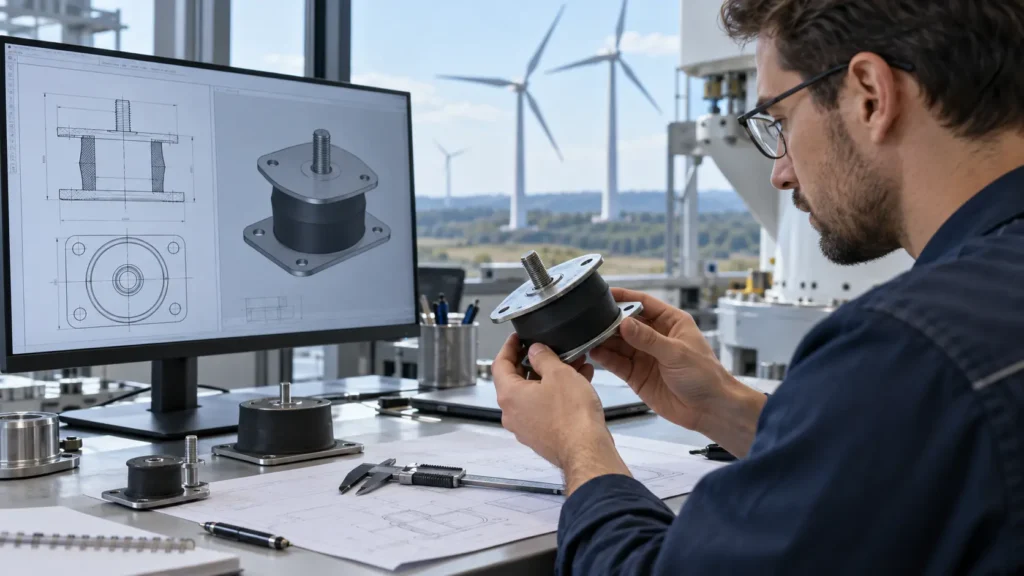
What should wind turbine equipment purchasers consider when selecting a vibration isolator supplier?
When purchasing rubber vibration isolators, price and delivery time are certainly important, but for wind power equipment designed for long-term operation, it is also essential to evaluate the product’s engineering suitability.
We recommend evaluating the following aspects:
Is the product technical documentation complete?
Can the supplier provide information on materials, dimensions, load ranges, and relevant performance characteristics? For projects with specific vibration isolation objectives, can the supplier provide applicable stiffness and dynamic performance data?
Do they have custom design capabilities?
When standard products do not meet equipment requirements, can the supplier collaborate to adjust the structure based on drawings and actual operating conditions?
Does the supplier have quality control processes in place?
For rubber-to-metal components, attention must be paid to raw material control, molding processes, bonding quality, dimensional inspection, and applicable product validation.
Can the supplier support sample evaluation?
Before placing a bulk order, the product’s installation compatibility should be confirmed and necessary performance tests completed whenever possible.
Can the supplier ensure long-term, stable supply?
Wind power equipment requires long-term maintenance; therefore, product consistency, traceability of technical documentation, and the ability to ensure a continuous supply are equally important.
For B2B buyers, selecting a vibration dampener supplier is not merely about purchasing a component; it also involves assessing whether the supplier can meet technical and supply requirements throughout the equipment’s entire lifecycle.
Conclusion
Noise and vibration control in wind farms is not a problem that can be solved by a single product.
Aerodynamic noise from blades must be addressed through blade design, maintenance, and operational management; noise from gearboxes and generators requires a focus on mechanical condition; and structural vibration at equipment mounting points can be controlled through appropriate elastic isolation and damping technologies.
Truly effective solutions begin with accurate diagnosis and are validated through sound engineering design and practical testing.
For wind turbine manufacturers and operators, incorporating vibration control into the design phase helps minimize issues that may arise during later installation and maintenance.
Vista Motion specializes in rubber vibration isolation components and customized vibration control solutions. Our product range includes equipment vibration isolation mounts, flexible couplings, tapered mounts, and decoupling elements, and we provide component selection support for wind power-related equipment that meets the application requirements.
If you are looking for suitable vibration isolation components for wind power equipment, please provide equipment drawings, installation dimensions, loads, vibration frequencies, and environmental requirements.
Vista Motion can discuss the suitability of standard products or customized vibration control solutions based on your specific application requirements.
Start proper vibration control right from the equipment design phase.
Learn about Vista Motion’s vibration control products | Contact us and submit your technical requirements
Frequently Asked Questions
Why Do Wind Turbines Make Noise?
The noise from wind turbines primarily stems from aerodynamic noise generated by the interaction between the blades and the air, as well as mechanical noise produced by the gearbox, generator, bearings, and auxiliary equipment. Some mechanical vibrations also propagate through the mounting structure, creating additional noise. The primary source must be determined based on specific acoustic characteristics and operating conditions.
How can wind turbine noise be effectively reduced?
To reduce wind turbine noise, the sources of noise must first be identified. For blade noise, consider aerodynamic optimization, blade maintenance, and low-noise operating modes; for mechanical noise, inspect bearings, gearboxes, and rotating components; and for structure-borne noise, evaluate appropriate vibration isolation and damping measures.
How Far Does Wind Turbine Noise Travel?
The distance over which wind turbine noise travels is influenced by sound source intensity, wind direction, atmospheric conditions, topography, and background noise; there is no fixed distance applicable to all wind farms. For actual projects, acoustic predictions should be combined with measurements at the receiving location to determine compliance with local noise requirements.
What Causes Wind Turbine Vibration?
During operation, wind turbines are subjected to periodic excitations caused by aerodynamic loads, rotor rotation, and mechanical transmission. Abnormal vibrations may also be related to rotor imbalance, gear or bearing damage, lubrication issues, misalignment, and structural resonance. The cause should be determined by analyzing vibration spectra and operational data.
Can rubber mounts reduce wind turbine noise?
Yes, but the effectiveness depends on the source of the noise. Rubber mounts are primarily used to reduce the vibration transmitted from mechanical equipment to the supporting structure, and thus may reduce the corresponding structure-borne noise. They cannot directly eliminate aerodynamic noise from the blades and require proper matching of loads, stiffness, and vibration frequencies.
How to Reduce Wind Turbine Gearbox Vibration?
First, inspect the gears, bearings, lubrication condition, alignment, and relevant vibration data. For applicable drive trains, you can also evaluate the dynamic characteristics of the couplings and the vibration transmission paths. Any design adjustments involving the gearbox’s primary supports or drive train must undergo technical validation approved by the turbine manufacturer.
Do trailing edge serrations on wind turbine blades really reduce noise?
Properly designed trailing-edge serrations on blades can reduce aerodynamic noise within specific frequency ranges. The actual effect depends on the blade airfoil, serration shape, wind speed, and operating conditions. Not all designs provide comprehensive noise reduction, so confirmation through aerodynamic analysis and acoustic testing is required.
How Should Anti-Vibration Mounts Be Selected for Wind Turbines?
Selection should comprehensively consider the equipment weight, actual support load, excitation frequency, target vibration isolation performance, allowable displacement, and operating environment. For rubber vibration isolators, attention must also be paid to dynamic stiffness, material aging, fatigue performance, and installation safety. Selecting based solely on rubber hardness or product shape is unreliable.
Can vibration monitoring detect mechanical faults in wind turbines in advance?
Vibration monitoring can detect changes in equipment operating conditions and provide clues for fault identification. For example, certain types of bearing and gear damage generate vibration signals with characteristic frequencies. However, abnormal vibrations do not necessarily indicate a fault; specific diagnosis still requires consideration of rotational speed, load, temperature, and other monitoring data.
How can maintenance costs and equipment vibration issues be reduced in wind farms?
It is recommended to combine preventive maintenance, condition monitoring, proper mechanical installation, and appropriate vibration control. Timely addressing of imbalance, wear, and lubrication issues helps reduce the risk of failure. For eligible auxiliary equipment, well-designed rubber vibration-isolation components can reduce the transmission of structural vibrations; however, specific maintenance benefits must be verified through operational data.
Technical Note: This document provides a general introduction to engineering technologies. Actual vibration reduction retrofits, structural modifications, and noise compliance assessments for wind turbines should be based on project-specific measurements, manufacturer requirements, applicable standards, and professional engineering evaluations.
