
If you’re looking for a vibration-damping mount that provides both vibration isolation and shock absorption while also balancing installation space and service life, this Center Bonded Mounts Guide addresses the key questions you care about: What are Center Bonded Mounts? Which equipment are they suitable for? How do you choose the right one? And what are the most common pitfalls to avoid when purchasing them?
What Are Center Bonded Mounts?
Center Bonded Mounts, also commonly referred to as center bonded rubber mounts or center bonded vibration isolators, are essentially a type of vibration-damping mount where metal and rubber are permanently bonded together.
They are typically used to isolate structures from transmitted vibrations, control impacts, and reduce noise, making them particularly suitable for mobile, portable, and industrial machinery that requires flexible support. They can be used in vibration isolation solutions for engines, cabs, fuel tanks, pumps, air conditioning units, compressors, and various types of industrial equipment.
To put it more simply, the purpose of Center Bonded Mounts is not to “raise the equipment,” but to keep vibrations where they belong. When a layer of properly designed elastic isolation is added between the vibration source and the supporting structure, the entire unit operates more smoothly, and structural noise is more easily suppressed.
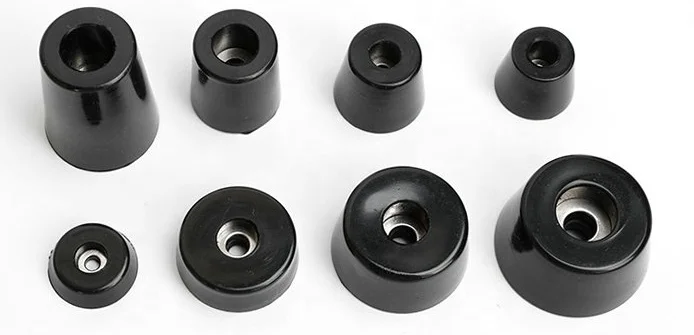
The Basic Structure of Center Bonded Mounts: Why Do They Reduce Vibration?
Structurally, Center Bonded Mounts typically consist of an inner metal component, an outer elastomer, and an outer metal support. Many products follow the “inner steel sleeve + outer rubber layer + outer structural component” design, where the rubber and metal are permanently bonded rather than loosely assembled.
This bonded design offers two practical advantages: first, more stable performance; second, a fatigue life that is generally superior to non-bonded solutions.
Why does it reduce vibration?
The logic is actually quite simple. When vibration energy is transmitted to the mount, it is not directly transferred to the bracket or frame through rigid contact. Instead, it is first absorbed and cushioned by the elastomer, then released in a more gentle manner.
Many Center Bonded Mounts are described as capable of isolating vibrations in multiple directions while simultaneously providing shock absorption and noise attenuation, which is why they are commonly used in engine mounts, compressor mounts, and vehicle-mounted equipment.
Why do many engineering applications prioritize Center Bonded Mounts?
In real-world equipment, vibrations rarely travel in just one direction. Applications such as engines, pumps, compressors, HVAC units, off-road equipment, and agricultural machinery often involve simultaneous axial loads, radial loads, rebound, impact, and structural resonance.
The value of Center Bonded Mounts lies in the fact that they do not merely provide cushioning in a single direction, but offer more balanced vibration isolation and support performance under multi-directional dynamic conditions.
Installation and Maintenance
Many integrated or permanently bonded Center Bonded Mounts emphasize simple installation, minimal space requirements, long service life, and low maintenance. When used with appropriate bolts, washers, and nuts, some products can also provide a fail-safe or captive mounting effect, meaning the system will not immediately detach completely in the event of extreme overload or elastomer failure.
This is particularly important for mobile equipment, transportation equipment, and safety-critical applications.
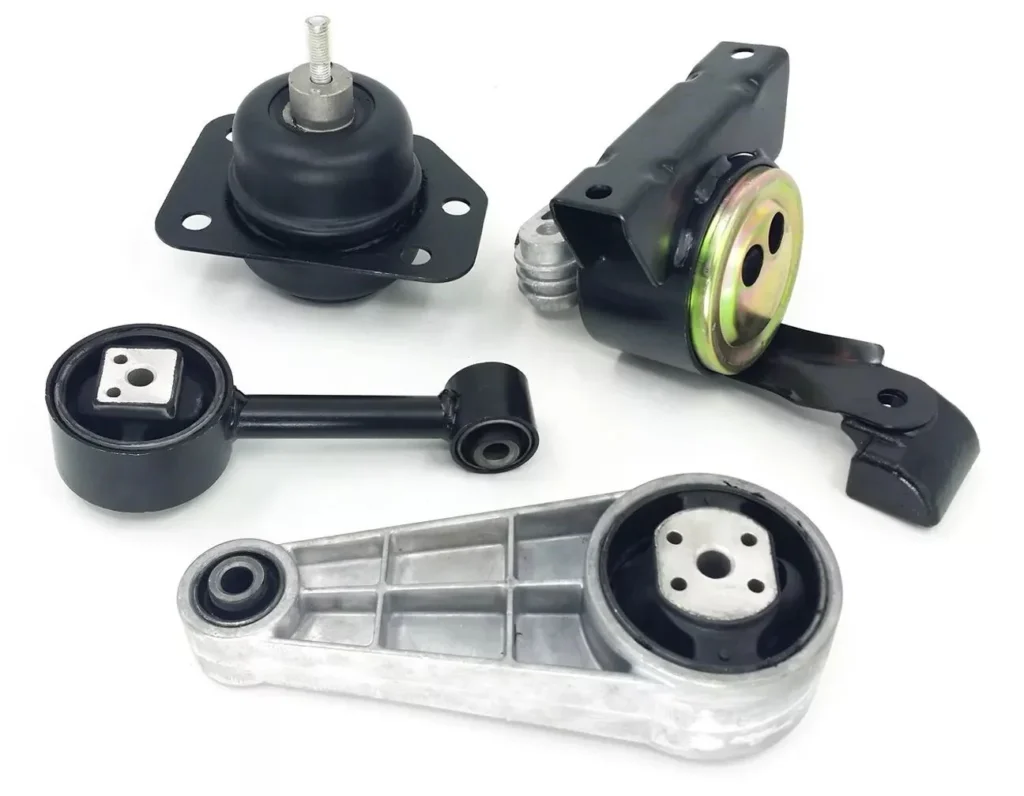
What are the common types of Center Bonded Mounts?
If you are looking for center bonded mount applications or a center bonded mount selection guide, you must first distinguish between the different types. This is because different structures are suitable for different operating conditions.
One-Piece Center Bonded Mounts
One-piece products typically emphasize ease of installation, high load capacity, and built-in rebound protection, making them suitable for vibration damping in many general industrial equipment, cabs, vehicles, and complete systems. Their advantages include a compact structure and simplified engineering.
Two-Piece Center Bonded Mounts
Two-piece products are more commonly used in heavy-duty, highly dynamic, and multi-directional load environments, such as trucks, heavy-duty vehicles, compressors, generators, and HVAC equipment.
Public literature typically describes them as providing a balance of stability and elasticity under multidirectional dynamic forces, while offering better fail-safe protection when installed with appropriate washers.
Three-Piece Center Bonded Mounts
The three-piece configuration is often used in mixed-load scenarios, such as agricultural machinery, construction equipment, road vehicles, and general industrial equipment. Some suppliers emphasize that it is easier to install and, in certain designs, offers lower radial stiffness. This solution is common for projects requiring a balance between vibration damping and structural compatibility.
For Which Applications Are Center Bonded Mounts Suitable?
If your equipment falls into any of the following categories, Center Bonded Mounts are often worth prioritizing:
Engine and powertrain mounts
Vibration isolation for cabs, engine compartments, and operator platforms
Pumps, compressors, air conditioning units, and HVAC equipment
Fuel tanks, portable equipment, and transport vehicles
Agricultural machinery, off-road equipment, industrial machinery, and vehicle-mounted equipment
A recurring challenge across these applications is that equipment requires support without being dragged down by rigid connections that amplify vibrations throughout the entire machine. Center Bonded Mounts exist to strike a balance between “supporting the load” and “blocking vibration transmission.”
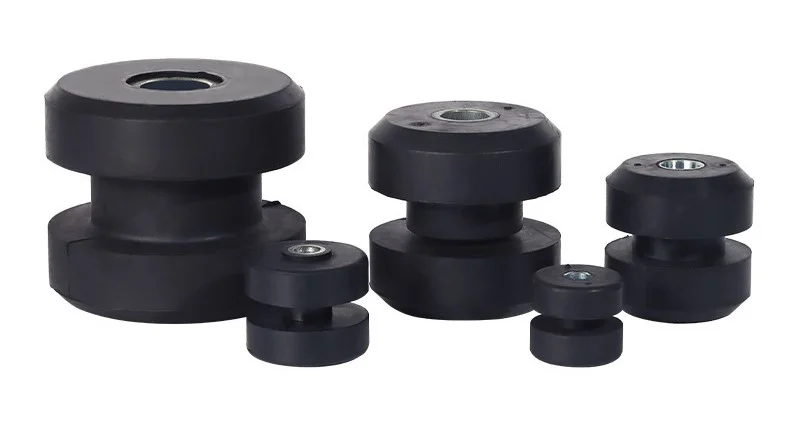
How to Select the Right Center Bonded Mounts?
This section is the most critical part of the entire article. Many buyers end up making the wrong choice not because they purchased a poor-quality product, but because they bought one that is unsuitable for their specific operating conditions.
Look at the load capacity, not just the dimensions
Even though they’re all called Center Bonded Mounts, the load ranges can vary significantly across different series. Some are suitable for moderate loads, while others are designed for heavier loads. You can’t just compare dimensions; you must factor in static, dynamic, and impact loads.
Some industrial series specify axial load ranges, radial load ranges, and corresponding frequency ranges—these are the foundational data for selection.
Consider the Direction of Forces
Many issues encountered in engineering applications stem not from insufficient load capacity, but from misjudging the direction of forces. Multi-directional dynamic forces are particularly common in compressors, generators, heavy-duty vehicles, and HVAC systems.
Two-piece Center Bonded Mounts are often recommended for these multi-directional dynamic load scenarios precisely because they offer a better balance between stability and elasticity.
Consider the environmental medium and rubber material
Across different supply chains, common elastomers for Center Bonded Mounts include natural rubber, neoprene, and nitrile rubber. Different hardness levels and materials correspond to varying requirements for oil resistance, fuel resistance, solvent resistance, and weather resistance.
Simply put, if the environment is unsuitable, even the best structure will age prematurely.
Consider Installation Methods and Fail-Safe Design
Many people buying mounts only ask, “Can it be installed?” but fail to ask, “What happens under extreme operating conditions after installation?” When used with appropriate washers, some Center Bonded Mounts can provide fail-safe or captive protection. This detail is particularly critical in mobile equipment, off-road equipment, and applications involving impact loads.
Focus on the goal, not just the price
What you’re really buying isn’t just a rubber part—it’s lower structural noise, smoother operation, fewer loose fasteners, and a longer equipment lifespan. If you focus solely on the unit price, you’ll likely end up paying the price difference in repairs, downtime, and replacement parts.
What is the difference between Center Bonded Mounts and other anti-vibration mounts?
Many buyers lump Center Bonded Mounts, sandwich mounts, conical mounts, and standard rubber mounts together when requesting quotes. While they all appear to be “vibration mounts,” their design principles differ.
If you need a solution that is structurally compact, provides multi-directional vibration isolation, and is suitable for mobile equipment and complex dynamic operating conditions, Center Bonded Mounts typically offer a distinct advantage. They are particularly well-suited for equipment requiring flexible suspension.
In contrast, other mount types may be more suited for unidirectional compression, high-load rigid support, or very specific installation constraints.
In publicly available industrial literature, the keywords repeatedly emphasized for Center Bonded Mounts are flexible suspension, all-direction isolation, shock control, and noise attenuation.
In other words, if your equipment operates under simple conditions, many mounts will suffice; however, if your equipment moves, experiences impacts, rebounds, or undergoes multidirectional vibration, you should give Center Bonded Mounts serious consideration.
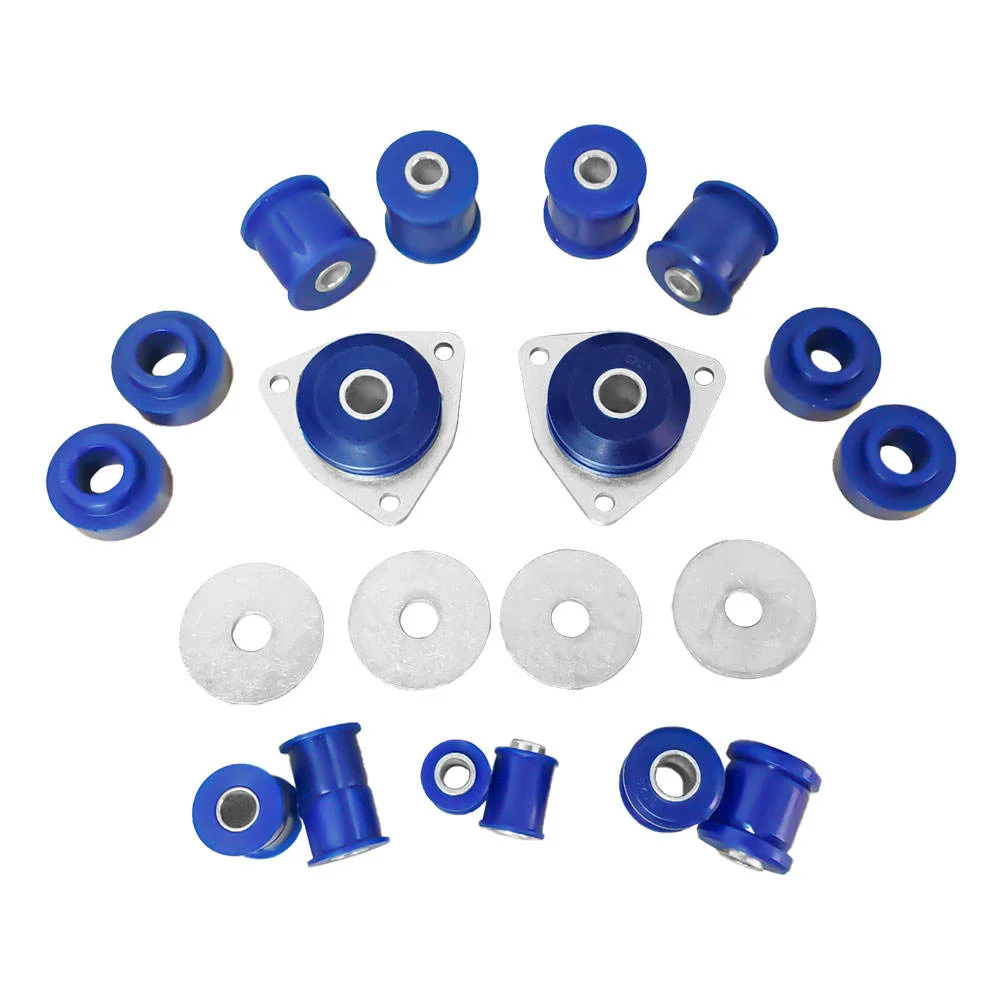
The 5 Most Easily Overlooked Details When Purchasing Center Bonded Mounts
- Providing only dimensions, not load ratings.
- Providing only static weight, not operating conditions.
- Mentioning only that it’s “oil-filled” without specifying the specific medium or temperature.
- Asking only about price, without inquiring about service life or failure modes.
- Purchasing only standard parts without confirming whether custom center bonded mounts are needed.
Especially regarding the fifth point, many projects are not suitable for direct replacement with off-the-shelf, generic specifications. Installation space, frequency range, bolt standards, metal surface treatment, rubber hardness, environmental media, and service life targets—if even one of these parameters is off, the final product’s performance may be completely different from what was expected.
Some manufacturers explicitly offer customized design, drawing support, and engineering analysis services, indicating that this industry is inherently more complex than simply “ordering from a catalog.”
When Should You Consider Custom Center-Bonded Mounts?
When you encounter the following situations, stop trying to force a standard part to fit:
- Very limited installation space
- Unusual load and frequency requirements
- Exposure to oil, fuel, solvents, or harsh outdoor environments
- Requirements for enhanced springback control or fail-safe design
- Compatibility with imperial or metric fasteners is required
- Requires coordinated design with the entire assembly’s bracket, housing, and baseplate
Some suppliers explicitly state that Center Bonded Mounts can be tailored through engineering analysis, CAD data, and custom design—a critical consideration for OEM projects. After all, your ultimate goal is the performance of the entire system, not just a single part that “looks similar.”
Summary
If we were to condense this Center Bonded Mounts Guide into a single sentence, it would be:
Center Bonded Mounts are suitable for applications that require both equipment support and control of vibration, shock, and structural noise.
Their value lies not only in vibration reduction but also in ensuring smoother equipment operation, greater structural durability, and easier maintenance. For engines, compressors, pumps, HVAC units, cabs, off-road equipment, and industrial machinery, selecting the right Center Bonded Mount often has a greater impact on overall system performance than you might imagine.
If your project is evaluating center-bonded rubber mounts, rubber vibration isolators, or custom center-bonded mounts, the most effective approach is not to start by haggling over price, but to clearly specify the load, direction, frequency, environment, and installation constraints. This allows Vista Motion to quickly determine whether standard specifications are more suitable, or if custom development would save time and reduce future costs.
For OEMs, equipment manufacturers, and engineering procurement teams, truly effective collaboration is never just a matter of “you send a part number, and I provide a quote.” Instead, it involves thoroughly discussing the application scenario, the vibration reduction objectives, and the required service life and reliability. The result is not just a quote, but a more robust solution.
If you have any needs, please feel free to contact Vista Motion.
FAQ
Can Center Bonded Mounts provide vibration isolation in multiple directions?
Many industry resources describe Center Bonded Mounts as capable of providing vibration isolation, noise reduction, and shock control in multi-directional operating conditions, which is a key reason they are suitable for complex dynamic applications.
Are Center Bonded Mounts suitable for engines and compressors?
Yes. Engines, compressors, pumps, and HVAC equipment are among the most common applications for Center Bonded Mounts, as these devices typically experience both continuous vibration and start-up, shutdown, and shock conditions.
What is the difference between Center Bonded Mounts and standard rubber mounts?
The key differences lie in the bonded construction and adaptability to operating conditions. Center Bonded Mounts emphasize flexible suspension, multidirectional vibration isolation, shock control, and more stable long-term performance, making them particularly suitable for mobile equipment and complex dynamic loads.
How should materials for Center Bonded Mounts be selected?
Common elastomers include natural rubber, neoprene, and nitrile rubber. Material selection should be based on factors such as exposure to oils, fuels, solvents, temperature, outdoor environments, and service life goals—price alone should not be the deciding factor.
Is it necessary to use washers when installing Center Bonded Mounts?
While operating conditions vary, many products explicitly recommend using washers in appropriate designs to achieve better fail-safe or captive protection capabilities. This is particularly important in shock and overload scenarios.
When should custom center-bonded mounts be selected?
Custom Center Bonded Mounts should be considered when standard specifications cannot simultaneously meet requirements for load, frequency, installation space, environmental media, bolt standards, or service life targets. This is particularly true for OEM projects.
What information should be prepared before purchasing center-bonded mounts?
At a minimum, prepare the following: equipment weight, static and dynamic loads, force direction, operating frequency, installation space, environmental media, temperature range, and service life goals. The more complete the information, the more accurate the selection will be, and the fewer rework issues will arise later. Based on publicly available industry information, many suppliers already incorporate application analysis and engineering matching into their selection process.
