
This article will focus on equipment durability to explain how rubber buffers work, what problems they can solve, why some buffers fail prematurely, and how to select the appropriate materials, hardness, and design for industrial machinery.
What Are Rubber Buffers?
Rubber buffers can be made of pure rubber or feature a rubber-to-metal composite structure. In the latter case, the rubber is bonded to threaded rods, steel plates, bushings, or other metal inserts through vulcanization and adhesive bonding processes; such products are typically referred to as rubber-to-metal bonded buffers.
Common configurations include:
- Cylindrical buffers;
- Conical buffers;
- Waist-shaped shock absorbers;
- Buffers with internal threads;
- Shock absorbers with external threads;
- Double-headed stud shock absorbers;
- Rubber shock absorbers with base plates;
- Buffer pads with center holes;
- Custom-shaped rubber-to-metal bonded components.
Differences in structure go beyond mere appearance. Shape, rubber volume, load-bearing area, mounting method, and deformation space all affect the buffer’s stiffness, load-carrying capacity, and load-displacement curve.
Therefore, when selecting rubber buffers for industrial equipment, one cannot rely solely on diameter, length, and thread specifications for matching.
How do rubber buffers absorb shock and vibration?
Rubber is a material that exhibits both elastic and viscoelastic properties. When an external force acts on a rubber buffer, the rubber undergoes compression, shear, tension, or a combination of these deformations.
During the deformation and recovery process, part of the mechanical energy is temporarily stored in the material, while another part is converted into heat through the material’s internal hysteresis effect. In this way, the impact energy that would otherwise be directly transmitted to the frame, bearings, welded structures, or equipment foundation is partially dissipated, reducing the transfer of energy to adjacent components or the foundation.
You can think of it as a “controlled deformation zone” within the equipment structure.
If two steel components collide directly, the deceleration process is very brief, and the instantaneous load can be extremely high. With the addition of a rubber buffer, the components decelerate over a longer distance and time, thereby reducing the peak loads acting on the structure.
However, this does not mean that the softer the rubber, the better.
If the buffer is too soft, the equipment may experience excessive displacement, or even suffer another hard impact after the rubber has been fully compressed; if the buffer is too hard, its own deformation will be insufficient, and the impact transmitted to the equipment structure may still be significant.
A truly effective buffer design requires striking a balance between the following factors:
- maximum load;
- impact energy;
- allowable displacement;
- Operating frequency;
- rubber stiffness;
- Damping characteristics;
- Installation space;
- Service life.
How Do Rubber Buffers Improve the Durability of Industrial Equipment?
Reducing Transient Impact Loads
Many industrial machines experience impact forces during startup, shutdown, turning, braking, or at the end of their travel.
For example:
- A conveyor reaching the end of its stroke;
- A mechanical door or access panel closes;
- Moving parts striking limit switches;
- construction machinery traveling over uneven terrain;
- Stamping or assembly equipment performs reciprocating motion;
- Material falls into a hopper or conveying device;
- A vehicle’s suspension reaches its compression limit.
Without shock-absorbing elements, the impact force is rapidly transmitted to the brackets, bearing housings, welds, and fasteners.
When suitable shock-absorbing rubber buffers are installed, the rubber deforms first, prolonging the impact process and reducing peak loads. This alleviates localized stress concentrations and reduces the risk of plastic deformation, cracking, or fracture in the structure.
Rubber buffers are particularly well-suited for end-of-stroke protection. According to industrial product data, stop buffers can absorb hard impacts generated during equipment acceleration and braking, protecting bearing housings, end caps, and moving parts.
Reducing Metal Fatigue Caused by Cyclic Loads
A single minor vibration typically does not immediately damage equipment, but cyclic loads gradually deplete the material’s fatigue life.
During long-term operation, even when stress levels are below the material’s static strength, repeatedly varying loads can still lead to:
- Cracks in the heat-affected zone of welds;
- Fatigue fractures in thin-plate brackets;
- Gradual enlargement of connection holes;
- Microcracks in metal edges;
- Loosening of bearing seats and mounting surfaces;
- Pipe connections are subjected to continuous tension.
Vibration-damping rubber buffers reduce the transmission of vibrations to surrounding structures, thereby decreasing the amplitude of cyclic stresses on critical components.
It is important to note that rubber buffers cannot correct severe imbalances in the equipment itself, shaft system eccentricity, or installation errors. If the vibration source stems from a faulty bearing, misalignment, or structural resonance, the root cause must be addressed first, and rubber buffers should then be used to control residual vibration.
Using buffers merely to mask faults typically does not ensure long-term durability.
Avoid Direct Metal-to-Metal Contact
In structures without elastic isolation, repeated collisions between two metal components can cause:
- Surface indentations;
- Coating damage;
- Burrs and flaking;
- Wear on contact surfaces;
- Metal noise;
- Localized deformation;
- Failure of the corrosion protection layer.
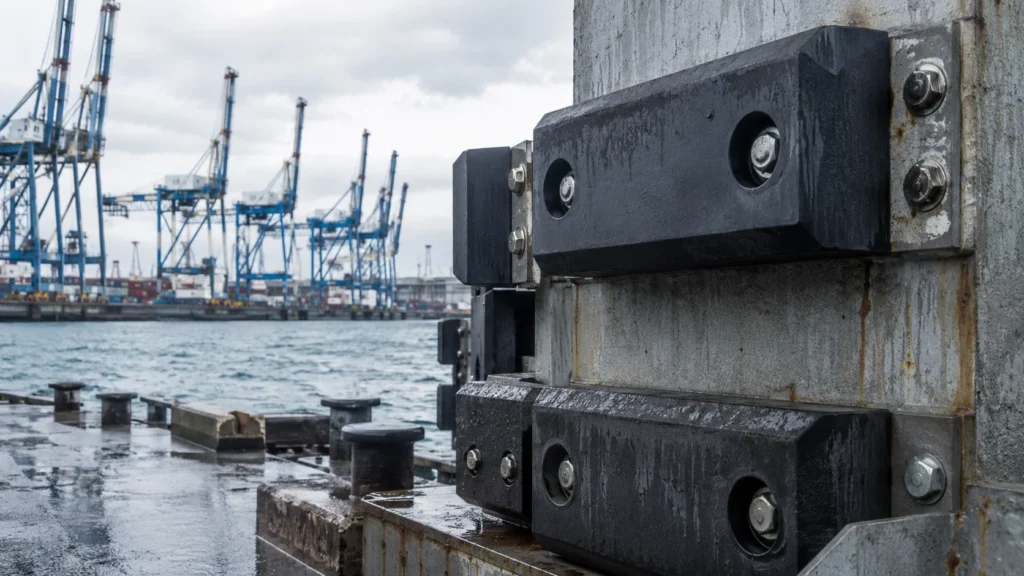
Rubber buffers create a flexible contact surface between two rigid components, allowing impacts to occur first in the deformable rubber area.
This not only reduces impact but also protects powder-coated, electroplated, painted, and machined surfaces. This protection is particularly important for doors, covers, guide rails, conveyor mechanisms, and limit switches that require frequent opening and closing.
From a maintenance perspective, replacing a removable rubber buffer is typically easier than repairing deformed frames, welded structures, or precision guideways.
Protecting Bolts, Welds, and Joints
Vibration often affects connection points first, rather than the base material.
Common issues include:
- Decreased bolt preload;
- Loosening of threaded connections;
- Wear at riveted joints;
- Cracks at weld edges;
- Deformation of bracket mounting holes;
- Detachment of pipe and cable mounting points.
When an industrial rubber buffer is installed between a vibration source and a support structure, it reduces the transmission of dynamic loads to the connection points.
This does not mean that anti-loosening measures are unnecessary after installing rubber buffers. For critical equipment, appropriate bolt grades, preload, anti-loosening mechanisms, and regular inspection intervals should still be selected based on operating conditions.
The function of the buffer is to reduce dynamic disturbances on the connection components, not to replace proper mechanical connection design.
Reducing Additional Loads on Bearings and Transmission Components
Shocks and vibrations may be transmitted through the frame to:
- bearings;
- couplings;
- Gears;
- Guide rails;
- lead screws;
- Pulleys;
- Gear reducers;
- Motor shaft.
These components are typically sensitive to alignment accuracy, clearance, and load distribution.
If the equipment base vibrates continuously, the bearings may be subjected to additional alternating loads; if the structure shifts during impact, the alignment of the couplings and shaft systems may also be affected.
Rubber buffers for industrial machinery can reduce vibration coupling between the equipment and the supporting structure, helping mechanical systems maintain a more stable operating state.
However, the buffers themselves can also generate displacement. Therefore, in precision transmission equipment, both the vibration-damping effect and the allowable displacement must be evaluated simultaneously; one cannot simply pursue lower stiffness.
Protecting Sensors and Precision Components
Modern industrial equipment contains a large number of:
- proximity sensors;
- encoders;
- measuring instruments;
- vision systems;
- control modules;
- Electronic connectors;
- Precision positioning mechanisms.
These components may not be immediately damaged by a single impact, but prolonged vibration can lead to loose connections, signal drift, solder joint failure, or measurement errors.
Proper placement of rubber shock absorbers can reduce the transmission of high-frequency vibrations and structural impacts to sensitive components. Rubber cushioning elements are also used in automated equipment and measurement systems to protect sensors and moving components.
However, for high-precision measurement equipment, the design should be tailored to the actual vibration frequencies. Incorrect buffer stiffness may cause the system’s natural frequency to approach the excitation frequency, thereby amplifying vibrations.
Reducing Abnormal Noise and the Maintenance Issues It Causes
Noise in industrial equipment often stems from:
- metal-on-metal contact;
- Structural vibration;
- Panel resonance;
- Loose components;
- Mechanical friction;
- Impact transmission.
Rubber buffers can reduce some structural noise by minimizing rigid contact and vibration transmission.
Noise reduction itself does not necessarily directly extend equipment life, but it typically indicates that impact and vibration levels are under control. At the same time, lower background noise makes it easier for maintenance personnel to identify unusual bearing noises, friction sounds, and other early signs of failure.
It is important to note objectively that if noise stems from gear damage, insufficient lubrication, or airflow issues, installing rubber buffers will not resolve the underlying problem.
Reducing Downtime Frequency and Total Lifecycle Costs
When purchasing rubber buffers, comparing only the unit price can lead to overlooking the true cost of ownership.
The total life-cycle cost of industrial equipment also includes:
- installation costs;
- Inspection costs;
- Replacement frequency;
- Maintenance labor hours;
- Unplanned downtime;
- Spare parts inventory;
- Quality complaints;
- On-site after-sales service;
- Consequential damage to surrounding components.
A low-cost buffer made from inappropriate materials may quickly suffer permanent deformation, rubber cracking, or separation of the rubber from the metal. Not only does this require frequent replacement, but it may also cause the buffer to lose its cushioning function, exposing the equipment to hard impacts once again.
Therefore, the economic value of rubber buffers lies not in “buying the cheapest rubber parts,” but in using the right materials and designs to minimize higher-cost equipment damage and downtime.
Which industrial applications are suitable for rubber buffers?
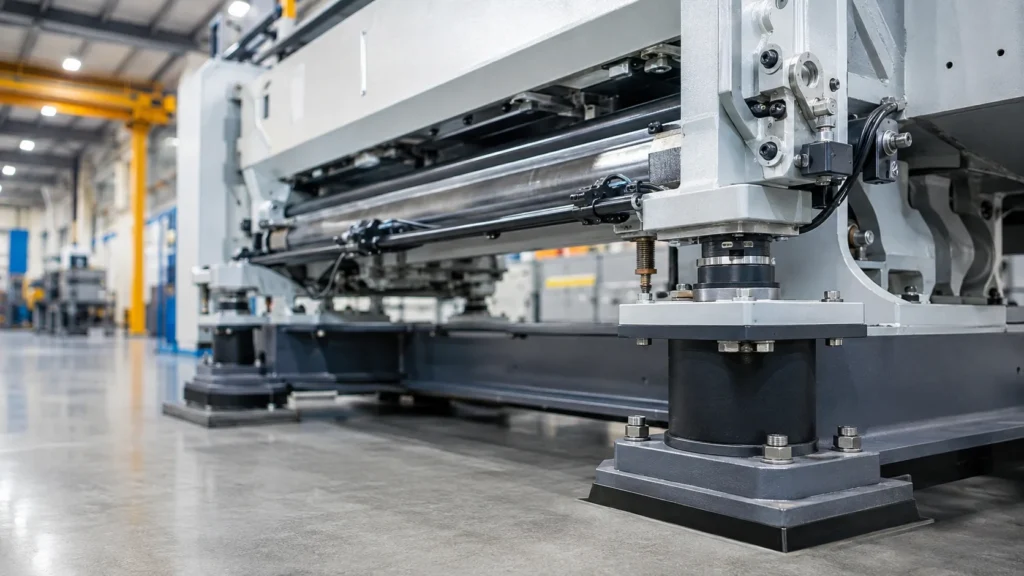
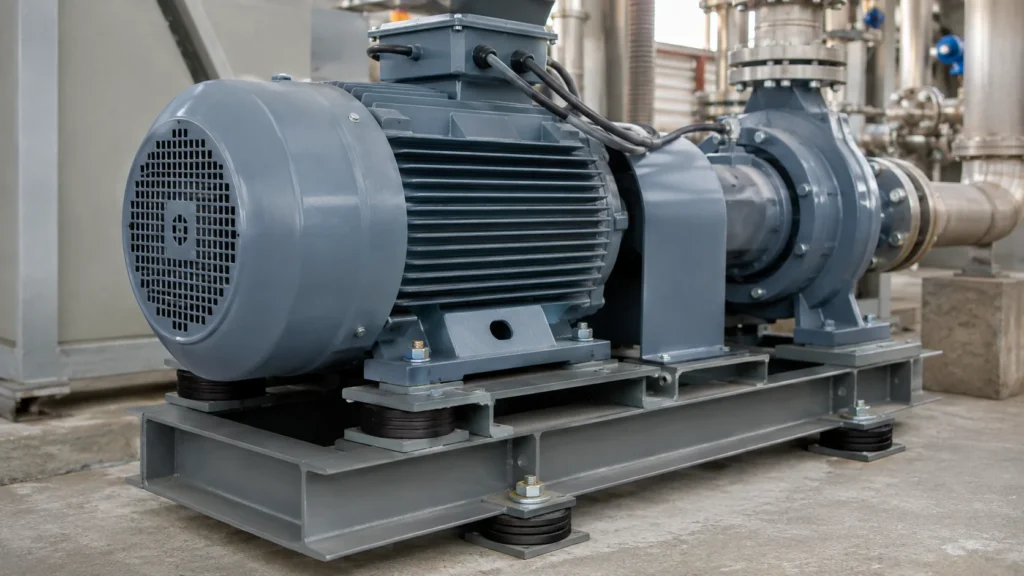
Motors, Pumps, and Compressors
Rotating equipment generates periodic vibrations. If these vibrations are transmitted directly to the frame, piping, or the ground, they can cause loose connections, structural noise, and vibrations in surrounding equipment.
Rubber buffers can be used for:
- Motor bases;
- Water pump supports;
- Air compressor frames;
- Fan equipment;
- Generator sets;
- HVAC equipment.
When selecting equipment, it is necessary to confirm the equipment’s weight, rotational speed, excitation frequency, center of gravity, and the actual load at each mounting point.
Automation Equipment and Conveyor Systems
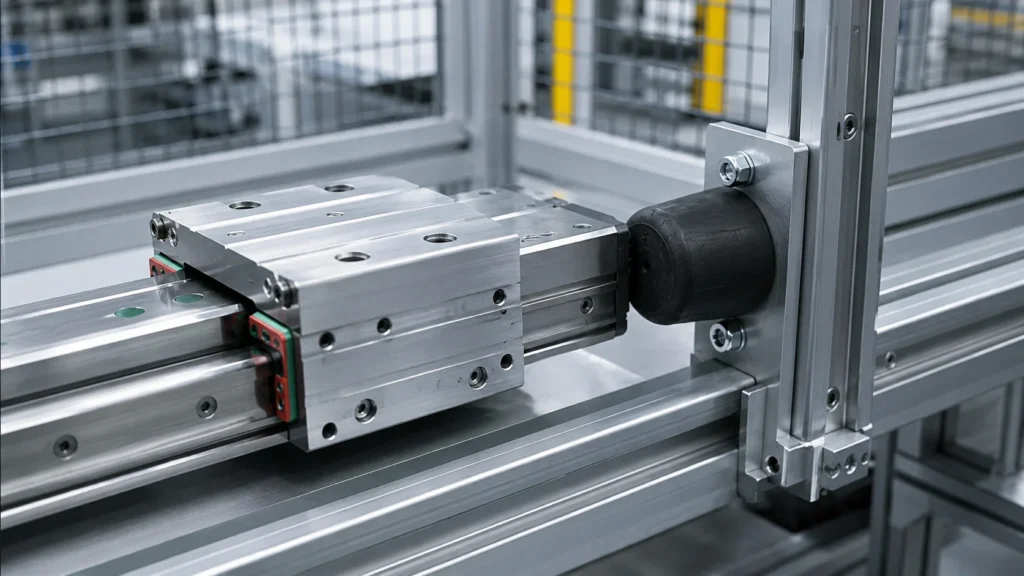
Automated production lines involve a large number of start-stop, reciprocating, and limit-switch movements.
Common installation locations include:
- end of the cylinder stroke;
- limit positions of sliding tables;
- Conveyor line stop mechanisms;
- mechanical doors and guards;
- assembly fixtures;
- Robot peripherals;
- Packaging machinery.
In these applications, shock absorbers must not only withstand impacts but may also require high repeatability of operation. If permanent deformation is excessive, the limit positions may shift.
Construction and Agricultural Machinery
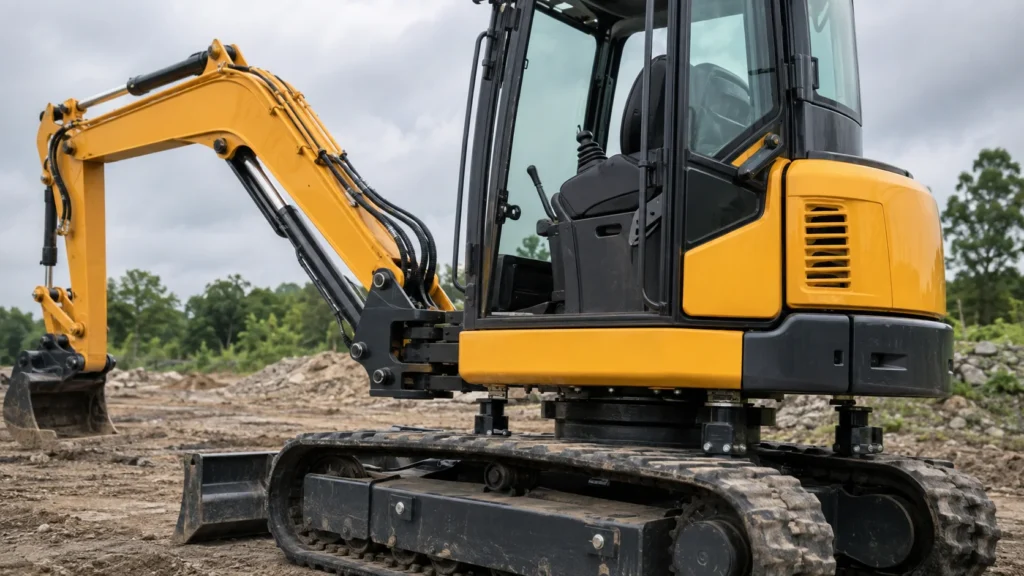
Construction and agricultural equipment typically face:
- Irregular impacts;
- mud, water, and dust;
- Outdoor exposure to sunlight;
- Fluid contamination;
- Temperature fluctuations;
- Superimposed high- and low-frequency loads.
Rubber buffers can be used for cab support, engine mounting, chassis connections, suspension stops, and equipment attachments.
For such applications, ordinary indoor-grade rubber materials alone are not sufficient. Special emphasis should be placed on evaluating oil resistance, weather resistance, ozone resistance, fatigue life, and metal corrosion protection.
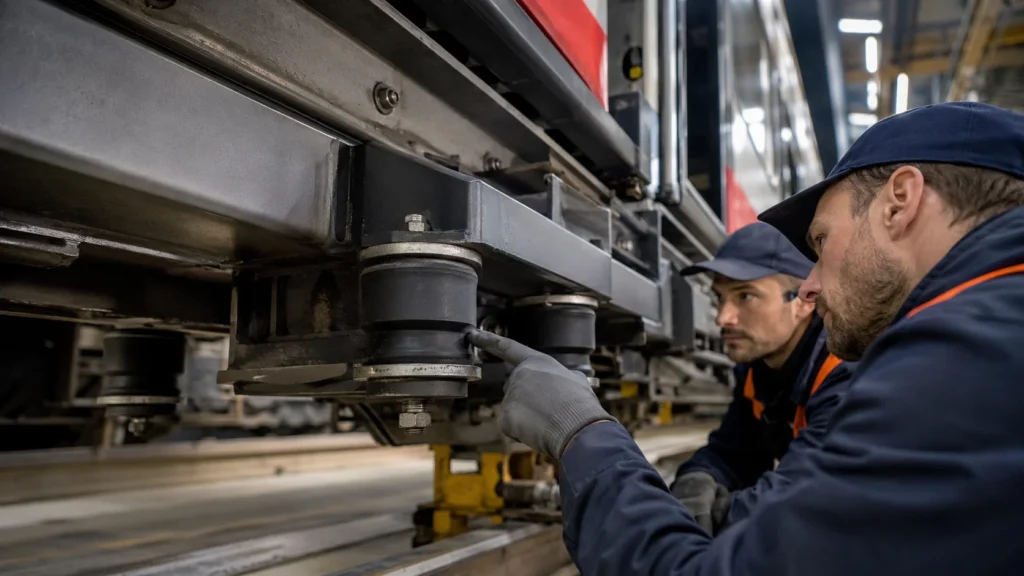
Rail Transit and Vehicle Systems
Rail vehicles and other transportation equipment are continuously subjected to operational vibrations, track impacts, braking loads, and environmental changes.
Rubber-to-metal bonded buffers can be used for:
- equipment support;
- structural connections;
- Door systems;
- auxiliary equipment;
- Limit devices;
- Vibration-damping mounts.
When safety or critical load-bearing functions are involved, products must not rely solely on dimensional inspections; they must also undergo material, static load, fatigue, and durability testing in accordance with project requirements.
Marine and Outdoor Equipment
Marine, port, and outdoor equipment may be exposed to:
- salt spray;
- humid air;
- ultraviolet (UV) radiation;
- Ozone;
- oil contamination;
- Temperature cycling.
In such cases, in addition to selecting an appropriate rubber material, the material, plating, coating, or other corrosion-resistant treatments applied to the metal inserts should also be inspected.
If the metal components corrode first, the entire buffer may lose its ability to provide a reliable mounting, even if the rubber body remains intact.
How to Select the Right Rubber Buffer?
Step 1: Identify the specific problem to be solved
Before requesting a quote, first determine what type of problem you are facing:
- Instantaneous impact;
- Continuous vibration;
- End-of-stroke impact;
- Metal-to-metal contact noise;
- Vibration at the equipment base;
- Limit switches for moving structures;
- Protection of sensitive components;
- Simultaneous presence of multiple loads.
Simply stating that “the equipment vibrates significantly” is usually not sufficient for selecting the right solution.
Suppliers need to know where the vibration originates, where it is transmitted, and which components need to be protected.
Step 2: Identify Loads and Force Directions
Rubber behaves differently under compression, shear, tensile, and torsional loads.
Generally, industrial buffers are more commonly designed for compression or shear loads. Prolonged tension on rubber or at rubber-to-metal bonded interfaces may impose higher requirements on fatigue life.
The information required includes:
- Static loads;
- Maximum dynamic load;
- Load per mounting point;
- Impact direction;
- Whether there is an off-center load;
- Whether torsion is present;
- Number of impacts or operating cycles;
- Maximum allowable displacement.
Even if the equipment is supported by four shock absorbers, it cannot be simply assumed that each shock absorber bears one-fourth of the total weight. The equipment’s center of gravity, base stiffness, and installation errors can all lead to uneven load distribution.
Step 3: Do not select a model based solely on Shore A hardness
Shore A hardness is a common measure of rubber hardness, but it does not, on its own, represent a buffer’s load-bearing capacity or durability.
Even if two products have the same Shore A hardness, they may still perform differently due to the following factors:
- Rubber compound;
- Product diameter;
- Rubber height;
- Effective load-bearing area;
- Whether there is a hole in the center;
- Is the shape conical?
- Metal plate dimensions;
- Rubber vulcanization state;
- Load direction.
Harder rubber typically has higher stiffness, but it does not necessarily provide better shock absorption or a longer service life.
The correct approach is to make a judgment based on a combination of hardness, structure, and the actual load-displacement curve.
Step 4: Select Rubber Materials Based on the Environment
Different rubber materials are suitable for different operating environments.
| Rubber Materials | Typical Advantages | Points to Consider | Common Applications |
| NR (Natural Rubber) | Good elasticity and dynamic performance | Typically limited resistance to oil, ozone, and weathering | General mechanical vibration damping, indoor dynamic cushioning |
| NBR Nitrile Rubber | Good resistance to a wide range of industrial oils and greases | Outdoor weather resistance requires evaluation based on the specific formulation | Oily environments, mechanical equipment, and areas surrounding hydraulic systems |
| EPDM (Ethylene Propylene Diene Monomer) rubber | Good resistance to ozone, UV radiation, aging, and outdoor environments | Generally not suitable for mineral oils and hydrocarbon media | Outdoor equipment, aquatic environments, construction, and renewable energy equipment |
| Silicone Rubber | Can withstand a wide temperature range and offers good resistance to ozone and weathering | Tear resistance, abrasion resistance, and dynamic load-bearing capacity must be confirmed based on the formulation | Equipment operating at high or low temperatures; clean or special environments |
| Specialty-formulated rubber | Can be developed for heat resistance, chemical resistance, flame retardancy, or specific dynamic performance | Cost, processability, and lead times may increase | Special industrial projects |
EPDM is generally suitable for environments requiring weather resistance, ozone resistance, and resistance to outdoor aging, while NBR is better suited for applications involving contact with industrial oils and greases. Material compatibility must be verified based on the actual media, temperature, and formulation; it cannot be determined solely by the rubber designation.
Step 5: Evaluate Compression Set
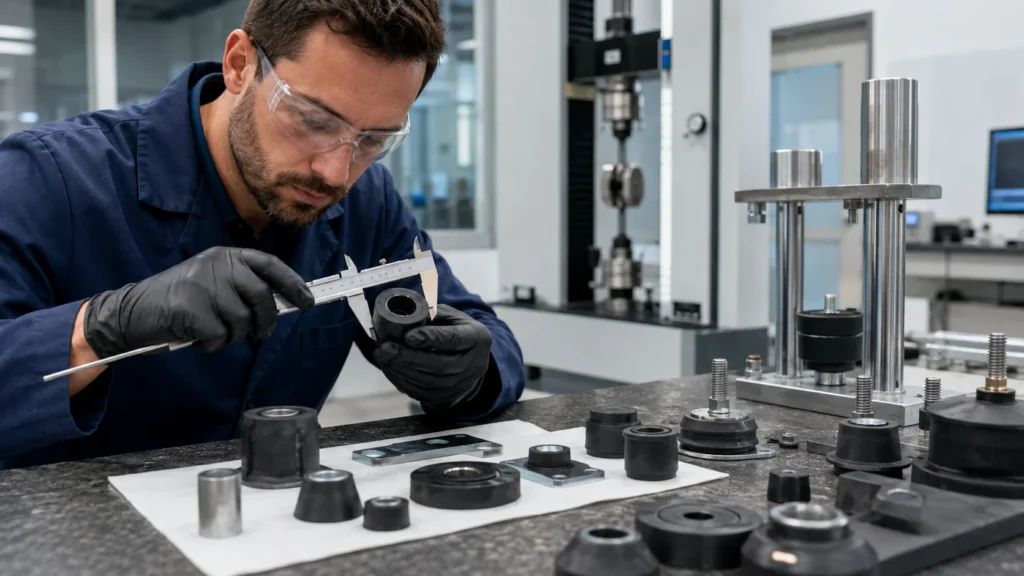
After being subjected to prolonged compression, rubber may not fully recover to its original height; this phenomenon is commonly referred to as compression set.
If compression set is excessive, the buffer may experience:
- a reduction in height;
- a decrease in preload;
- a shift in the equipment’s position;
- Reduced cushioning stroke;
- Changes in load distribution;
- Recurrence of hard impacts.
ASTM D395 is specifically designed to evaluate the ability of rubber materials to maintain their elastic properties after prolonged compressive stress and is explicitly applicable to applications such as mechanical mounting components, vibration dampers, and seals. The standard also notes that static compression testing cannot fully replace dynamic fatigue evaluation.
Therefore, for industrial rubber buffers subjected to long-term loading and sustained compression, compression set is often a more critical concern than initial hardness.
Step 6: Inspect the Quality of the Rubber-to-Metal Bond
In rubber-to-metal bonded buffers, the rubber body, metal components, and bonded interface collectively determine the product’s service life.
Potential failures include:
- Rubber delamination starting from the metal edges;
- Water ingress at the bonded interface;
- Corrosion of the metal surface;
- Internal tearing of the rubber;
- Loosening of studs;
- Deformation of the metal plate;
- Peeling of the surface treatment layer.
Reliable rubber-to-metal bonding typically requires control of:
- Cleanliness of metal parts;
- Surface roughness;
- Pre-treatment process;
- Adhesive system;
- curing temperature and time;
- Mold pressure;
- Rubber flow;
- Edge structure;
- Subsequent corrosion protection treatment.
A visually intact product does not necessarily indicate that the bonded interface has sufficient long-term durability.
Step 7: Verify Installation Clearance and Deformation Allowance
Rubber buffers must have sufficient space for deformation.
If the installation space is too small, the following may occur:
- Restriction of the rubber’s lateral expansion;
- The metal structure cutting into the rubber edges;
- The buffer being excessively compressed;
- Interference between the studs and surrounding structures;
- The load is not transmitted through the design center.
During the product design phase, the initial height, operating height, maximum compression, and limit positions should all be verified.
Avoid allowing the buffer to be fully compressed frequently during normal operation. Once the rubber loses the space to continue deforming, the structure approaches a rigid connection, and impact loads may rise rapidly.
Summary
Rubber buffers may appear to be merely small rubber components in a piece of equipment, but they serve the functions of shock management, vibration control, and structural protection.
Properly designed and selected rubber buffers can:
- reduce transient impact loads;
- reduce the transmission of vibrations to surrounding structures;
- Prevent direct metal-to-metal contact;
- Protect bolts, welds, and fasteners;
- reduce additional loads on bearings and transmission components;
- Protect sensors and precision components;
- Reduce abnormal noise;
- Reduce maintenance and downtime costs;
- Extend the service life of the equipment and surrounding components.
However, durability is not determined solely by the “quality of the rubber.” Materials, hardness, structure, force direction, compression, operating frequency, the quality of the rubber-to-metal bond, and environmental conditions must all be evaluated together.
Vista Motion supports the development of rubber buffers, rubber-to-metal bonded components, related metal parts, and custom mechanical parts based on customer drawings, samples, and application requirements. Current business information indicates that Vista Motion is capable of providing rubber vibration damping products, rubber-to-metal composite parts, CNC-machined parts, sheet metal structural components, and related testing support.
What are rubber buffers used for?
Rubber buffers are primarily used to absorb shocks, reduce vibration, prevent direct collisions between metal components, and protect equipment structures. They are commonly found in industrial machinery, automation equipment, conveyor systems, vehicles, pumps, motors, compressors, and construction machinery.
How do rubber buffers extend the service life of equipment?
They reduce peak impact forces through elastic deformation and minimize the transmission of vibrations to bearings, mounts, welds, bolts, and other critical components. This reduces the risk of fatigue damage, loosening of connections, and wear on contact surfaces.
What is the difference between a rubber buffer and a vibration isolator?
Rubber buffers typically focus more on absorbing impacts, limiting travel, and protecting mechanical end points, while vibration isolators focus more on reducing the transmission of continuous vibrations. However, many industrial rubber components can provide both cushioning and vibration isolation functions; the actual classification depends on the structure and intended application.
What hardness should be selected for industrial rubber buffers?
Hardness must be determined in conjunction with load, dimensions, structure, installation orientation, and allowable displacement. Higher Shore A hardness typically implies greater stiffness, but does not necessarily mean better shock absorption or a longer service life; therefore, selection should not be based solely on hardness.
Which rubber material is best suited for industrial buffers?
No single material is suitable for all environments. NR is generally suitable for general dynamic vibration damping; NBR is better suited for oil-contaminated environments; EPDM is suitable for outdoor, ozone-resistant, and weather-resistant applications; and silicone rubber is suitable for a wide temperature range. The final material selection should also be confirmed based on specific formulations, media, and test results.
Can rubber buffers reduce equipment noise?
They can reduce some of the noise caused by metal-on-metal contact and structural vibrations. Rubber can isolate rigid contact points and reduce vibration transmission; however, if the noise stems from bearing damage, gear failure, or airflow issues, the underlying mechanical problems must be addressed first.
What is the service life of rubber buffers?
There is no fixed, standardized service life. Durability depends on the material, load, compression, operating cycles, temperature, lubricants, ozone, UV exposure, and installation conditions. Regular inspections for cracks, permanent deformation, corrosion, and bond failure can help determine the optimal replacement time.
What are rubber-to-metal bonded buffers?
These are composite buffer components formed by vulcanizing rubber to steel plates, studs, bushings, or other metal inserts. This structure facilitates installation and can accommodate higher loads or complex connection requirements; however, its durability is highly dependent on the quality of metal pretreatment, bonding, and vulcanization.
Why do rubber buffers experience permanent deformation?
Prolonged high compression, high temperatures, overloading, or an unsuitable material formulation can all lead to compression set. Once permanent deformation occurs, the buffer cannot fully recover its original height, and both its buffering stroke and load-bearing capacity will decrease.
What technical information is required for custom rubber buffers?
It is recommended to provide drawings, dimensions, static and dynamic loads, force direction, operating frequency, allowable displacement, temperature, contact media, installation method, and service life requirements. For critical projects, specifications regarding fatigue testing, oil resistance, ozone resistance, metal corrosion protection, and quality documentation requirements should also be provided.
Editorial and Technical Statement
This document is intended to provide general guidance on the selection and durability design of industrial rubber buffers and does not replace mechanical calculations, risk assessments, or application verification for specific equipment. Actual product materials, hardness, dimensions, and testing requirements should be determined based on customer drawings, operating parameters, and applicable standards.
