
When selecting rubber products, choosing between natural rubber (NR) and ethylene propylene diene monomer (EPDM) is one of the most common challenges faced by engineers and procurement professionals. Based on real-world engineering cases and authoritative technical data, this article provides an in-depth comparison of the core performance differences between natural rubber and EPDM to help you make accurate and safe selection decisions.
Natural Rubber vs. EPDM
To help you quickly grasp the key differences, I have summarized the core characteristics of both materials as follows:
| Comparison Dimensions | Natural Rubber (NR) | Ethylene Propylene Diene Monomer (EPDM) |
| Source | Harvested from the sap (latex) of the three-leaf rubber tree; a renewable, bio-based material | Produced through a synthetic process using ethylene and propylene; a petroleum-based synthetic rubber |
| Molecular Structure | The molecular chain contains a large number of unsaturated double bonds, making it chemically reactive | The main molecular chain has a saturated structure and is chemically stable |
| Key Advantages | Ultra-high elasticity and exceptional mechanical strength | Extremely resistant to aging, ozone, and weathering |
| Typical Applications | Tires, vibration damping mounts, springs, shoe soles | Automotive seals, outdoor building materials, wires and cables, waterproofing membranes |
| Reference Price | Relatively low (highly influenced by natural factors) | Relatively high and stable |
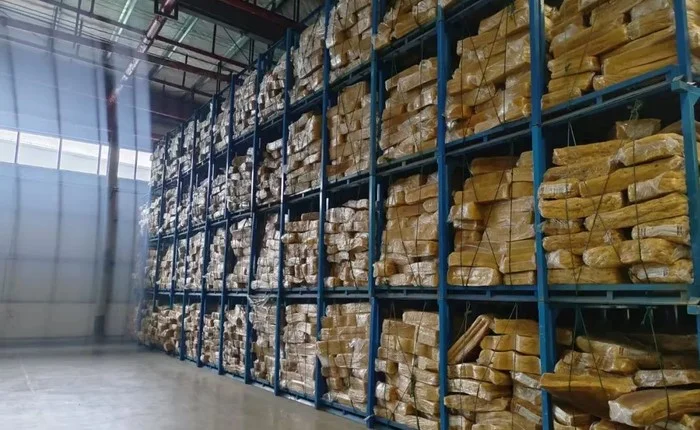
Performance Comparison of Natural Rubber and EPDM
Next, we will conduct a detailed comparison across seven key dimensions, illustrating the differences with specific data and engineering case studies.
Ozone Resistance and Weather Resistance
This is the most significant difference between the two.
Due to its saturated main chain structure, EPDM is known as “crack-free” rubber. It exhibits exceptional resistance to ozone, UV radiation, and weathering; even after prolonged exposure to the elements outdoors, it is unlikely to crack or harden.
The double bonds in the molecular chains of natural rubber are highly susceptible to attack and breakage by ozone. Once exposed to an ozone-rich environment (such as parking lots or industrial zones), dense cracks will appear within a very short time.
Physical and Mechanical Properties
In applications requiring high tensile strength, tear resistance, and frequent dynamic deformation, natural rubber is the undisputed champion.
| Performance Indicators | Natural Rubber (NR) | Ethylene Propylene Diene Monomer (EPDM) | Data Interpretation |
| Tensile Strength (MPa) | Approx. 3000 psi (20.7 MPa) | Approx. 3,000 psi (20.7 MPa) | Under ideal formulations, the ultimate tensile strengths of both are similar. |
| Tear Strength | Excellent | Fair to Good | NR’s tear resistance is significantly superior to EPDM’s; it is not easily punctured by sharp objects or prone to crack propagation. |
| Abrasion Resistance | Excellent | Good | NR exhibits outstanding abrasion resistance, approximately 30–45% higher than that of EPDM. |
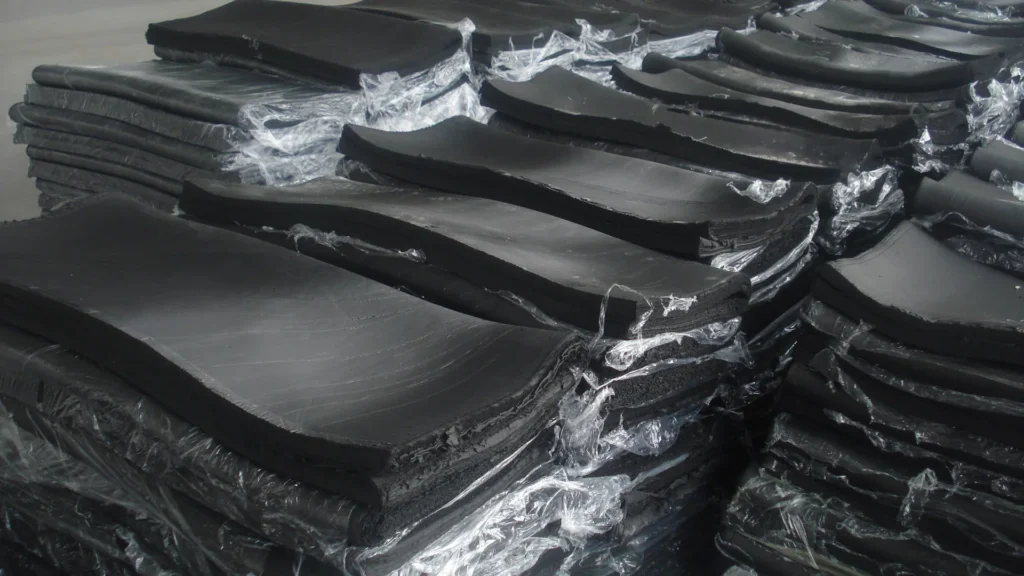
Elasticity and Shock Absorption
Natural rubber is renowned for its “high resilience,” enabling it to quickly return to its original shape after being subjected to force, with minimal hysteresis loss and low heat generation. This makes it an ideal material for manufacturing shock absorbers, engine mounts, and high-speed train springs. Although EPDM also possesses good elasticity, NR typically performs better in high-demand dynamic vibration damping applications.
Chemical Resistance
The difference in chemical resistance between the two materials is significant, and this is often the key deciding factor in material selection.
EPDM:
Resistant to: strong acids, strong alkalis, alcohols, ketones, hot water, steam, and phosphate ester hydraulic oils.
Not resistant to: mineral oils, fuels, aromatic solvents (such as gasoline, toluene, xylene). In these media, EPDM swells significantly, and its mechanical strength drops sharply.
Natural Rubber:
Resistant to: alcohols (e.g., brake fluid), water, dilute acid and alkali solutions.
Not resistant to: mineral oils, fuel oils, ozone, and strong oxidizing media.
Special Note:
If your pipes or equipment handle mineral oil-based media (such as hydraulic oil, lubricating oil, or gasoline), EPDM must never be used; in such cases, nitrile rubber (NBR) should be considered. However, if the medium is brake fluid (alcohol-based), natural rubber is suitable.

Temperature Resistance Comparison
| Material | General Operating Temperature Range | Special Heat Resistance |
| Natural Rubber (NR) | -50°C to +80°C | Can withstand temperatures above 100°C for short periods, but this will accelerate aging |
| Ethylene Propylene Diene Monomer (EPDM) | -50°C to +150°C | Maintains good stability at high temperatures; excellent resistance to hot water and boiling water |
Electrical Insulation Properties
EPDM possesses excellent electrical insulation properties, particularly a very high dielectric strength, and is therefore widely used as an insulating material for medium- and high-voltage wires and cables. Although natural rubber also has some insulating properties, it is not as reliable as EPDM in high-voltage applications.
Processing and Adhesion Properties
Natural rubber, being a crystalline self-reinforcing rubber with active molecular chains, exhibits excellent processing properties. It possesses strong self-adhesion and inter-adhesion, making it easy to bond with metal reinforcements. EPDM, on the other hand, has a slower vulcanization rate and poor self-adhesion and inter-adhesion, requiring more stringent processing conditions (such as mixing, vulcanization, and bonding).
Selection Decision
Based on the above analysis, you can use the following logic to make your decision:
Will it come into contact with oil-based media?
Yes (e.g., mineral oil, fuel oil, lubricating oil) → Exclude NR and EPDM; consider oil-resistant rubbers such as NBR and FKM.
No → Proceed to the next step.
Will the material be exposed to outdoor environments, ozone, high temperatures, or strong chemical media (acids and alkalis)?
Yes (e.g., outdoor gaskets, chemical pipeline linings, water heater seals) → EPDM is the preferred choice.
No (primarily indoor, ambient temperature, non-chemical environments) → Proceed to the next step.
Are high dynamic mechanical performance requirements needed?
Yes (e.g., subject to high-frequency vibration, severe impact, or requiring ultra-high wear resistance) → Natural rubber (NR) is the preferred choice.
No (e.g., static seals, simple gaskets) → Either NR or EPDM is suitable; fine-tune the formulation based on cost and specific operating conditions.
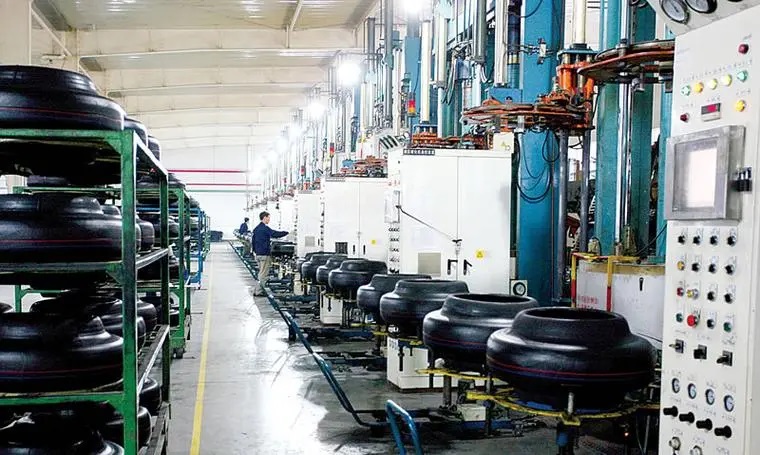
How can we help you avoid material selection pitfalls?
As the previous case study demonstrates, a seemingly minor error in material selection can lead to millions of dollars in equipment damage or product recalls. As a professional provider of rubber product solutions, Vista Motion’s value lies not only in supplying products but also in intervening at the source to help you mitigate risks.
- In-Depth Operating Condition Analysis: Our sales engineers (such as myself) will engage in thorough discussions with you to gain a detailed understanding of the medium composition, temperature fluctuation range, dynamic stress conditions, and even the ozone concentration in the installation environment, ensuring that every material recommendation is backed by solid data.
- End-to-End Quality Control: From online Mooney viscosity monitoring during compound mixing to precise control of the vulcanization curve, we strictly adhere to digital work instructions to ensure product consistency and prevent quality issues caused by process fluctuations.
- Custom Formulations: If you face specific operating conditions (such as low-temperature embrittlement or dynamic fatigue), we can develop tailor-made formulations for you by adjusting the filler system or adding specialized antioxidants.
Bring us your application, and we’ll provide you with a reliable solution. If you’re struggling to choose between NR and EPDM for a specific application, or if you’re puzzled by the failure of existing rubber components, please feel free to contact me anytime.
FAQ
Which is more oil-resistant: EPDM or natural rubber?
Neither is resistant to mineral oils. Both natural rubber and EPDM will swell and degrade in mineral oils (such as engine oil, gasoline, and hydraulic oil). If you need an oil-resistant material, you should choose nitrile rubber (NBR). However, natural rubber is resistant to brake fluid (alcohol-based).
Which rubber is better suited for outdoor sealing strips?
EPDM is the king of outdoor applications. It offers unmatched resistance to ozone, UV rays, and weathering, and is widely used in automotive door and window seals, building curtain wall seals, and more.
What is the maximum temperature limit for natural rubber?
The recommended long-term operating temperature for natural rubber should not exceed 80°C. It can withstand temperatures around 100°C for short periods, but this will accelerate aging. EPDM, on the other hand, can operate continuously at temperatures between 120°C and 150°C.
Why did my natural rubber product crack after only a short time?
This is most likely due to ozone or UV aging. The molecular chains of natural rubber contain unsaturated double bonds, making them highly susceptible to ozone attack, which leads to cracking. If ozone exposure cannot be avoided in your application environment (e.g., near motors or outdoors), you should switch to EPDM.
Does EPDM have good abrasion resistance?
EPDM has “Good” abrasion resistance, which meets most general requirements, but it is not as good as natural rubber (Excellent) or polyurethane rubber (PU).
Which is more environmentally friendly: natural rubber or EPDM?
Both are widely used and safe materials. Natural rubber comes from plants and is a renewable resource. EPDM is a synthetic rubber, but its production process also complies with strict environmental standards. Specific environmental performance depends on the application; for example, both materials have grades suitable for seals in contact with drinking water.
In terms of price, is EPDM significantly more expensive than natural rubber?
Generally, EPDM is slightly more expensive than or comparable in price to natural rubber. However, the price of natural rubber is more heavily influenced by natural conditions (such as climate and pests), resulting in greater price volatility than synthetic rubber. From a total life-cycle cost perspective, EPDM may offer a cost advantage for outdoor applications due to its longer service life.
Can EPDM be used in hot water and steam environments?
Absolutely. EPDM offers excellent resistance to hot water and superheated steam, making it a common material for water heater gaskets and steam hoses.
Is natural rubber suitable for bonding to metal?
A: It is highly suitable. Due to its excellent self-adhesion and inter-adhesion properties, natural rubber can achieve a very strong bond with metal substrates using appropriate adhesive systems. It is widely used in composite components such as shock absorbers and bushings.
What is the most important factor to consider when choosing between these two materials?
The application environment. This is the decisive factor. If the application is outdoors or involves contact with chemical media, EPDM is the preferred choice; if it is an indoor, dry environment at room temperature with extremely high requirements for elasticity and wear resistance, natural rubber is the better option. Be sure to inform your supplier of your actual operating conditions.
