
First, The Conclusion
If you search “How Much Does It Cost to Replace Shock Absorbers” or “Replacing Shock Absorbers Cost,” most car owners will find themselves within two price ranges:
- For replacing “traditional shock absorbers,” the actual cost for a “pair (same axle)” across many models typically falls within the $394–$466 range (including labor and parts, based on aggregated real-world quotes).
- If you’re replacing “struts/MacPherson assemblies (often colloquially called shock absorbers),” the total cost is typically significantly higher. Based on common U.S. estimates, the average range for a full “Shock/Strut Replacement” is approximately $1,057–$1,260 (including labor and parts, but excluding taxes and regional variations).
Note: For “mainstream family cars,” the total cost often stays under $1,000. However, luxury vehicles or high-end models with active suspension or complex systems may reach $1,500–$2,600 or higher, potentially requiring calibration and adjustment.
Why “shock absorbers” can cost twice as much: Shock vs Strut
Shock (traditional shock absorber): Primarily handles damping, features a relatively simple structure, and is typically faster and cheaper to replace.
Strut (suspension strut): Often combines structural support with steering geometry, making parts more expensive and labor more time-consuming. Wheel alignment is frequently recommended afterward. RepairPal explicitly advises: Perform wheel alignment when replacing struts, as new struts may alter vehicle height and affect alignment data.
How Shock Replacement Costs Break Down
To determine if a “shock absorber replacement cost” is reasonable, don’t just look at the total price. When you receive a quote, examine these 4 items:
Parts cost
For the same vehicle model: OEM parts are typically more expensive than aftermarket parts; parts for active suspension/air suspension systems exhibit greater price fluctuations. Luxury brands and high-end systems may significantly increase costs.
Labor Costs
Labor time strongly correlates with suspension structure: Struts generally require more time than shocks. Using struts as an example, media estimates for single-unit replacement (including labor and parts) range from approximately $300–700 USD per front strut and $220–580 USD per rear strut. It’s also noted that replacement typically takes 2–3 hours.
Wheel Alignment/Geometry Calibration
After replacing struts, alignment is often recommended to prevent pulling and uneven tire wear.
Whether an alignment is required after replacing only the rear shocks depends on the suspension design and whether critical geometric connection points were altered. In practice, it’s often “recommended but not mandatory.” (This varies significantly across vehicle models/architectures, and shops typically advise at least performing an inspection.)
Additional Components and Associated Repairs
Examples: Top mounts, bearings, buffer blocks, dust boots, control arm bushings, links, springs, etc. RepairPal also notes that “related repairs may be needed simultaneously” and recommends a full steering and suspension inspection before replacement to minimize repeat labor.
7 Key Variables Affecting Shock Absorber Replacement Cost
- Replacement Location: Front shock absorber replacement costs are typically higher than rear (more complex structure, tighter space).
- Number Replaced: Pair replacement (left + right) is recommended to maintain consistent damping and prevent handling/braking instability.
- Vehicle Class: Economy cars vs. luxury vehicles/active suspension systems.
- Parts Strategy: OEM vs. Aftermarket; “Quick Strut” replacements often save labor time compared to core-only swaps, though parts costs may be higher.
- Regional labor rates: Significant variations may exist even among shops within the same city.
- Alignment/Calibration Required: Alignment is often needed after strut replacement; complex systems may require calibration.
- Corrosion & Disassembly Risks: Seized bolts and aged bushings increase labor hours and unpredictable costs.
When to Replace
If you’re searching “how much does shock absorber replacement cost,” you’ve likely already noticed changes in driving performance. Use these symptoms to determine replacement:
- Noticeable body bounce: Repeated up-and-down movement after hitting bumps, failing to settle quickly.
- Brake dive, increased body roll during turns, and more unstable steering.
- Cup-shaped or wave-shaped tire wear with reduced traction (especially on wet surfaces).
- Shock absorber oil leaks or abnormal noises.
- Mileage perspective: Many resources suggest a common replacement range of approximately 50,000–100,000 miles (specific mileage still depends on vehicle condition/road conditions/load).
How to reduce costs without compromising safety
When receiving a quote, practice the “3 Questions, 3 Demands” approach:
3 Questions (Ask immediately upon receiving the quote)
1) Are you replacing the shock absorbers or struts? Is it just the core replacement or the entire assembly?
2) How many labor hours are charged? Which items are “recommended” versus “mandatory” (wheel alignment, calibration, additional parts)?
3) Why are these additional parts needed? Can you show evidence of wear or measurement results?
3 Requests (Have the shop document these on the invoice)
1) Part brand/model/warranty terms
2) Labor cost breakdown (labor cost, alignment, calibration)
3) Post-replacement checks: road test, noise re-evaluation, alignment data before/after (if performed)
How much can DIY save?
Replacing only the shock absorber is more DIY-friendly for some models;
However, replacing struts that require spring compression poses significant safety risks. RepairPal explicitly warns that spring compression can cause serious injury and advises against attempts by untrained individuals.
Summary
Returning to the original question “How much does it cost to replace shock absorbers?”: For traditional shocks, a pair typically costs around $394–466. For struts/uprights, the total cost is more likely to approach $1,057–1,260 or higher, with luxury/active suspension systems commanding even greater prices.
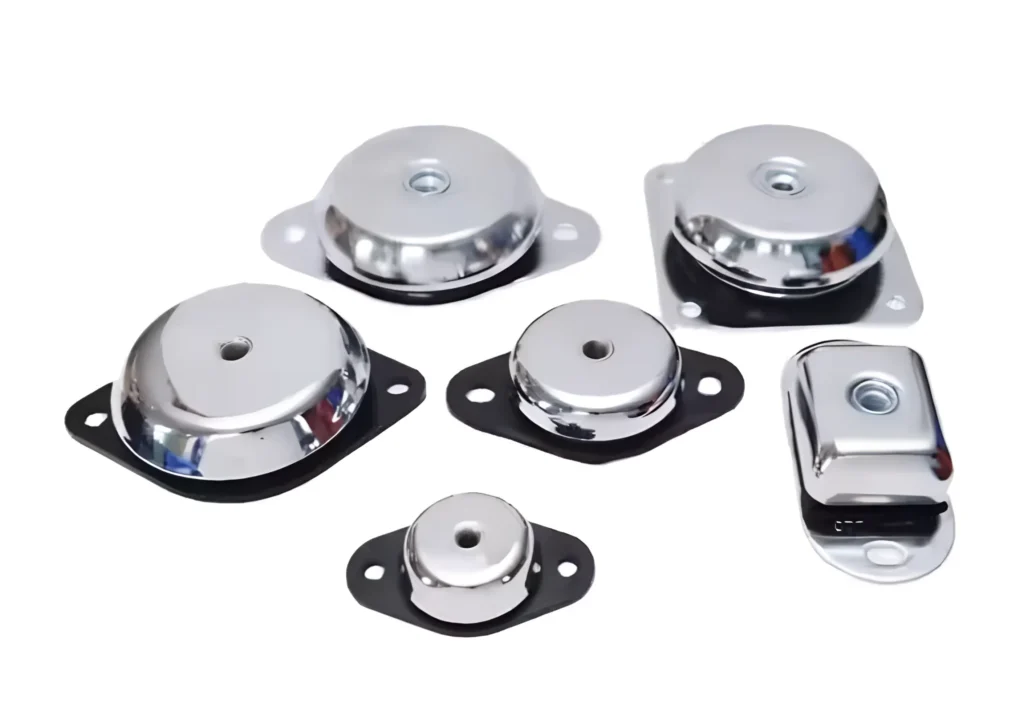
For OEM/equipment manufacturers sourcing components (automotive parts, rail transit, construction machinery, hydraulic equipment, consumer electronics structural parts, etc.), the primary concern is “controlling development and volume costs for shock absorbers/rubber dampers.”For such projects, costs are typically determined by the rubber compound formulation, metal insert structure, molds and tooling, target lifespan (cycle count), static/dynamic stiffness specifications, environmental resistance (oil/salt spray/temperature), and testing/validation requirements.
vistamotion provides customized rubber dampers/metal-rubber composite components and related precision manufacturing solutions (casting, machining, sheet metal fabrication, welding, etc.), supporting rapid quoting and DFM recommendations based on “operating parameters + target lifespan + testing criteria.”To provide you with more accurate cost and delivery estimates, please prepare: drawings/3D models, load and displacement specifications, mounting method, operating frequency, environmental media and temperature range, target service life (cycle count), key inspection and certification requirements, annual usage volume, and batch production schedule.
FAQ
Why are there significant price differences within the same city?
Price variations in “near me” scenarios typically stem from four factors: First, differing labor rates and billing standards (e.g., same replacement job may use different book time calculations); Second, parts sourcing channels (OEM vs. aftermarket, including accessories like top seals or dust boots); Third, whether wheel alignment, road test verification, and additional part replacements are bundled in the quote;Fourth, the structural complexity and rust condition of your vehicle.
Is it okay to replace just one shock absorber?
Replacing only one shock is not recommended. The core reason is inconsistent damping and rebound characteristics between new and old components, leading to uneven dynamic response between left and right sides. This affects braking posture, cornering roll, tire wear, and ride comfort.Shock absorbers/struts should be replaced in pairs on both sides. Otherwise, ride quality and performance will be significantly altered. This is why “shock absorber replacement cost” is typically quoted per “pair/axle” rather than per individual unit.
How long does it take to replace shock absorbers?
Time depends primarily on whether you’re replacing shocks or struts. Using struts as an example, common repair time is approximately 2–3 hours.
Is wheel alignment necessary after replacing shock absorbers?
Wheel alignment is more critical after replacing struts. New struts may alter the vehicle’s height, thereby changing alignment data. While rear shock replacement on some models might not strictly require alignment, it’s strongly recommended to perform an alignment check or road test verification. Failure to do so could lead to pulling issues or uneven tire wear, resulting in costs far exceeding the alignment expense.
Is replacing the entire strut assembly or just the strut core more cost-effective?
If you prioritize “reducing rework risk + saving labor time,” quick struts are generally safer because they avoid the process of removing old springs and installing them on new struts. “Replacing only the core/transferring springs” may be cheaper in parts, but it demands higher tooling and experience requirements.Reusing old springs requires compressing them for removal and installation, and compressed coil springs pose an “extremely dangerous” risk (spring slippage can cause serious injury). For most users, safety and getting it right the first time are higher priorities.
How often should shock absorbers be replaced?
Shock absorbers and struts “typically last 50,000–100,000 miles,” though their lifespan is influenced by road conditions, load, driving habits, and other factors. Always refer to your owner’s manual for specific recommendations. If you frequently drive with a full load, navigate rough roads, or accelerate over speed bumps at high speeds, you’ll likely need to replace your shock absorbers sooner.
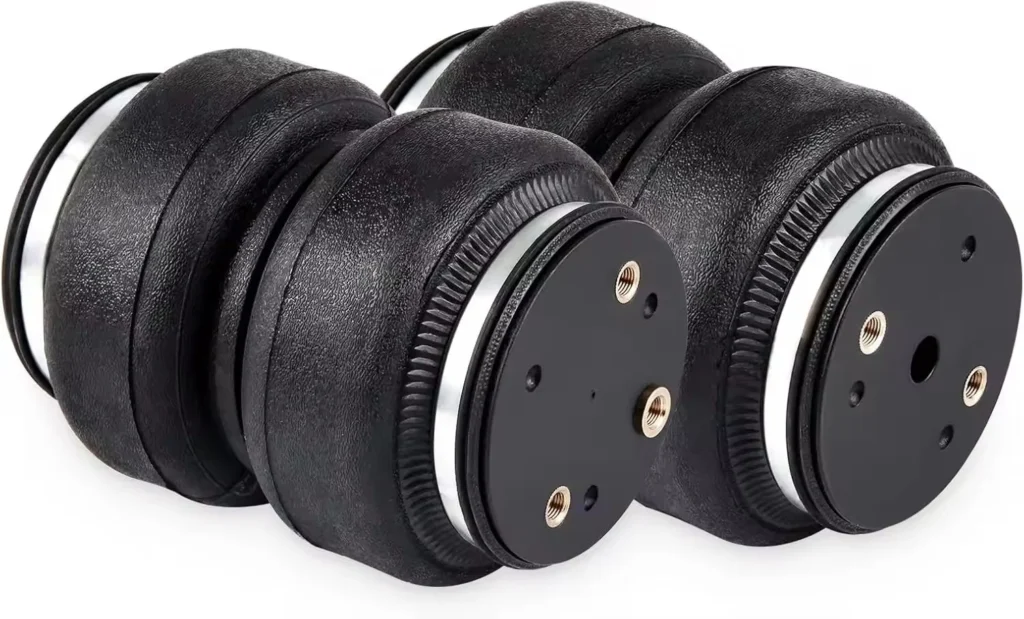
Why is replacing air suspension/active suspension shock absorbers more expensive?
The higher cost stems from the system’s greater complexity and integration, often requiring additional diagnostic and calibration procedures. Based on our estimates alone, the average range for “Active Suspension/Air Spring Replacement” is approximately $1,542–$1,664, significantly higher than standard shock/strut replacement. Actual quotes may include higher parts costs, increased labor hours, and additional items like calibration/tuning.
The priority principle is to replace components that “significantly increase disassembly frequency and cause noise/play when worn,” such as strut top mounts/bearings, bump stops, and dust boots. Conduct a comprehensive steering and suspension inspection before replacement to identify all potential related repairs at once. This saves labor costs compared to “replacing struts today and disassembling again weeks later to replace bushings.”
