
Many procurement professionals and engineers often face premature product failure or even safety incidents when selecting rubber materials due to a lack of understanding of material properties. Drawing on thousands of real-world cases from industries such as automotive, aerospace, and food processing, and in accordance with authoritative standards, this article systematically outlines the properties, advantages, disadvantages, and suitable applications of natural rubber and seven mainstream synthetic rubbers to help you make informed material selection decisions.
Natural Rubber And Synthetic Rubber
Before delving into specific types, it is essential to clarify the two main categories:
- Natural Rubber (NR): Derived from the latex of the three-leaf rubber tree, it offers excellent resilience, tensile strength, and abrasion resistance, but has weaker resistance to oil and aging.
- Synthetic Rubber: Artificially synthesized through chemical polymerization, it can be customized to provide special properties such as oil resistance, high-temperature resistance, and corrosion resistance.
Below, we will focus on the 8 most widely used and versatile rubber types on the market, along with practical material selection recommendations.
Detailed Explanation of 8 Common Rubber Types
Natural Rubber (NR)
Properties
- Tensile strength can reach 25–30 MPa, making it the rubber with the highest mechanical strength.
- Excellent resilience and good low-temperature performance (retains elasticity even at -50°C).
- Not resistant to oil or ozone; prone to aging when exposed to air for extended periods.
Typical Applications
Tire treads, shock-absorbing pads, bridge bearings, conveyor belts, latex gloves.
Our Experience
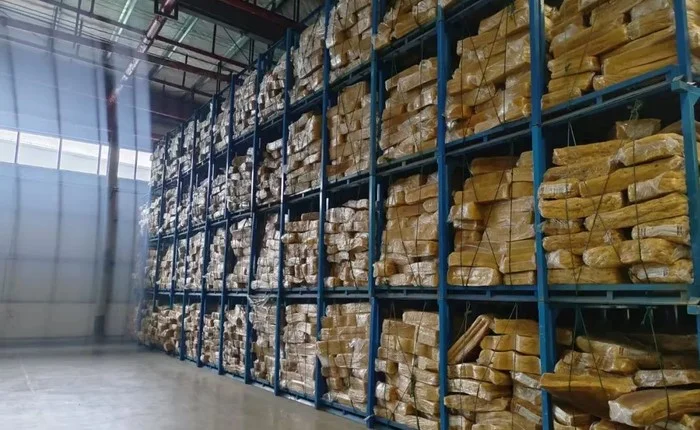
In a mining machinery shock absorber project, the client initially selected lower-cost recycled rubber, which resulted in fractures after just one week of operation. We recommended switching to a natural rubber-based formulation, which extended the service life by four times. Natural rubber is suitable for high-dynamic-load applications, but surface protection must be ensured, or contact with oil-based media must be avoided.
Styrene-Butadiene Rubber (SBR)
Characteristics
- An alternative to natural rubber, offering superior abrasion resistance but slightly lower elasticity.
- Average heat resistance (up to 90°C) and moderate resistance to aging.
- Relatively inexpensive, it is currently the most widely produced synthetic rubber.
Typical Applications
Tire treads (used in combination with NR), shoe soles, conveyor belts, and rubber hoses.
Material Selection Tips
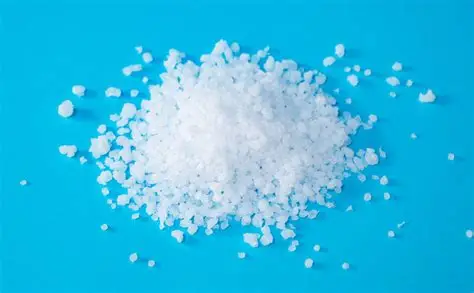
SBR is not suitable for use in oily environments or under high-temperature dynamic conditions. If you require oil-resistant rubber, please consider nitrile rubber (NBR) as your first choice.
Nitrile Rubber (NBR)
Properties
- Excellent resistance to oils, fuels, and solvents (oil resistance varies significantly depending on acrylonitrile content).
- Temperature range: -30°C to 120°C; special formulations can withstand up to 150°C for short periods.
- Poor ozone resistance; not suitable for long-term outdoor exposure.
Typical Applications
Oil seals, O-rings, fuel lines, printing rollers, and seals for oilfield equipment.
Real-world case
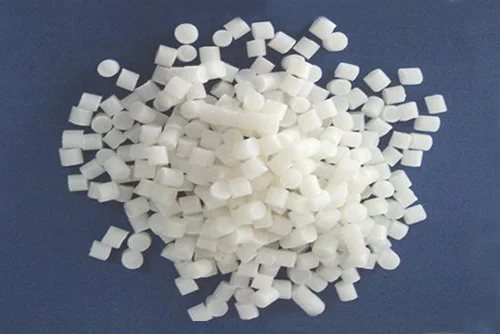
An automotive parts supplier previously experienced low-temperature leakage (during northern winters at -35°C) due to the use of standard NBR. Based on their operating conditions, we recommended a formulation combining low-acrylonitrile NBR with a cold-resistant plasticizer, which resolved the low-temperature embrittlement issue. When selecting NBR, it is essential to clearly define the temperature, oil type, and concentration; otherwise, it is very easy to choose the wrong grade.
Ethylene Propylene Diene Monomer (EPDM)
Properties
- Excellent resistance to ozone, UV radiation, and weathering.
- Resistant to polar solvents (such as brake fluid and alcohols), but not resistant to mineral oil and fuel.
- Temperature range: -45°C to 150°C; up to 200°C in steam environments.
Typical Applications
Automotive door and window seals, roof waterproofing membranes, high-pressure steam pipes, cooling water pipes, and electrical insulation components.
Authoritative Reference
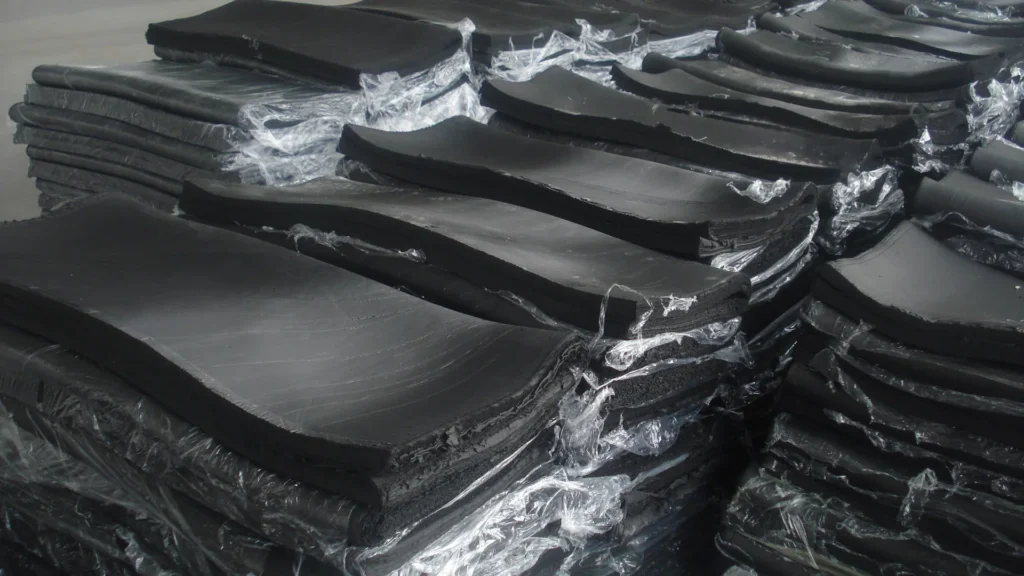
According to ASTM D2000 classification, EPDM is rated AA/BA for heat and chemical resistance, making it the material of choice for outdoor seals. In the coastal photovoltaic power plant sealing projects we have undertaken, EPDM showed no significant signs of aging after 5 years of salt spray testing, far outperforming other elastomers.
Chloroprene Rubber (CR)
Properties
- Combines moderate oil resistance, weather resistance, and flame retardancy.
- Good self-extinguishing properties; does not sustain combustion when exposed to fire.
- High mechanical strength and excellent adhesion.
Typical Applications
Cable sheathing, bridge expansion joints, conveyor belt cover rubber, diving suits, adhesives.
Key Considerations for Material Selection
CR is inferior to NBR in oil resistance and to EPDM in weather resistance, but in scenarios requiring flame retardancy, weather resistance, and physical strength simultaneously, CR is often irreplaceable. For example, cables in subway tunnels require both flame retardancy and moisture resistance, and CR performs reliably.
Silicone Rubber (VMQ)
Properties
- Extremely wide temperature range (-60°C to 250°C); special formulations can withstand up to 300°C.
- Biologically inert, compliant with FDA and USP Class VI standards, suitable for food and medical contact.
- Low tensile strength (4–10 MPa); not resistant to oil or high-pressure steam.
Typical Applications
Baby pacifiers, medical device seals, oven door gaskets, high-voltage insulators, keyboard keys.
Note
There are many types of silicone rubber (condensation-cured, addition-cured). If used for medical implants or food contact, suppliers must provide FDA 21 CFR 177.2600 or relevant food-grade certification reports. When manufacturing air fryer seals for a well-known small appliance brand, we provide third-party RoHS and food-grade testing for every batch to ensure compliance.
Fluorocarbon Rubber (FKM/FPM)
Properties
- Temperature resistance up to 200°C–250°C, with short-term exposure up to 300°C.
- Resistant to almost all oils, strong acids, and strong solvents; excellent resistance to aging.
- Expensive, costing 5–10 times more than general-purpose rubber, and difficult to process.
Typical Applications
Seals for aircraft engines, oil drilling equipment, semiconductor equipment, and O-rings for automotive fuel injection systems.
Expert Tip
Under extreme operating conditions, fluorocarbon rubber is the only reliable choice. However, note that fluorocarbon rubber is not resistant to ketones, esters, and low-molecular-weight solvents; the composition of the medium must be confirmed before selection. We previously supplied FKM seals to a chemical pump manufacturer for use with highly corrosive media, and the seals have operated continuously for 3 years without leakage.
Hydrogenated Nitrile Rubber (HNBR)
Properties
- Hydrogenation of NBR significantly enhances heat and ozone resistance.
- Temperature resistance: -40°C to 150°C; oil resistance is comparable to FKM; mechanical strength is superior to NBR.
- It is more expensive than NBR but more cost-effective than FKM.
Typical Applications
Automotive timing belts, deep well seals in oil fields, refrigeration system seals, and cooling lines for new energy vehicle batteries.
Application Trends
As new energy vehicles demand higher temperature resistance for cooling media, the application of HNBR in battery pack seals and cooling lines is growing rapidly, serving as a cost-effective alternative to traditional NBR and some FKM.
How to quickly select the right rubber type based on operating conditions?
| Operating Conditions | Preferred Material | Alternatives/Considerations |
| Resistance to mineral oil, fuel | NBR, HNBR, FKM | NBR is the most cost-effective; FKM is suitable for high-temperature, highly corrosive environments |
| Outdoor weather resistance, ozone resistance | EPDM, CR | EPDM is not oil-resistant; CR has some flame-retardant properties |
| Extremely low temperatures (below -50°C) | Silicone rubber, natural rubber | Conventional synthetic rubbers tend to become brittle at low temperatures |
| Continuous high temperatures above 200°C | FKM, silicone rubber | FKM is oil-resistant; silicone rubber is not oil-resistant |
| Food contact | Silicone rubber (food-grade), EPDM (specific formulations) | Must have FDA or LFGB certification |
| Dynamic sealing, high wear resistance | Natural rubber, polyurethane (non-rubber) | Depends on the medium and environment |
Summary
Selecting rubber materials is not simply a matter of choosing the cheapest option; rather, it requires a comprehensive balance of temperature, medium, pressure, service life, and cost. Over the past five years, Vista Motion has helped more than 300 companies complete material upgrades. Among them, over 60% of clients had originally selected materials that were not the most suitable, resulting in average annual losses exceeding 50,000 yuan due to seal failure.
As a rubber product manufacturer with an in-house R&D laboratory and a full suite of testing equipment, Vista Motion offers you:
- Free Material Selection Consultation: Based on your operating conditions report, our engineers with 15 years of experience will provide a material selection recommendation.
- Rapid prototyping: Samples provided within 3 days, accompanied by actual performance data (tensile strength, oil resistance volume change rate, compression set, etc.).
- End-to-End Compliance: We provide certification support for RoHS, REACH, FDA, and other standards to ensure your products meet target market regulations.
If you are unsure about material selection or if your existing rubber components are experiencing leaks or premature aging, please contact Vista Motion to obtain the “Rubber Material Selection Checklist.” We offer one-on-one technical support to help you reduce failure rates and extend equipment lifespan from the source.
FAQ
What is the difference between natural rubber and synthetic rubber?
Natural rubber is derived from plants; it offers high strength and good elasticity but lacks oil resistance and aging resistance. Synthetic rubber is produced through artificial polymerization and can be specifically engineered to provide properties such as oil resistance, high-temperature resistance, and weather resistance. Under general operating conditions, synthetic rubber has a wider range of applications.
What is the temperature range for EPDM rubber?
Standard EPDM can be used long-term at temperatures ranging from -45°C to 150°C, while specially formulated grades can withstand short-term exposure to steam at 200°C. However, EPDM is not resistant to mineral oils; contact with oils can cause swelling and failure.
Is nitrile rubber (NBR) resistant to gasoline?
It exhibits excellent resistance to gasoline, provided the acrylonitrile content is ≥33%. If the gasoline contains oxygenated fuels such as ethanol, it is recommended to use fluorocarbon rubber or hydrogenated nitrile rubber (HNBR), as otherwise, volume expansion is likely to occur.
Is silicone rubber a food-grade safe material?
Not all silicone rubber is food-grade. Only silicone rubber that complies with FDA 21 CFR 177.2600, LFGB, or China’s GB 4806.1 standards may be used for food contact. When purchasing, be sure to request test reports from the supplier.
Why is fluorocarbon rubber so expensive?
Fluorocarbon rubber contains fluorine atoms in its main chain, offering exceptional resistance to high temperatures and chemical corrosion, and its synthesis process is complex. Under severe operating conditions (such as oils at temperatures above 200°C), fluorocarbon rubber is one of the few viable material options, and its overall cost is far lower than that of low-cost rubbers that require frequent replacement.
How can you distinguish between EPDM and NBR?
The simplest empirical method is an oil resistance test: immerse the sample in engine oil or hydraulic oil for 24 hours. If the sample exhibits significant volume expansion (>30%) and softens, it is EPDM; if the volume change is minimal (<15%) and it retains its hardness, it is NBR. You can also distinguish them by their odor when burned (NBR has a pungent odor, while EPDM has a paraffin-like odor).
Can EPDM rubber be used in hydraulic systems?
No. Hydraulic fluids are typically mineral oil-based, and EPDM swells and deforms severely when exposed to mineral oil, leading to seal failure. Nitrile rubber or fluorocarbon rubber should be selected for seals in hydraulic systems.
Which is more wear-resistant, neoprene or nitrile rubber?
Generally, nitrile rubber offers slightly better wear resistance than neoprene. However, when both flame retardancy and wear resistance are required (such as in mining conveyor belts), neoprene is preferred due to its flame-retardant properties.
Can hydrogenated nitrile rubber (HNBR) replace fluorocarbon rubber?
In applications where the temperature does not exceed 150°C and the medium consists of ordinary mineral oil or fuel oil, HNBR can replace some fluorocarbon rubber at a lower cost. However, if the temperature consistently exceeds 150°C or the medium contains strong acids or ketones, fluorocarbon rubber must still be used.
Does silicone rubber yellow and age?
Standard silicone rubber may yellow when exposed to high temperatures or ultraviolet light, but its physical properties typically do not deteriorate significantly. If color stability is required, “anti-yellowing” silicone rubber formulations can be selected and supplemented with antioxidants.
