
What is a Strut Mount
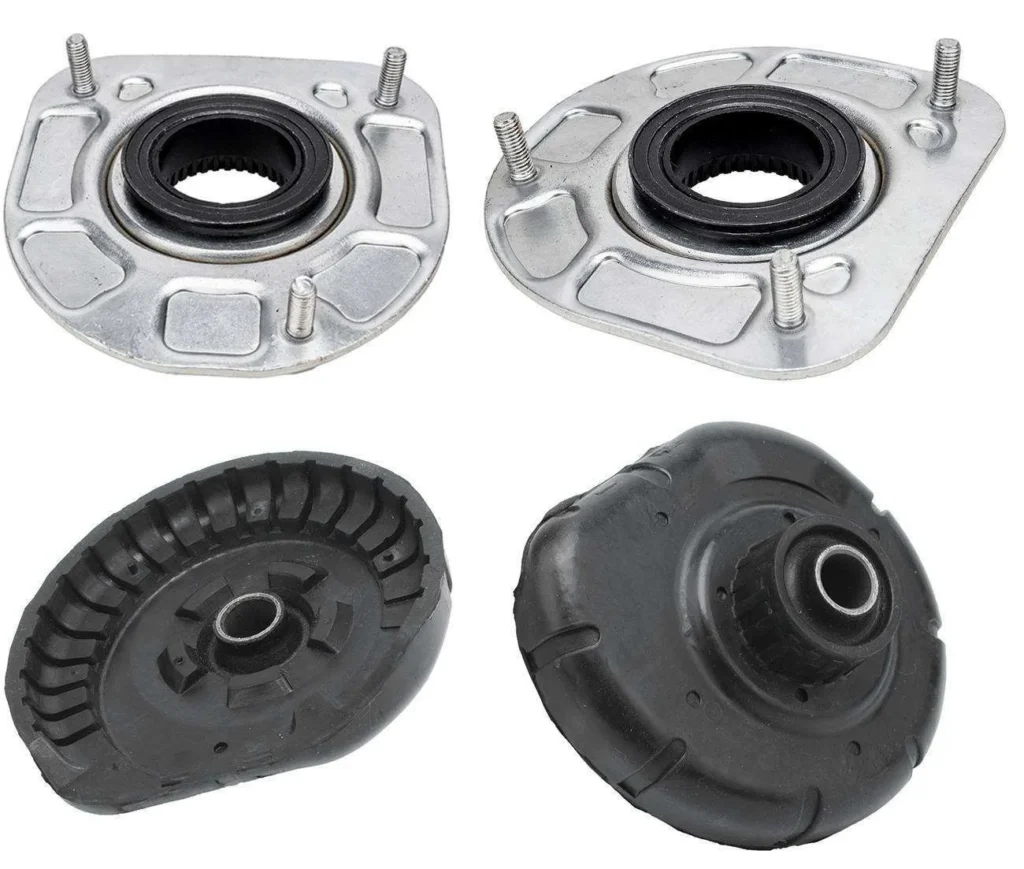
Commonly referred to as the “shock absorber top mount” or “upper strut mount,” the strut mount is installed at the top of the shock absorber strut in MacPherson strut suspensions. It connects the strut to the vehicle’s tower top.It serves not merely as a “fastener,” but fulfills two critical functions: isolating road noise and vibration, and—in many front suspensions—incorporating a bearing/bearing plate that acts as the “steering pivot point” for strut rotation during turns.
In other words: the strut mount not only bears loads and maintains alignment, but also determines whether you experience a “quiet, smooth ride with proper steering return” while driving.
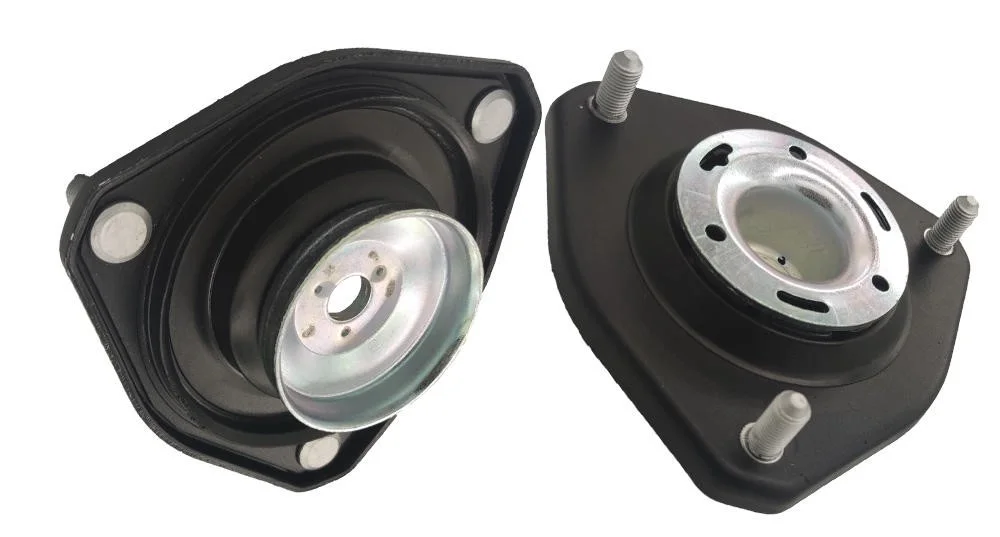
Strut Mount Structure and Function
A typical strut mount structure can be understood as a “sandwich layer”:
- Upper/lower metal plates or metal housings: Connect to the vehicle body and shock absorber strut;
- Intermediate rubber/elastomer damping layer: Absorbs impacts and suppresses noise and vibration transmission;
- Bearing or bearing plate: Enables smooth rotation of the strut during steering, affecting steering feel and self-centering.
Why does it fail?
The core cause is “high load + high-frequency cycling + environmental corrosion and aging.” Under normal road conditions, the strut undergoes approximately 1,750 cycles per mile. This constant up-and-down stress causes rubber fatigue, cracking, and separation from the metal. Simultaneously, environmental factors like salt spray, humidity, and temperature fluctuations accelerate damage.
Material properties also degrade over time (changes in damping material density/characteristics), and bearing wear further degrades NVH and steering quality.
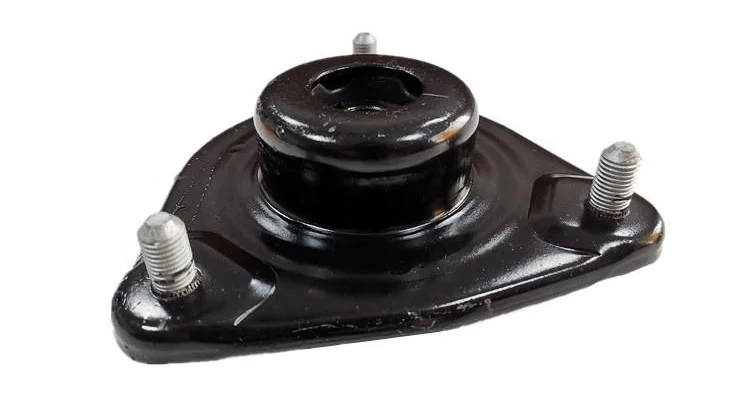
What are the symptoms of a bad strut mount?
The following are more “specific” strut mount symptoms consistently reported across multiple sources:
- Noise: Thumping sounds (“thump-thump”) over speed bumps or potholes; squeaking or grinding noises during low-speed steering maneuvers.
- Steering Abnormalities: Steering wheel feels stiff, heavy, or makes noise; poor center-return (slow or incomplete return).
- Increased Vibration: Body or steering wheel vibration/harsher road feel, reduced comfort.
- Alignment/Tire Issues: Difficulty maintaining wheel alignment, increased pulling sensation, uneven tire wear (especially abnormal outer/inner edge wear).
- Secondary damage: May accelerate wear on related components like shock absorbers/struts (“small-cost top mounts” leading to “costlier assemblies”).
- Visual signs: Cracked, collapsed, or torn top mount rubber; separation of metal and rubber; rust; abnormal wobbling of the strut assembly at the tower top.
Practical “Low-Cost Self-Inspection” Approach
- Reproduce the condition: Drive on low-speed turns and minor potholes. Note if noise “changes with steering angle” or “occurs with impact.” The former is more common with top mount bearings/bearing plates.
- Tower Top Inspection: Open the engine compartment to examine the top mount area for cracks, collapse, rust, or abnormal gaps. If necessary, have someone slowly turn the steering wheel while observing for binding or bouncing.
- Differentiation from other faults: Stabilizer linkages, ball joints, and lower control arm bushings can also produce “thumping” noises. If the noise primarily occurs during “steering maneuvers” and is accompanied by steering-back-to-center issues, the strut mount bearing should be the primary suspect.
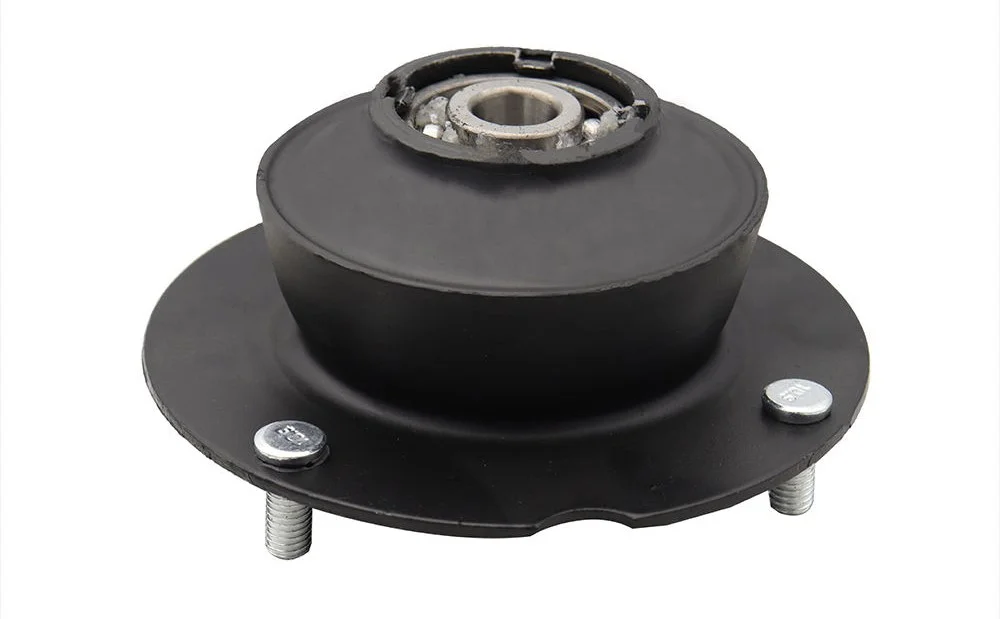
Should the Strut Mount be replaced with the shock absorber?
In most cases, the answer is “strongly recommended to replace simultaneously/in pairs on the same side.” The reason lies not in part cost but in labor efficiency and access paths:
- Overlapping disassembly paths: Replacing the strut mount typically requires removing the entire strut assembly and managing spring compression/decompression. Replacing the top mount necessitates disassembling the strut and spring assembly. Replacing both axially aligned wear components simultaneously avoids repeating the most labor-intensive steps.
- While strut mounts are relatively low-cost, they involve labor-intensive work. Replacing them during strut replacement is often more economical.
- Pair Replacement: Since both sides endure similar mileage and road conditions, wear on one side usually indicates the other is nearing end-of-life. Replace both sides when necessary to maintain consistent axle response.
Strut Mount Replacement Costs
Cost variations primarily stem from vehicle architecture, front suspension configuration (bearing-equipped), use of “Quick Strut/Loaded Strut” systems, and local labor rates.
Publicly available data for reference ranges:
- Strut mount replacement only: Replacement costs range approximately from $150–350 (typically including parts and labor, varying by vehicle).
- If top mount bearings are involved: Average range is approximately $382–530, with parts costing about $65 and labor constituting the primary cost ($317–466).
- If replacing the “strut/shock absorber assembly”: Average range is approximately $1,057–$1,260 (also varies by vehicle model).
How to estimate your strut mount replacement cost more accurately?
Break it down into three costs: part cost (with or without bearing) + labor for removal/installation + wheel alignment fee (if needed). Labor is often the deciding factor.
Is wheel alignment required after replacement?
Conclusion: Alignment is generally recommended after most replacements, especially when replacing struts or disassembling suspension geometry.
Alignment should be performed after replacing struts or other steering/suspension components; failure to do so may cause abnormal tire wear and other issues if alignment deviates from factory specifications.
Wheel alignment is recommended after strut replacement, as new struts may alter vehicle height and affect alignment parameters.
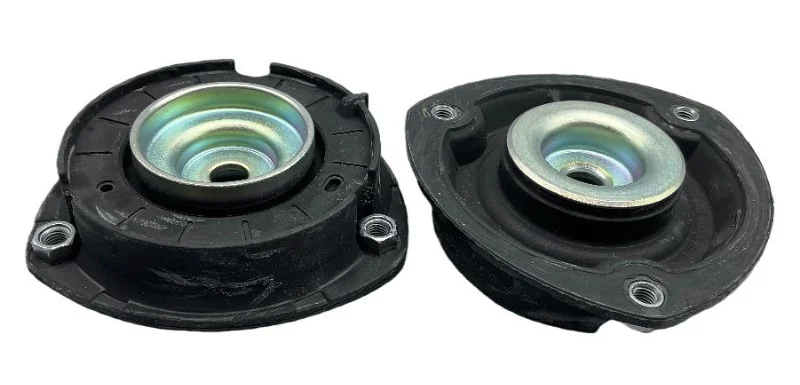
Replacement and Safety Considerations
- Spring Energy Risk: Strut/spring assemblies are under high preload. Improper disassembly may cause serious injury. Spring tension is immense; without proper tools and training, entrust this to a professional technician.
- Address “coaxial wear components” comprehensively: Top mounts, bearings, struts, and springs typically age within the same service cycle. Splitting repairs into multiple visits often incurs extra labor costs.
- Post-Replacement Road Test and Reinspection: Verify elimination of abnormal noises, restoration of self-centering, and absence of abnormal tire wear.
Summary
For OEMs, Tier 1 suppliers, or aftermarket brands developing or sourcing strut mount components, the true differentiator isn’t “capability” but: rubber compound stability under temperature and fatigue, reliable rubber-to-metal bonding, bearing/metal structure coaxiality and corrosion resistance compliance, and traceable NVH and durability data for the entire assembly.
Vista Motion provides OEM/ODM manufacturing support for rubber-to-metal composite and metal structural components related to strut mounts (e.g., rubber isolators, stamping/machining of metal seats/brackets, welding and surface treatment). We can also establish validation approaches for durability and corrosion based on project requirements (e.g., cyclic load endurance, salt spray testing, dimensional and material consistency control).To expedite part selection and quotation, please prepare: drawings/3D models or samples, target load-displacement curves (or operating condition descriptions), installation space and connection methods, life cycle targets, and environmental conditions (temperature/salt spray/mud water). Based on this information, we can provide material and structural recommendations, DFM key points, prototyping pathways, and inspection plans.
FAQ
Are strut mounts and shock absorber top mounts the same thing?
Yes. A strut mount typically corresponds to the upper mount/top rubber on the top of a MacPherson strut, providing connection and vibration isolation. Many front suspensions also integrate the steering bearing.
What are the most typical symptoms of a bad strut mount?
Common symptoms include a “thudding” impact noise over potholes, a “squeaking” or grinding noise during low-speed steering, and may be accompanied by poor steering return.
What distinguishes symptoms of front strut mounts from those of rear suspension top mounts?
Front suspension components are more prone to “steering-related squeaks/stiffness” because their top mounts often incorporate bearings as steering pivot points; rear suspension issues typically manifest as impact noises and reduced vibration damping.
How much does a strut mount replacement typically cost per side?
Publicly available references indicate a range of approximately $150–350 per side (including labor and parts, varying by vehicle model).
What are the symptoms of a failed strut bearing?
Common signs include steering noise, rough steering feel, and poor center return (“steering memory” tendency), potentially accompanied by wheel alignment issues.
Should wheel alignment be performed after replacing strut mounts?
It’s generally recommended. Both Monroe and RepairPal advise performing an alignment after replacing strut/suspension components to prevent uneven tire wear.
Can I replace just one strut mount? Or should both sides be replaced together?
It’s preferable to replace them in pairs: Both sides have endured similar mileage and road conditions, so wear on one side often indicates the other is nearing the end of its lifespan. Replacing them in pairs maintains consistent axle response.
Why is it often recommended to replace strut mounts when replacing shock absorbers?
Because replacing the strut mount requires disassembling the strut-spring assembly; replacing both during the same disassembly avoids paying for high labor costs twice.
Does a quick strut replacement include the strut mount? Is it worth it?
Many quick-strut assemblies integrate the strut body, spring, and top mount/bearing into one unit. The core value lies in reducing disassembly and reassembly steps, lowering labor risk. Whether it’s cost-effective depends on part pricing and local labor rates.
How long can you drive with a worn strut mount? Does it affect safety?
Worn strut mounts affect handling, tire wear, and ride comfort, and may accelerate wear on other suspension components. Prompt inspection and repair are recommended if noticeable noise, steering irregularities, or abnormal tire wear occur.
