
During the architectural design, construction, and equipment installation phases, implementing appropriate vibration control solutions has become a key measure for improving project quality and extending the service life of buildings. However, vibration control is not simply about reducing noise; rather, it involves using scientific design to minimize the transfer of vibration energy, thereby ensuring the stability of building structures, mechanical equipment, and the surrounding environment.
What Is Vibration Control in Construction?
Vibration control refers to a series of engineering methods that reduce the propagation of mechanical or structural vibrations through design, material selection, and vibration isolation techniques.
During the construction process, vibrations typically originate from:
- Pile driving equipment
- Excavators and heavy machinery
- Concrete compaction equipment
- Road rollers and road construction equipment
- HVAC systems and construction machinery
- Ground Vibrations Caused by External Traffic
These vibrations propagate through the following pathways: machinery → connecting structures → building frames → foundations → the surrounding environment
Therefore, effective vibration control requires a design approach that simultaneously addresses the vibration sources, transmission paths, and affected elements.
Simply put:
The goal of vibration control is not to eliminate all vibrations, but to manage and reduce unwanted vibration transmission.
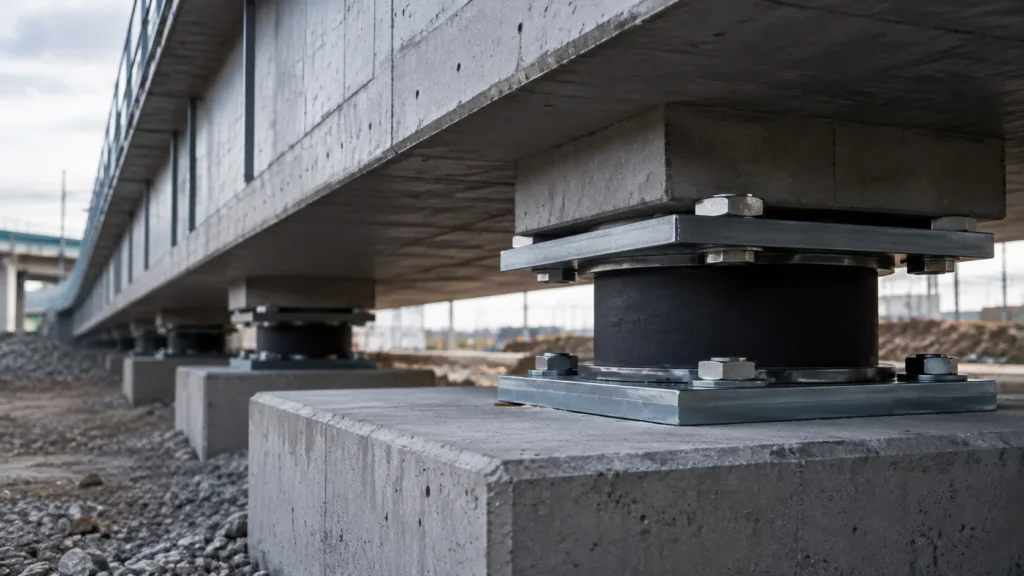
Why Is Vibration Control Important in Construction?
As modern buildings become increasingly complex, and with high-rise buildings, precision industrial facilities, medical facilities, and laboratories placing ever-higher demands on environmental stability, vibration has become a factor that cannot be ignored in engineering design.
Protecting Structural Integrity
Prolonged or excessive vibrations can compromise the stability of building structures.
Although a single vibration event typically does not directly cause serious damage, persistent dynamic loads continuously act on:
- structural joints
- welded areas
- bolted joints
- Concrete structures
- Walls and finish layers
Over time, the following may occur:
- Microcracks
- Structural fatigue
- Loose connections
- Deterioration of material properties
Particularly when construction is carried out near older buildings, the propagation of vibrations may increase the risk of damage to surrounding structures; therefore, vibration monitoring and assessment before and after construction are crucial.
Through proper design:
- Vibration-damping connectors
- Elastic supports
- Vibration-isolation pads
- rubber vibration-damping elements
can effectively reduce the dynamic impact on the structure.
Improving Equipment Performance and Service Life
Buildings typically contain a large number of mechanical systems, such as:
- Air conditioning systems (HVAC)
- Water pumps
- Compressors
- Power generation equipment
- Industrial production equipment
These pieces of equipment generate periodic vibrations during operation.
If the equipment is installed directly on a rigid foundation, vibrations will be transmitted to the building structure through the mounting structure, while external vibrations may also affect equipment operation.
Long-term vibration may result in:
- Bearing wear
- Bolt loosening
- Part fatigue
- Reduced equipment accuracy
- Increased maintenance costs
Therefore, using appropriate rubber vibration isolators or elastic mounts during equipment installation can reduce vibration transmission and improve equipment operational stability.
Enhancing Building Comfort
Buildings must not only meet structural safety requirements but also provide a positive user experience.
Excessive vibration may result in:
- A noticeable sensation of swaying for occupants
- Reduced work efficiency
- Reduced living comfort
- Adverse effects on medical environments
For example: Hospitals, laboratories, and office buildings are typically more sensitive to vibration.
Some precision equipment can be affected even by very slight vibrations, such as microscopes, measuring instruments, and medical devices.
Therefore, these types of facilities usually require more stringent vibration isolation designs.
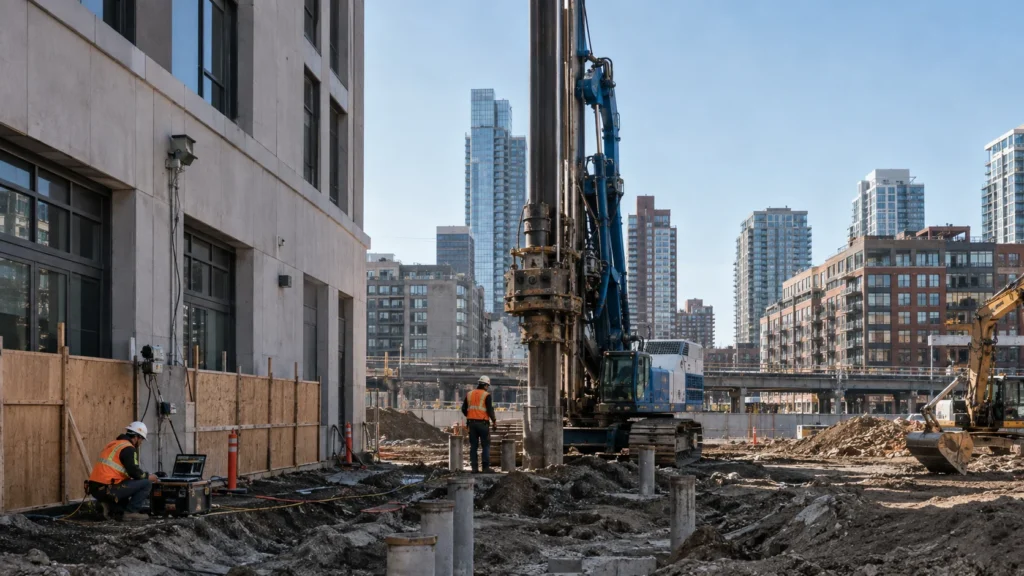
Common Sources of Construction Vibrations
Understanding the sources of vibration is the first step in developing an effective control plan.
Heavy Construction Equipment
Large equipment typically generates high-energy vibrations, such as excavators, cranes, pile drivers, and compaction machinery.
The low-frequency vibrations generated by this equipment easily travel through the ground and affect nearby buildings.
Mechanical Systems
Even after a building is occupied, mechanical equipment may continue to generate vibrations.
These primarily include: fans, pumps, motors, and air conditioning compressors.
If installed improperly, equipment vibrations can be directly transmitted to the building structure.
External Environmental Vibrations
In addition to internal factors within the building, the external environment also exerts an influence: road traffic, rail operations, nearby construction, and industrial equipment in operation.
Although the energy of each individual vibration is limited, their long-term effects may compromise building comfort and equipment stability.
Types of Vibration Control Methods in Construction
Depending on the vibration source, frequency range, and application environment, the engineering field typically employs different vibration control methods.
Effective vibration control is not simply a matter of adding cushioning materials; rather, it requires systematic design based on equipment weight, operating speed, vibration frequency, and installation environment.
Common methods include:
Vibration Isolation
Vibration Damping
Structural Modification (Structural Optimization)
Active Vibration Control
Vibration Isolation
Vibration isolation is one of the most commonly used vibration control methods in buildings and mechanical equipment.
Its core principle involves introducing a flexible connection between the vibration source and the structure to be protected, thereby reducing the transfer of vibration energy.
For example: Equipment → Rubber Vibration Isolator → Foundation Structure → Building Structure
By reducing the stiffness of connections along the vibration transmission path, dynamic loads generated by equipment operation can be effectively reduced.
Common vibration isolation components include:
- Rubber vibration isolators
- Rubber mounts
- Spring isolators
- Isolation pads
Due to their elasticity and damping properties, rubber materials can absorb some vibration energy while bearing loads, making them widely used in mechanical equipment and building systems.
Vibration Damping
Vibration damping primarily reduces the amplitude of structural vibrations by dissipating vibration energy.
Unlike vibration isolation, vibration damping typically acts on the vibrating structure itself.
For example:
- Adding damping materials at structural joints
- Using high-damping rubber
- Optimizing structural stiffness
- Changing the material composition
Rubber materials exhibit viscoelastic properties; when subjected to periodic deformation, they convert mechanical energy into thermal energy through internal friction, thereby reducing the vibration response.
This approach is commonly used in:
- Building connection components
- Mechanical mounting structures
- Transportation engineering facilities
- Industrial equipment support systems
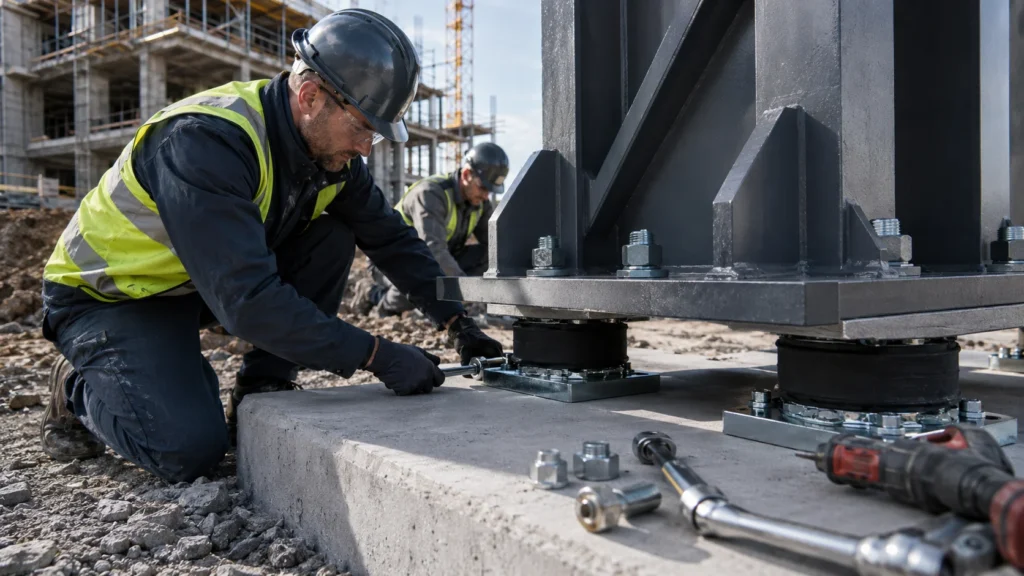
Structural Design Optimization
In addition to adding vibration-damping components, optimizing structural design is also a key method for controlling vibration.
Engineers typically consider:
Structural stiffness
Increasing the structure’s optimal stiffness can reduce excessive deformation.
Natural Frequency
Every structure has its own natural frequency.
When the frequency of an external excitation approaches the structure’s natural frequency, resonance may occur, causing the amplitude of vibration to increase significantly.
Therefore, avoiding resonance regions during the design phase is a key measure for reducing structural vibration.
Connection Design
In construction:
- Bolted Connections
- Welded areas
- Support joints
all affect vibration transmission.
Properly designing connection methods can reduce localized vibration concentration.
Why Are Rubber Vibration Isolators Widely Used in Construction?
Among the many vibration-isolation materials available, rubber has become a common choice for construction equipment and mechanical systems due to its excellent overall performance.
Excellent Elasticity
Rubber can undergo controlled deformation when subjected to pressure or shear forces and return to its original state.
This elasticity enables rubber to:
- Support the weight of equipment
- Cushion impact loads
- Reduce vibration transmission
For construction machinery, rubber shock absorbers reduce vibration transmission caused by rigid connections while maintaining stable support.
Effective Energy Absorption
Vibration is, by its very nature, a process of energy transfer.
High-quality rubber materials dissipate part of the vibration energy through internal damping, resulting in:
- Reduced vibration amplitude
- Reduced noise
- Smoother equipment operation
Resistance to Repeated Loading
Construction equipment typically requires long-term, continuous operation.
For example:
- Water pumps
- Fans
- Compressors
- Motors
These devices generate a large amount of cyclic vibration every day.
Therefore, vibration-damping components must possess:
- Fatigue durability
- Stable stiffness
- Long-term reliability
High-quality rubber vibration control products typically undergo static, dynamic, and fatigue testing to verify their long-term performance.
Applications of Vibration Control in Construction
HVAC Equipment
HVAC systems are one of the major sources of vibration in buildings.
For example:
- Air-handling units
- Fans
- Cooling equipment
Without effective vibration isolation, vibrations may propagate through ductwork and building structures, resulting in:
- Noise
- Structural resonance
- Reduced comfort
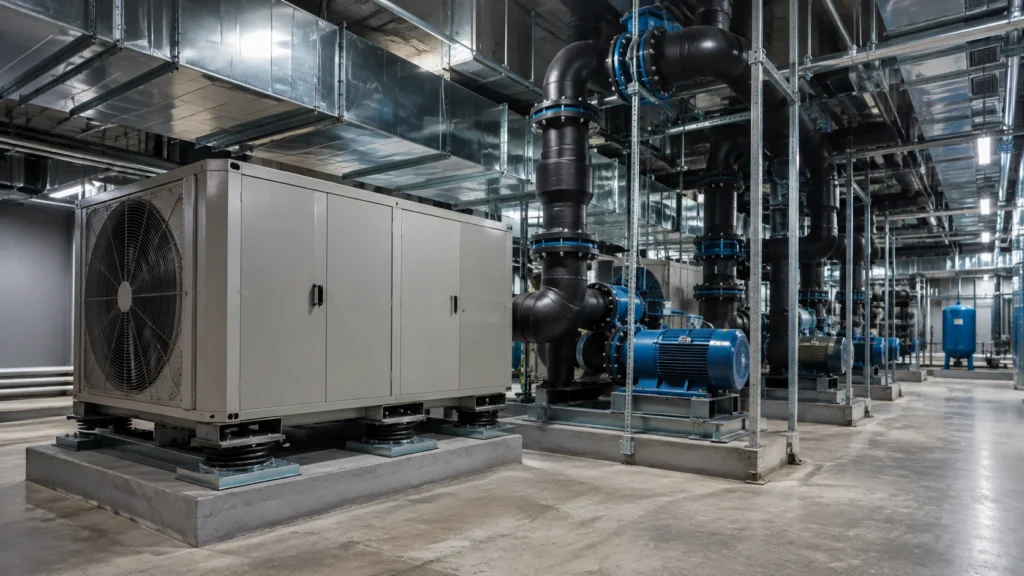
Therefore, the following are typically installed beneath the equipment:
- Rubber mounts
- Anti-vibration pads
- Flexible connectors
Industrial Buildings
In industrial buildings:
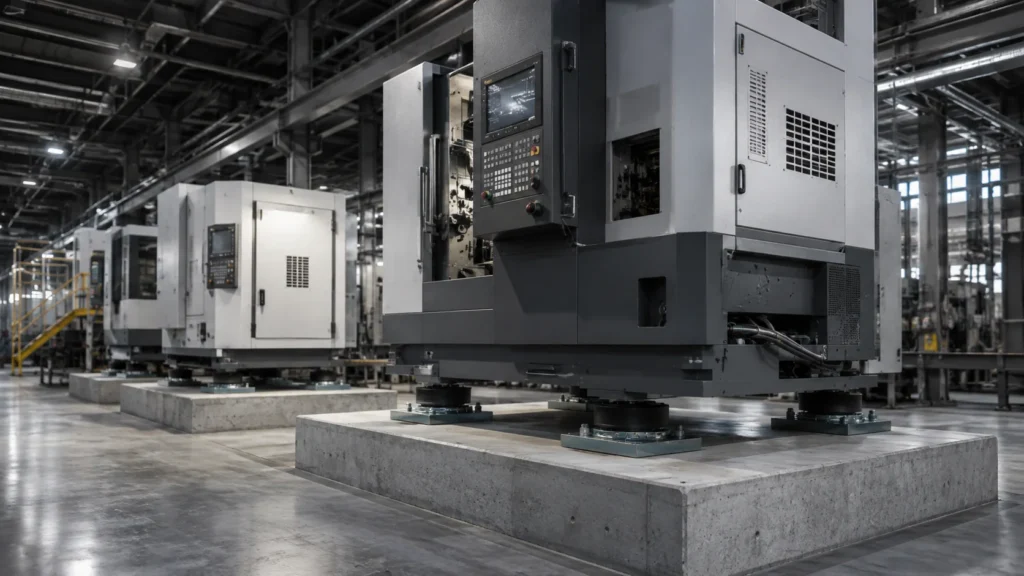
- CNC equipment
- Compressors
- Pump systems
- Automation equipment
Typically contain high-speed rotating components.
Continuous vibration may affect:
- Product machining accuracy
- Equipment lifespan
- Maintenance intervals
Through the proper design of vibration isolation solutions, the stability of the production environment can be improved.
Infrastructure Projects
In:
- Bridges
- Rail Transit
- Road Engineering
, vibration control is equally important, as traffic loads continuously generate dynamic effects.
Long-term accumulation may lead to:
- structural fatigue
- Deterioration of connections
- Reduced ride comfort
Therefore, the following are commonly used in engineering:
- Rubber bearings
- Elastomeric components
- Damping systems
to reduce dynamic effects.
How to Choose the Right Vibration Control Solution?
When selecting vibration control products, one should not focus solely on product dimensions but must comprehensively consider multiple engineering factors.
Load Capacity
First, determine the weight of the equipment or structure.
The vibration-damping components must be capable of:
- Support the static weight
- Withstand dynamic loads
- Maintain long-term stability
Vibration Frequency
Different equipment generates vibrations at different frequencies.
For example:
High-speed rotating equipment typically generates high-frequency vibrations; large machinery may generate low-frequency dynamic loads.
Therefore, it is necessary to select the appropriate:
- Rubber compound
- Stiffness
- Damping characteristics
Operating environment
The actual application environment also influences product selection.
Factors to consider:
- Temperature fluctuations
- Humidity
- Chemical agents
- Outdoor environments
Equipment installed on the exterior of buildings may require enhanced:
- Weather resistance
- Aging resistance
- Corrosion protection
Vista Motion: Providing Reliable Vibration Control Solutions
Vibration control is not simply a matter of selecting a rubber component; it is an engineering design that integrates materials, structure, and the application environment.
Vista Motion specializes in rubber vibration isolation solutions, providing the following for various industrial applications:
- Rubber vibration isolators
- Rubber mounts
- Shock-absorbing components
- Custom molded rubber parts
Through optimized material formulations, structural design, and rigorous quality control, Vista Motion helps customers reduce vibration transmission, improve equipment operational stability, and extend product service life.
Our engineering team can design solutions based on:
- Load requirements
- Installation space
- Vibration frequency
- Operating environment
to provide customized vibration isolation solutions.
From building equipment to industrial machinery, from transportation systems to specialized engineering applications, Vista Motion is committed to ensuring smoother, safer, and more efficient equipment operation through reliable rubber vibration isolation technology.
Conclusion
As construction projects become larger and more intelligent, vibration control has become a key factor in improving construction quality and equipment reliability.
Effective vibration control in construction not only protects building structures but also enhances equipment performance, reduces maintenance costs, and improves the user experience.
By making the right choice:
- rubber vibration isolators
- Vibration damping components
- Customized isolation solutions
engineering teams can manage vibration issues more effectively and create a more stable and reliable building environment.
Leveraging its expertise in rubber materials technology and custom manufacturing capabilities, Vista Motion provides customers with high-performance vibration control solutions, helping various industries achieve safer and more efficient operations.
Why is vibration control important in construction?
Vibration control reduces the dynamic impacts caused by construction and equipment operation, protects building structures, extends equipment lifespan, and improves the user environment.
What causes vibration in construction projects?
The main sources include:
Heavy machinery
Pile driving
Concrete equipment
HVAC systems
Industrial machinery
What are rubber vibration isolators used for?
Rubber vibration isolators are primarily used to reduce the transmission of vibrations between mechanical equipment and building structures, thereby improving operational stability.
How do rubber vibration isolators work?
Rubber absorbs vibration energy through elastic deformation and internal damping, thereby reducing the propagation of vibrations.
Are rubber mounts suitable for heavy equipment?
Yes, but the appropriate rubber material and structural design must be selected based on the equipment’s weight, vibration frequency, and operating environment.
What factors affect vibration isolation performance?
The main factors include:
Material properties
Stiffness
Load capacity
Frequency range
Installation method
Can vibration damage buildings?
Prolonged or excessive vibration can lead to structural fatigue, loosening of connections, and localized damage.
What is the difference between vibration isolation and vibration damping?
Vibration isolation primarily reduces the transmission of vibrations; vibration damping primarily reduces the amplitude of the structure’s own vibrations.
How long do rubber vibration isolators last?
Their service life depends on:
material formulation
Operating environment
Dynamic loads
Operating conditions
How can I choose the right vibration control solution?
We recommend that a professional engineering team handle the design and selection based on equipment parameters, vibration characteristics, installation environment, and engineering requirements.
