
How do rubber couplings transmit torque, compensate for shaft misalignment, and reduce mechanical vibration? This article provides a detailed overview of the working principles, main types, material selection, common failures, application scenarios, and selection methods for rubber couplings.
What Are Rubber Couplings?
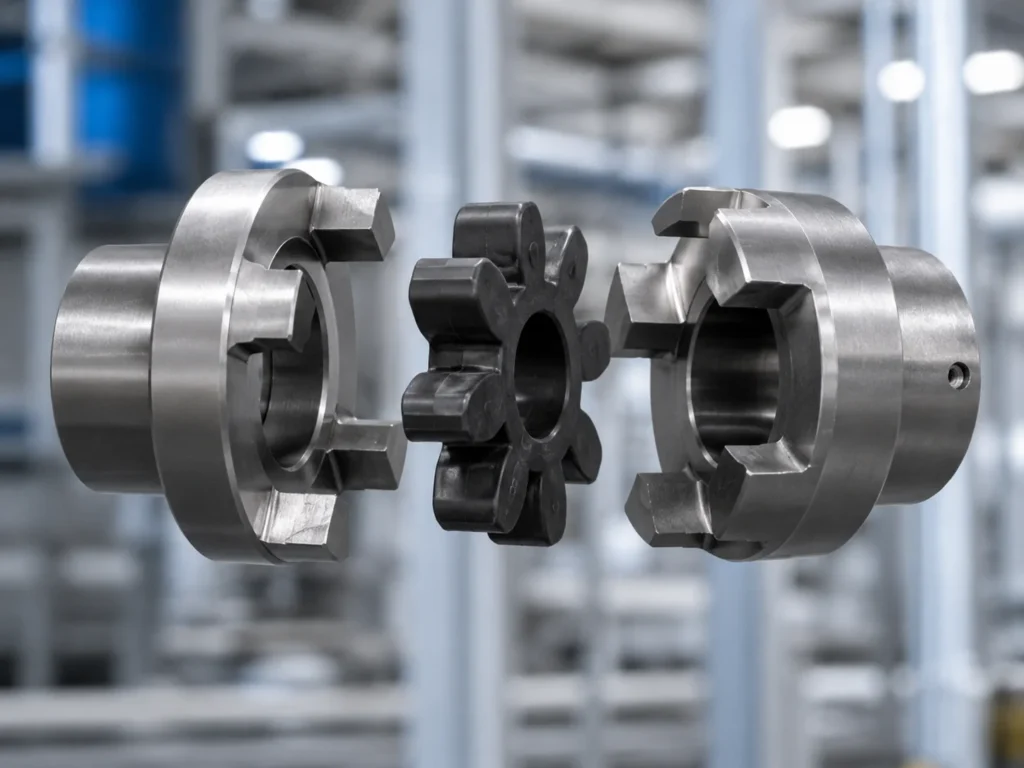
Rubber couplings typically consist of two metal hubs and an elastic element. The two hubs are mounted on the driving shaft and driven shaft, respectively, while the rubber, polyurethane, or other elastic material in between is responsible for transmitting torque.
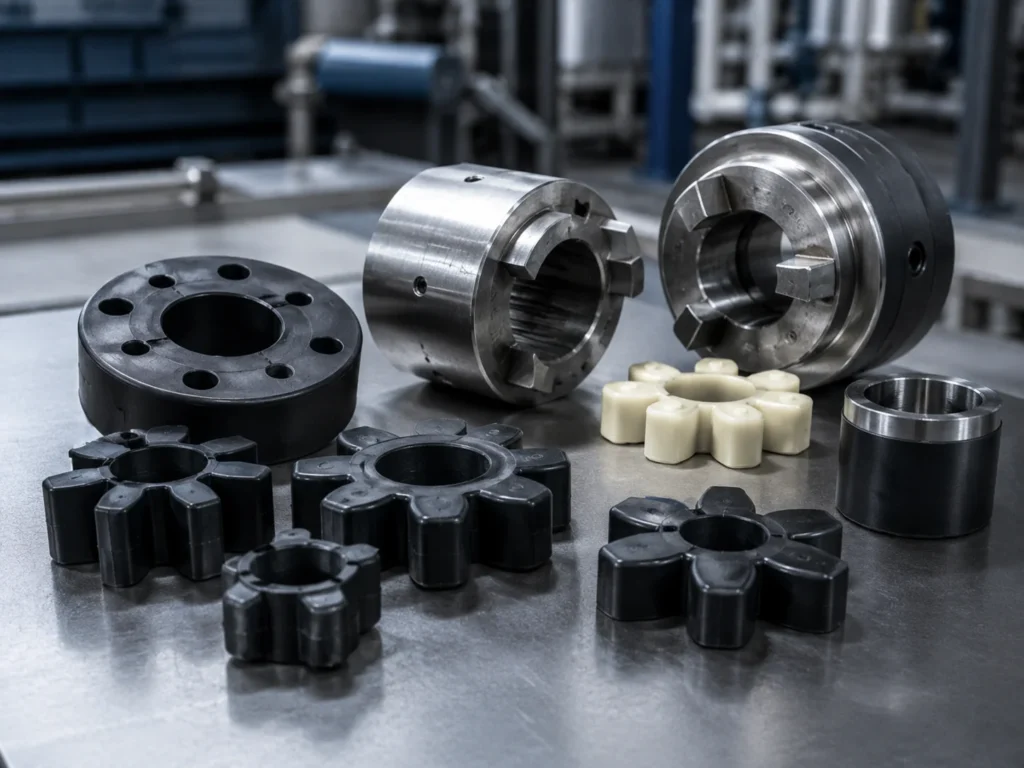
Taking the common claw-type rubber coupling as an example, it generally consists of:
- a metal hub on the driving side;
- a metal hub on the driven side;
- A star-shaped elastomer located between the two hubs;
- a key, expansion sleeve, fastening screw, or other shaft-hub connection mechanism.
During operation, the driving shaft rotates the first hub, which applies pressure or shear force to the central elastomer. The elastomer then drives the other hub to rotate, thereby transmitting torque to the driven equipment.
The structures of different rubber couplings may vary. Some elastomers primarily bear compressive loads, some primarily bear shear loads, and others transmit power through the torsional deformation of rubber discs, sleeves, or blocks. Therefore, a “rubber coupling” is not a specific, fixed structure, but rather a class of couplings that use elastomers as flexible power-transmitting elements.
How do rubber couplings work?
To understand the operating principle of a rubber coupling, we can examine three processes: power transmission, elastic deformation, and energy dissipation.
Input Torque from the Drive Shaft
An electric motor, internal combustion engine, or other power source drives the rotation of the driving-side hub. The hub is secured to the shaft via a keyway connection, clamping connection, spline, or expansion sleeve.
The connection between the hub and the shaft must be capable of withstanding the equipment’s rated torque, peak starting torque, and cyclic loads. Even if the elastic element has sufficient torque capacity, the coupling may still experience hub slippage, keyway wear, or loosening of fasteners if the shaft-hub connection is poorly designed.
Controlled deformation of the elastomer
When the driving hub rotates, it applies compressive, shear, or torsional loads to the rubber element in the center. Under these loads, the elastomer undergoes deformation and transmits the force to the driven hub.
Because rubber is elastic and viscoelastic, it does not transmit all impacts immediately and completely, as a rigid metal connection would. The elastomer can temporarily store part of the deformation energy and dissipate a portion of the vibration energy during the recovery process.
Power Transmission to the Driven Shaft
The elastomer transmits torque to the driven-side hub, driving the rotation of pumps, fans, compressors, conveying equipment, or other machinery.
This process is not a completely “soft connection.” Rubber couplings must still possess sufficient torsional stiffness; otherwise, excessive torsional angles, alignment deviations, or dynamic response delays may occur. Therefore, a coupling is not necessarily better the softer it is; rather, a balance must be struck between torque capacity, damping capability, displacement compensation, and transmission accuracy.
The Primary Role of Rubber Couplings in Mechanical Equipment
The value of a rubber coupling goes beyond simply “connecting two shafts.” In practical mechanical systems, it typically fulfills the following six functions.
Transmitting Torque Between Two Shafts
Torque transmission is the most fundamental function of all couplings.
From small servo motors to industrial pump sets and engine-driven equipment, couplings must reliably transmit the rotational force output by the power source to the driven equipment.
When selecting a coupling, one must not only consider the rated power on the motor nameplate but also take into account:
- Operating speed;
- Rated torque;
- Starting torque;
- Maximum instantaneous torque;
- Load fluctuations;
- Start-stop frequency;
- Forward and reverse rotation frequency;
- Daily operating time;
- Potential stalling or overloading.
For equipment subject to frequent starts, reciprocating impacts, or significant load variations, selecting a rubber coupling based solely on rated torque may underestimate the actual operating conditions.
Compensating for Limited Shaft Misalignment
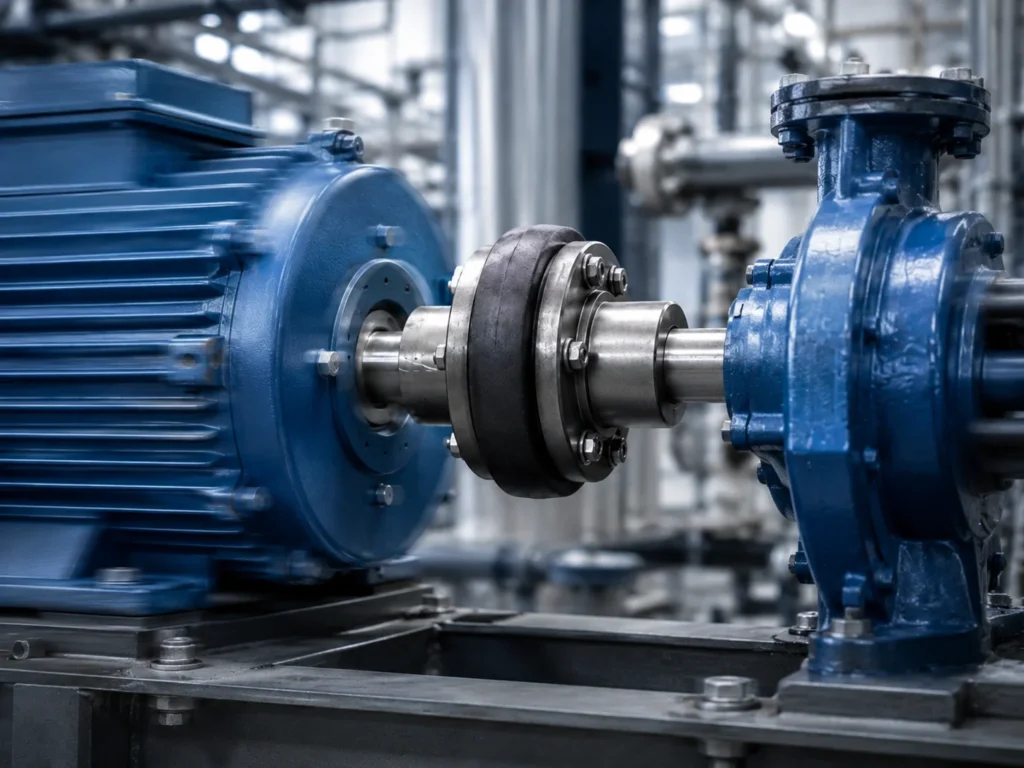
In practice, it is difficult to maintain absolute coaxiality between the driving and driven shafts. Equipment installation, foundation settlement, temperature changes, bearing clearance, and operating loads can all cause some degree of misalignment.
Rubber couplings can typically compensate for three types of misalignment:
Radial misalignment
The centerlines of the two shafts are parallel to each other but do not lie on the same straight line.
Angular Misalignment
The centerlines of the two shafts form a certain angle.
Axial displacement
The two shafts move toward or away from each other along their axes.
The elastomer absorbs these relative displacements through controlled deformation, reducing the extent to which misalignment directly affects the bearings and sealing systems. Permissible misalignment ranges vary depending on the specific design and specifications; a single generic value cannot be used in place of the technical parameters provided by the manufacturer.
Important Note: Flexible couplings can accommodate limited misalignment but cannot replace proper equipment alignment.
Reducing Torsional Vibration
The torque output from electric motors, internal combustion engines, piston pumps, and compressors is not always completely smooth. Significant torque pulsations may occur in drive shaft systems, particularly with diesel engines, reciprocating compressors, and equipment subject to cyclic loads.
Rubber couplings can reduce the amplitude of torsional vibrations transmitted to downstream equipment through elastic deformation and material damping.
This helps improve:
- the operational stability of the shaft system;
- Gear meshing conditions;
- Bearing load conditions;
- structural noise;
- Operating comfort;
- Operating environment of surrounding precision components.
However, for transmission systems subject to significant periodic excitation or at risk of resonance, selecting elastomer hardness based on experience alone is insufficient.
Absorbing startup shocks and sudden load changes
When equipment starts, stops, reverses direction, or is suddenly loaded, the transmission system may experience transient torque peaks.
Rigid couplings transmit these shocks more directly to the shafts, bearings, gears, and driven equipment, whereas elastomeric elements can reduce the rate of transmission and the peak magnitude of the shock loads through brief deformation.
This capability is particularly important in the following equipment:
- Conveyors;
- Crushers;
- Mixers;
- Compressors;
- Diesel generator sets;
- Agricultural machinery;
- Construction machinery;
- Production equipment subject to frequent start-stop cycles.
Rubber couplings are not the same as overload protection devices. Only designs that explicitly incorporate torque-limiting, disengagement, or failure-safe protection functions can perform the corresponding overload protection tasks.
Reducing Structure-Borne Noise
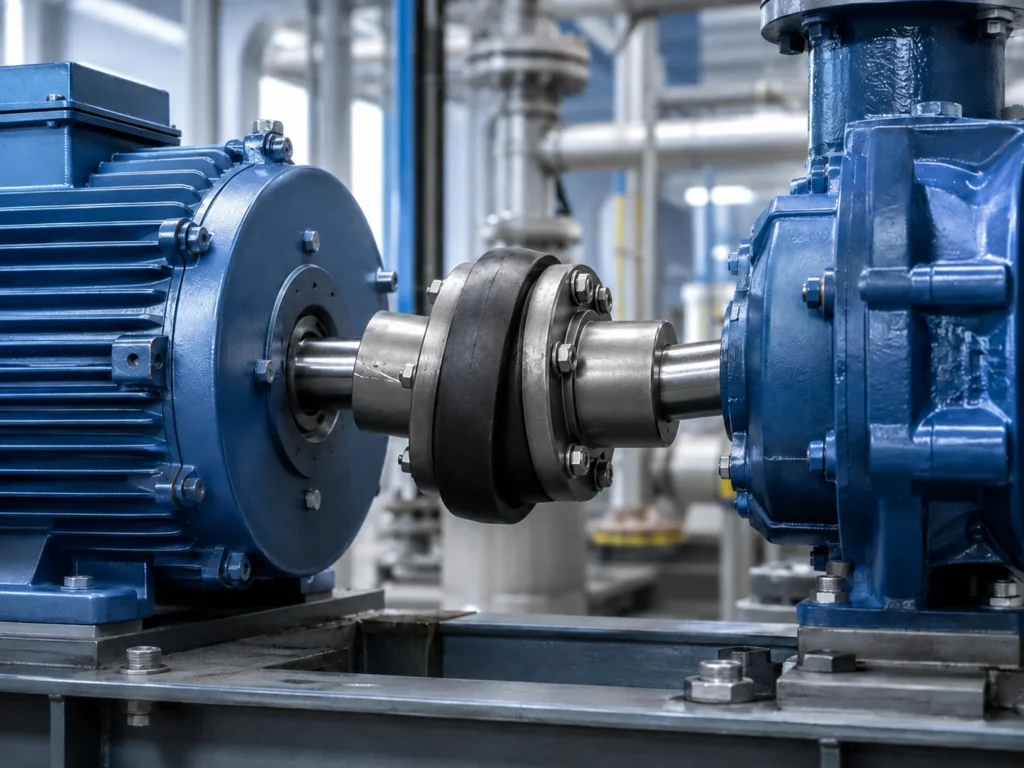
Vibrations generated by rotating equipment can propagate along shaft lines and metal structures, creating structural noise.
Rubber has significantly lower stiffness than metal and possesses a certain degree of internal damping; therefore, elastomeric elements can reduce the transmission of some high-frequency vibrations and structural noise from one piece of equipment to another.
High-flexibility elastomer couplings can reduce torsional vibrations, load shocks, and structure-borne noise while compensating for multidirectional displacement.
However, couplings cannot eliminate all mechanical noise. Equipment noise may also stem from rotor imbalance, bearing damage, abnormal gear meshing, loose foundations, impeller aerodynamic noise, or resonance. It is necessary to first identify the primary vibration pathways before determining whether a rubber coupling is the correct solution.
Reduced Maintenance Requirements
Many rubber couplings rely on the deformation of elastomeric materials to transmit power and do not require periodic grease replenishment, unlike gear couplings.
This can reduce:
- lubrication maintenance;
- lubricant leaks;
- the risk of contamination;
- downtime for maintenance;
- wear issues caused by insufficient lubrication.
However, “lubrication-free” does not mean “inspection-free.” Elastomers may still age due to fatigue, high temperatures, oil contamination, ozone, chemical agents, or installation misalignment. Coupling hubs, fasteners, keyways, and protective covers also require periodic inspection. Some claw-type rubber couplings feature a metal-free and lubrication-free design, but specific requirements must be confirmed in the product manual.
What are the common types of rubber couplings?
Different mechanical equipment has varying requirements for torque, speed, misalignment, damping, and installation space, leading to a wide variety of rubber coupling designs.
| Types | Basic Structure | Key Features | Common Applications |
| Claw-Type Rubber Coupling | Two claw-shaped hubs and a star-shaped elastomer | Compact design, easy installation, maintenance-free, and suitable for a wide range of applications | Motors, water pumps, fans, hydraulic equipment, automation equipment |
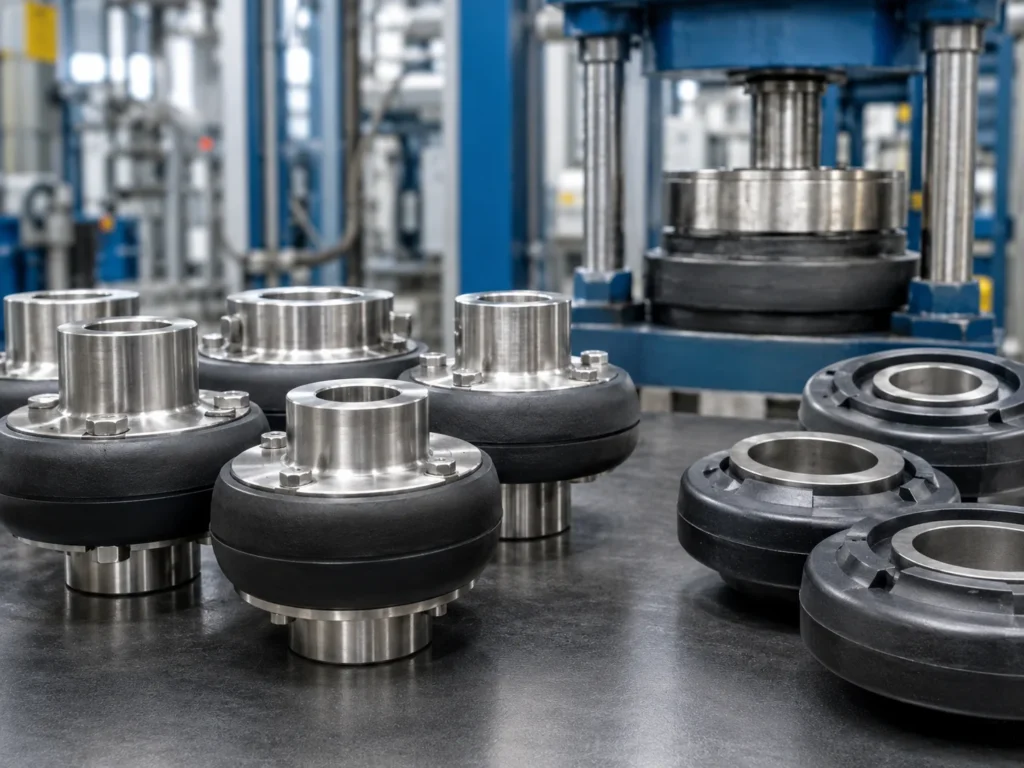
| Tire-Type Coupler | Two hubs are connected to tire-shaped rubber elements | Strong misalignment compensation capability and good vibration damping performance | Pump units, blowers, conveying equipment, heavy-duty machinery |
| Rubber Sleeve Couplings | An elastic sleeve is mounted on the outside or inside of a metal hub | Fewer parts and a relatively simple structure | General-purpose machinery, pumps, fans, and light- to medium-duty power transmission |
| Rubber disc couplings | Torque is transmitted through one or more rubber discs | High torsional flexibility, suitable for shock and fluctuating loads | Generator sets, marine equipment, construction machinery |
| Rubber Flange Couplings | Combination of an elastomer and a flange structure | Can withstand high torque, making it suitable for connecting engines or large equipment | Diesel engines, compressors, mobile machinery |
| Elastic Pin Couplings | Metal pins with rubber sleeves or elastic bushings on the outside | Proven design; relatively easy to maintain and replace | Conveyors, gear reducers, metallurgical and general industrial equipment |
Claw couplings typically transmit torque by compressing the elastic element in the center; tire-type couplings, on the other hand, often transmit power through the shear deformation of rubber or polyurethane elements. Both designs fall under the category of elastic couplings, but they differ in torsional stiffness, misalignment compensation capability, and applicable torque range.
What materials are typically used in rubber couplings?
In the industry, the term “rubber coupling” does not necessarily refer to elastic elements made solely of traditional vulcanized rubber; elastomeric materials such as polyurethane may also be used.
The material directly affects the coupling’s hardness, torsional stiffness, damping, temperature resistance, oil resistance, weather resistance, and fatigue life.
Natural rubber
Natural rubber generally offers good elasticity, dynamic fatigue performance, and vibration damping capabilities, making it suitable for applications involving significant dynamic deformation.
Its limitation is that its resistance to petroleum-based media, ozone, and high temperatures is generally inferior to that of some synthetic rubbers; therefore, its use must be tailored to the specific environment.
Nitrile Rubber
Nitrile rubber is commonly used for rubber components that come into contact with lubricating oil, hydraulic fluid, or certain types of fuel.
Some standard claw couplings use NBR rubber elastomers as the basis for their torque rating, indicating that nitrile rubber is one of the most common materials used in industrial couplings.
Ethylene Propylene Diene Monomer (EPDM) Rubber
Ethylene Propylene Diene Monomer (EPDM) rubber generally offers good resistance to ozone, weathering, water, and aging, making it suitable for outdoor, humid, or sun-exposed operating environments.
However, it is generally not suitable for prolonged exposure to petroleum-based lubricants and fuels. Vista Motion’s guide to rubber vibration-damping materials also emphasizes that materials must be selected based on actual operating conditions, such as exposure to oil, water, salt spray, temperature, and chemical media.
Neoprene
Neoprene offers a relatively balanced combination of weather resistance, flame retardancy, mechanical properties, and a certain degree of oil resistance, making it suitable for some general-purpose industrial environments.
Actual performance depends on the formulation; product lifespan cannot be determined solely by the “CR” material designation.
Polyurethane Elastomers
Polyurethane offers high load-bearing capacity, wear resistance, and adjustable hardness, and is commonly used for star washers in claw couplings and elastic elements in tire-type couplings.
Polyurethane of different hardnesses will alter the coupling’s torsional stiffness, damping capacity, and rated torque.
Silicone Rubber
Silicone rubber is suitable for a wide temperature range or environments requiring flexibility at low temperatures.
Its tear resistance, wear resistance, and dynamic load-bearing capacity must be verified in conjunction with the formulation and structure; ordinary silicone rubber cannot simply be used as a substitute for the elastomer specified in the original design. For some highly flexible couplings, different elastomer materials such as natural rubber, EPDM, or silicone rubber can be selected based on operating conditions.
Is higher rubber hardness always better?
No.
As rubber hardness increases, the coupling typically exhibits higher torsional stiffness and load-carrying capacity, but its deformation capacity and some damping properties may decrease.
Softer elastomers typically provide:
- greater elastic deformation;
- more pronounced shock absorption;
- lower torsional stiffness;
- better partial vibration damping capabilities.
Stiffer elastomers typically provide:
- Higher torque capacity;
- Smaller torsional angle;
- A more direct dynamic response;
- Better positioning stability.
Therefore, material hardness is not a parameter selected in isolation. It must be evaluated in conjunction with coupling size, operating torque, operating speed, misalignment, shock loads, and equipment control accuracy.
Technical content published by Vista Motion also points out that Shore hardness must be evaluated in conjunction with the rubber material, metal structure, bonding method, load direction, and testing requirements, rather than simply pursuing higher hardness.
How to Select the Right Rubber Coupling?
Proper selection of a rubber coupling should be based on the entire power transmission system, rather than simply measuring the shaft diameter and then searching for a model that fits.
Step 1: Confirm the motor power and operating speed
At a minimum, the following information should be provided:
- Motor or engine power;
- Normal operating speed;
- Minimum and maximum speeds;
- Drive shaft diameter;
- Diameter of the driven shaft;
- Keyway or hub connection type.
Power and speed can be used to estimate operating torque, but the final selection must also take into account the service factor and peak loads.
Step 2: Identify Start-up and Impact Loads
A smoothly operating centrifugal fan and a crusher that starts and stops frequently—even if they have the same rated power—will have completely different requirements for rubber couplings.
The following must be confirmed:
- Whether there are frequent starts;
- Whether it starts under load;
- Whether there are frequent reversals;
- Is stalling a possibility?
- Is there reciprocating impact?
- Does the driven equipment have a high moment of inertia?
- Is there significant torque pulsation?
For equipment with high inertia, frequent starts and stops, and impact loads, a sufficient safety margin must be maintained relative to the rated torque.
Step 3: Evaluate Shaft System Misalignment
Before selecting a model, confirm the presence of any:
- radial misalignment;
- Angular misalignment;
- Axial displacement;
- thermal expansion displacement;
- Foundation settlement;
- Changes in installation accuracy.
The tolerances specified by the manufacturer typically represent the range that the coupling’s design can accommodate and should not be directly regarded as recommended long-term operating tolerances. Proper alignment remains a key factor in extending the service life of elastomers, bearings, and seals.
Step 4: Analyze Torsional Vibration
For motor-driven steady-state loads, standard selection may already meet the requirements.
However, for the following equipment, torsional vibration should be further evaluated:
- Diesel engines;
- Gas engines;
- Piston compressors;
- Reciprocating pumps;
- Crushing machinery;
- Large generator sets;
- Equipment with cyclic loads;
- Drivetrains operating over a wide speed range.
Such equipment may approach the natural frequency of the shaft system near a specific rotational speed, triggering resonance. In such cases, it is necessary to analyze the mass moment of inertia, torsional stiffness, damping, excitation frequency, and operating speed range; the problem cannot be solved simply by increasing the coupling size.
Step 5: Confirm Environmental Conditions
The elastic elements in rubber couplings are directly affected by the operating environment. When requesting a quote or selecting a model, specify:
- Minimum and maximum operating temperatures;
- Whether there is contact with lubricating oil or hydraulic fluid;
- Whether there is contact with fuel;
- Whether there is contact with water, steam, or salt spray;
- Whether the coupling will be used outdoors;
- Exposure to ozone or ultraviolet (UV) radiation;
- Is it exposed to acids, alkalis, or cleaning agents?
- Is there a high concentration of dust?
- Is the environment explosion-proof?
- Are there any food, rail transit, or other industry standards that must be met?
Even if the material names are the same, this does not mean their performance is exactly the same. Rubber formulations, vulcanization systems, reinforcing materials, and manufacturing processes all affect the final performance.
Step 6: Evaluate Installation Space and Maintenance Conditions
Whether there is sufficient space around the equipment to disassemble the coupling will affect the selection of the coupling type.
The following should be confirmed in advance:
- the distance between the two shaft ends;
- Outer diameter limitations of the hub;
- Internal space of the guard;
- Whether the equipment can be moved axially;
- Whether the elastomer can be replaced without moving the host machine;
- Whether a split-type design is required;
- Whether a spacer shaft or extended structure is required.
For production lines with high downtime costs, the ability to quickly replace the elastomer may be more important than the initial purchase price of the coupling.
Step 7: Check Failure Modes and Safety Requirements
In some claw-type compression couplings, the metal claws may temporarily maintain the mechanical connection even after the elastomer fails; however, not all rubber couplings offer this fail-safe feature.
For mobile machinery, lifting equipment, critical pump sets, or systems that cannot be shut down immediately, it is essential to confirm:
- Whether the connection is maintained after elastomer failure;
- Whether direct metal-to-metal contact will occur;
- Whether mechanical stops are required;
- Whether a redundant design is required;
- Whether protective covers are in place;
- Is condition monitoring required?
- How is the replacement cycle for elastomers determined?
What is the difference between a rubber coupling and a rigid coupling?
| Comparison Criteria | Rubber Couplings | Rigid Coupling |
| Torque Transmission | Transmitted through an elastomer and the hub | Transmitted directly through a rigid metal structure |
| Misalignment Compensation | Can compensate for limited radial, axial, and angular misalignment | Requires high alignment accuracy for the shaft system |
| Vibration damping | Provides a certain degree of damping and shock absorption | Generally cannot significantly dampen vibration |
| Torsional stiffness | Varies depending on the material and structure | Generally high |
| Transmission accuracy | Some structures may exhibit elastic torsion | Suitable for high-stiffness and precision synchronous transmission |
| Maintenance | Most do not require lubrication, but the elastomer must be inspected | Simple structure, but requires high installation precision |
| Applications | Pumps, fans, compressors, conveyors, and applications with impact loads | High-precision alignment, strict coaxiality, or special rigid connections |
Rubber couplings are not a universal substitute for rigid couplings.
For high-precision servo positioning, extremely high-temperature environments, ultra-high-speed transmission, or systems that are highly sensitive to torsional angles, diaphragm couplings, bellows couplings, metal disc couplings, or other high-stiffness designs may be more suitable.
However, when equipment prioritizes vibration damping, shock absorption, and compensation for limited misalignment, elastomeric couplings typically offer more significant advantages.
In which types of machinery are rubber couplings commonly used?
Rubber couplings can be used in a wide variety of rotating machinery, but the required design and materials vary depending on the application.
Pump systems
Used to connect motors to centrifugal pumps, circulation pumps, or process pumps, compensating for limited installation misalignment and reducing startup shock.
Fans and Blowers
Used to reduce vibration transmission between the motor and the fan, improving the operational stability of the shaft system.
Compressors
Used to connect motors, engines, and compressors. Reciprocating compressors typically require special attention to torsional vibration and cyclic loads.
Conveying Equipment
Used in conveyors, elevators, and material-handling equipment to help cushion impacts caused by starts, stops, and load changes.
Generator Sets
The drive system between a diesel engine and a generator may experience significant torsional vibrations, requiring the selection of a suitable high-flexibility coupling based on the dynamic characteristics of the shaft system.
Construction and Agricultural Machinery
Equipment may be simultaneously subjected to impacts, dust, mud and water, temperature fluctuations, and unstable loads; therefore, special consideration must be given to material weather resistance, reliability, and failure protection.
Marine and Offshore Equipment
Factors such as salt spray, humidity, oil contamination, corrosion, and long-term continuous operation must be taken into account.
Automation and Machine Tool Equipment
Certain backlash-free claw-type flexible couplings can provide both vibration damping and transmission accuracy, making them suitable for servo, motor, and automation systems; however, selection must be based on positioning accuracy and torsional stiffness requirements.
What are the signs of rubber coupling damage?
Rubber couplings typically exhibit observable signs before failure.
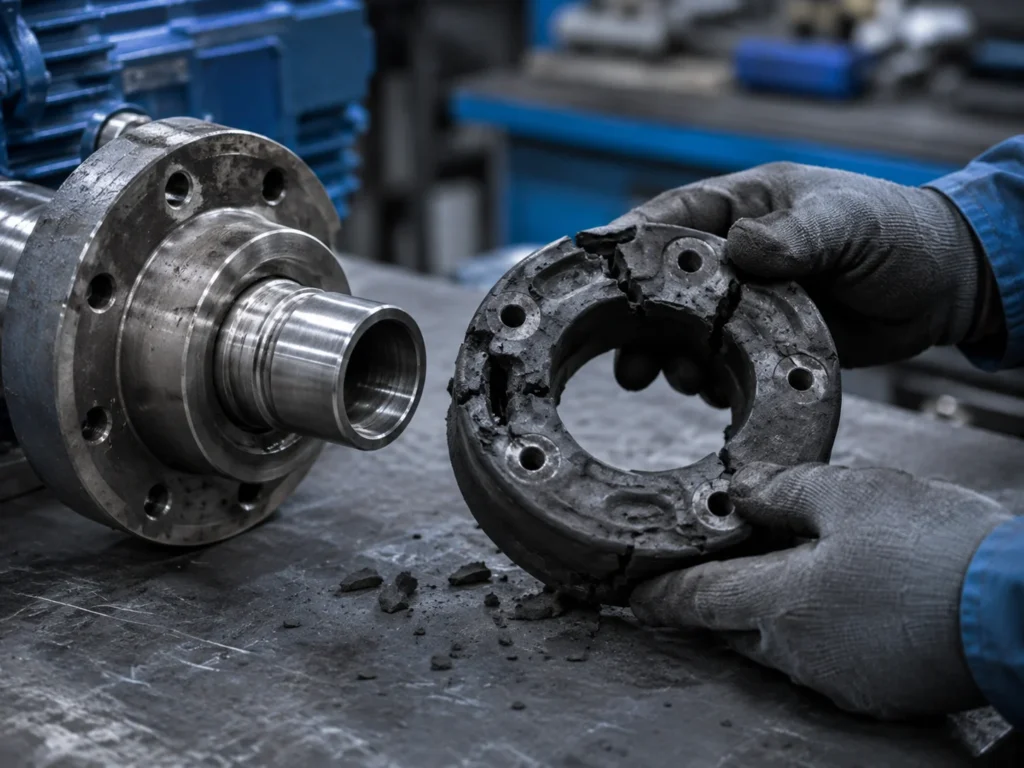
Cracking of the rubber surface
This may be related to fatigue, ozone exposure, high temperatures, material aging, or excessive deformation.
Elastomer hardening
After aging or prolonged exposure to high temperatures, the rubber may lose its original elasticity, leading to a decrease in its ability to dampen shock and vibration.
Rubber softening or swelling
This is commonly seen when the material is incompatible with lubricants, fuel, or chemical media.
Elastomer Flaking or Powdering
This may indicate that the rubber component has been subjected to prolonged overloading, excessive eccentricity, friction, compression fatigue, or material degradation.
Sudden Increase in Equipment Vibration
As the elastomer wears, the coupling’s clearance, torsional stiffness, and damping characteristics may change, causing more pronounced equipment vibration.
However, increased vibration is not necessarily caused entirely by the coupling. The rotor balance, bearings, foundation, alignment, impeller, and gear system should also be inspected.
Metal Clanging Noises
In some claw-type designs, if the elastomer is severely worn or cracked, the two metal hubs may come into contact, producing a periodic knocking sound.
Loose wheel hubs, keys, or fasteners
If there is a problem with the shaft-hub connection, you may observe keyway wear, loose screws, hub slippage, or metal powder.
Why do rubber couplings fail prematurely?
When the service life of a rubber coupling is significantly shorter than expected, it is usually not due to a single cause.
Common causes include:
- The coupling is undersized and has been operating under overload for an extended period;
- Start-up or shock torque exceeding design conditions;
- Shaft misalignment exceeding the allowable range;
- Lack of precise alignment after equipment installation;
- Operating temperatures exceeding the elastomer’s capacity;
- The rubber material is incompatible with oil, fuel, or chemical media;
- Inappropriate selection of elastomer hardness or torsional stiffness;
- Insufficient strength of the shaft-hub connection;
- Incorrect coupling mounting clearance;
- Torsional resonance in the drive system;
- Inconsistencies in the rubber formulation or vulcanization;
- Improper long-term storage conditions for the product;
- Fasteners not installed to the specified torque;
- Accumulation of oil, dust, or hot air inside the protective cover.
One of the most commonly overlooked points is interpreting “allowable deviation” as “no alignment required.” Flexible couplings merely accommodate limited deviations; the greater the deviation, the greater the additional deformation and restoring force typically borne by the elastomer.
How to Inspect and Maintain Rubber Couplings?
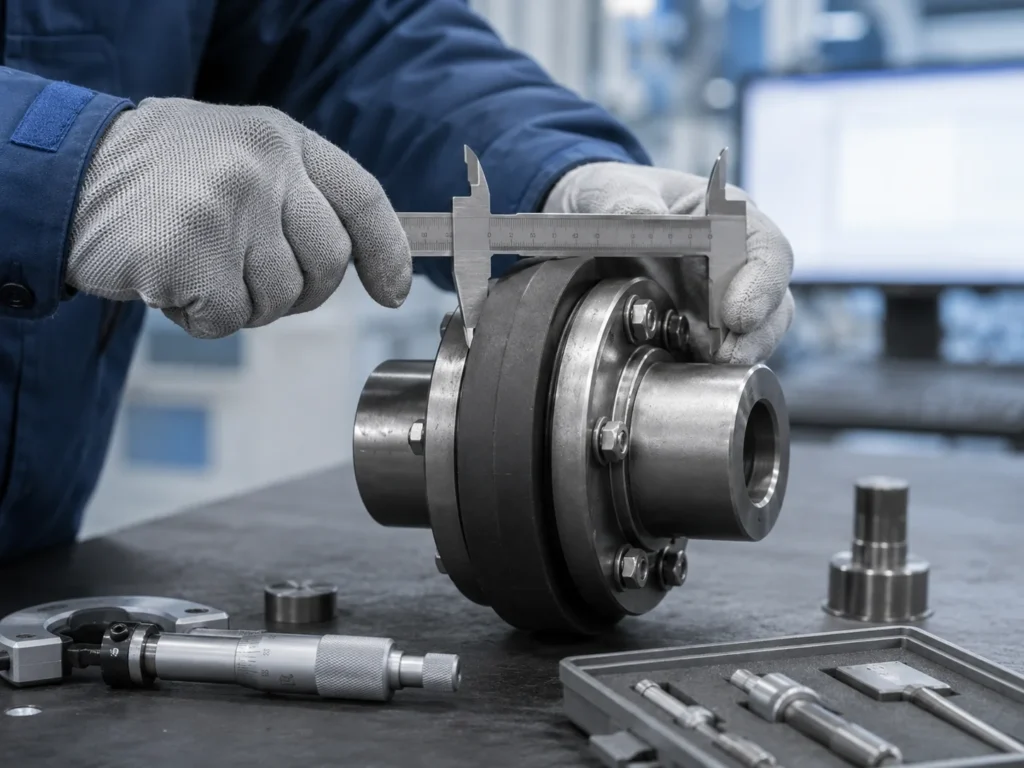
Before inspecting any rotating equipment, shut down the machine, isolate the power source, and follow company safety procedures to ensure the equipment cannot start unexpectedly.
Routine inspections should focus on:
- Whether the elastomer is cracked, hardened, or swollen;
- Whether there are any notches, missing pieces, or rubber dust;
- Whether the hub shows abnormal wear;
- Whether fastening screws are loose;
- Whether the keys and keyways are worn;
- Has the mounting distance between the two hubs changed?
- Has the alignment of the shaft assembly changed?
- Check for oil residue or foreign objects inside the guard;
- Are there any trends indicating a rise in operating temperature or vibration?
- Are there any periodic knocking or grinding noises?
Inspection intervals should be determined based on the equipment’s criticality, operating time, load fluctuations, environmental conditions, and the coupling manufacturer’s instructions.
For continuous production lines, critical pump sets, or equipment with high downtime costs, it is advisable to record changes in vibration, temperature, and the appearance of the elastomer to establish trend data, rather than waiting until the coupling is completely damaged before taking action.
What information should be provided when purchasing rubber couplings?
To improve the efficiency of selection and quoting, it is recommended to provide suppliers with the following information:
- Equipment name and application;
- Motor or engine power;
- Normal and maximum operating speeds;
- Diameters of the driving and driven shafts;
- Keyway, spline, or clamping method;
- Rated torque and maximum peak torque;
- Start-stop frequency and load variations;
- Possible radial, angular, and axial misalignments;
- Operating temperature;
- Contact with oil, water, fuel, or chemical media;
- Installation space constraints;
- Expected service life;
- Photographs of failed existing products;
- Original coupling drawings, samples, or model numbers;
- Required testing procedures and industry standards.
If an existing rubber coupling exhibits cracking, delamination, abnormal deformation, or inconsistent service life, simply providing product dimensions is often insufficient. Suppliers also need to understand the loads the product is subjected to in actual equipment, as well as where and at what stage of operation the failure occurred.
Summary
The primary function of a rubber coupling is to connect the driving shaft and the driven shaft and transmit torque, but its value in mechanical equipment extends far beyond mere connection.
Through properly designed elastomeric components, rubber couplings can compensate for limited misalignment, cushion startup shocks, dampen torsional vibrations, reduce structural noise transmission, and minimize the transfer of impact loads to bearings, gears, and equipment structures.
If your project involves elastomeric elements, rubber sleeves, rubber bushings, or rubber-to-metal composite structures in rubber couplings, Vista Motion can assist in evaluating rubber materials, Shore hardness, metal structures, bonding processes, and validation requirements based on drawings, samples, and actual operating conditions.
Vista Motion has long specialized in rubber vibration damping and rubber-to-metal composite components, offering customized support for material selection, structural manufacturing, rubber molding, metal surface treatment, vulcanized bonding, and quality inspection. Rather than simply replicating existing dimensions, a more effective development approach is to start with equipment loads, vibration environments, and failure causes to establish a solution that ensures stable production, batch consistency, and suitability for long-term operation.
FAQ
What is a rubber coupling used for?
Rubber couplings are primarily used to connect two rotating shafts and transmit torque. Compared to rigid connections, they can also compensate for radial, axial, and angular misalignments within a certain range, while absorbing some of the startup shock and torsional vibration.
Are rubber couplings and flexible couplings the same product?
Rubber couplings are a type of elastic coupling. Elastic couplings are a broader concept, and their flexible elements can be made of rubber, polyurethane, metal diaphragms, springs, or other elastic materials. In the industry, couplings that use polyurethane star-shaped pads are also often classified as rubber couplings or elastomer couplings.
Can rubber couplings reduce mechanical vibration?
Yes, but the effectiveness depends on the elastomer’s hardness, torsional stiffness, damping, design, vibration frequency, and installation conditions. Rubber couplings are primarily used to reduce torsional vibration and shock transmission; they cannot automatically resolve issues such as rotor imbalance, bearing failure, loose foundations, or structural resonance.
How much shaft misalignment can a rubber coupling compensate for?
The allowable misalignment depends on the coupling type, size, rotational speed, and the manufacturer’s design. There are significant differences between products, so you should check the radial, angular, and axial misalignment parameters for the specific model. During actual installation, you should strive to keep the misalignment below the maximum allowable value rather than operating near the limit for extended periods.
How do you select the size of a rubber coupling?
Selection should be based on power, rotational speed, rated torque, peak torque, service factor, start-up frequency, load type, shaft diameter, and operating environment. For applications involving shock loads, frequent starts and stops, or reciprocating equipment, torsional vibration and dynamic safety margins should also be considered.
What rubber materials are used in rubber couplings?
Common materials include natural rubber, nitrile rubber, EPDM rubber, neoprene, silicone rubber, and polyurethane elastomers. The selection must be based on temperature, exposure to oil, water, ozone, salt spray, chemical media, torque, and dynamic fatigue requirements; it should not be based solely on hardness and price.
Do rubber couplings require lubrication?
Many claw, tire-type, and elastic sleeve couplings do not require lubrication because they rely on the deformation of the elastomer to transmit torque. However, the hubs, fasteners, protective covers, and elastomers still need to be inspected, and specific maintenance procedures should be followed according to the manufacturer’s instructions.
How long do rubber couplings typically last?
There is no fixed, standardized service life. Service life depends on load, rotational speed, alignment accuracy, number of starts, operating temperature, medium, rubber compound, and maintenance status. Proper selection and maintaining good alignment typically contribute more to extending service life than simply increasing the coupling size.
How can you tell when a rubber coupling needs to be replaced?
Replacement is required when the elastomer exhibits obvious cracking, hardening, swelling, chipping, powdering, permanent deformation, or severe wear. If the equipment exhibits new abnormal vibrations, periodic knocking sounds, metal-to-metal contact at the hub, or a significant increase in clearance, the equipment must be shut down immediately for inspection.
Can rubber couplings be used in high-temperature or oily environments?
Yes, but the elastomer must be selected to match the specific environment. Nitrile rubber is generally better suited for certain oily environments, EPDM is better suited for weather-resistant, ozone-resistant, and water-resistant environments, and silicone rubber can be used over a wide temperature range. The final selection must be verified based on specific temperature, medium concentration, contact time, load, and manufacturer data.
