
First, the conclusion
“Symptoms of a Faulty Control Arm” fundamentally stem from “play/looseness” in the suspension: aging or cracked control arm bushings, worn ball joints, or deformed control arms allow the wheels to shift beyond their intended range under load. This manifests as: clunking noises over bumps, steering drift or pull, steering wheel vibration, uneven tire wear on inner/outer edges, more pronounced brake dive, and reduced handling stability.When experiencing a combination of “knocking noise + pulling/uneven wear,” do not dismiss it as a mere comfort issue—schedule repairs promptly.
What is a control arm?
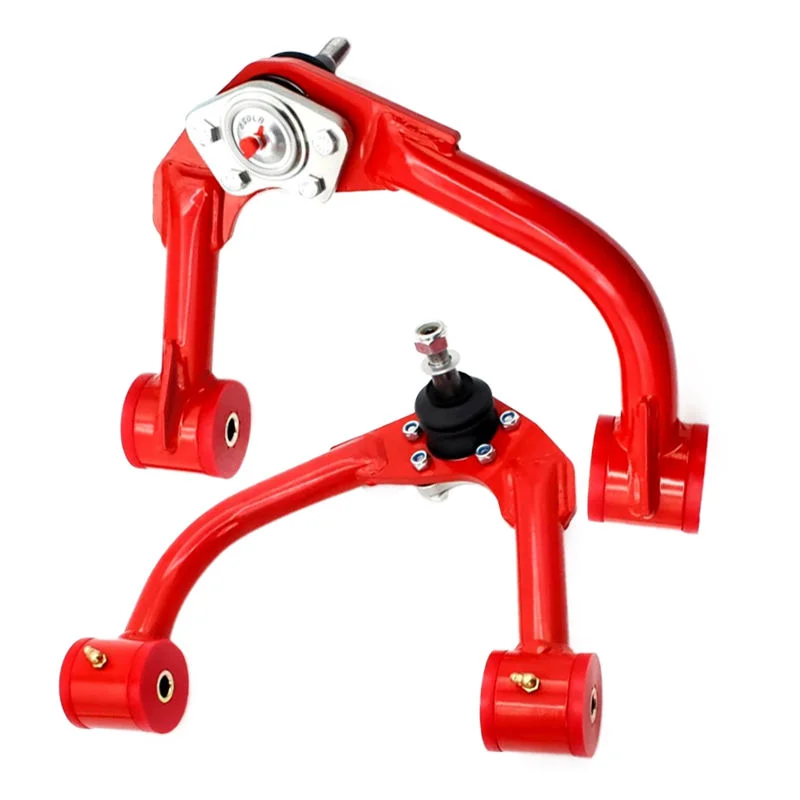
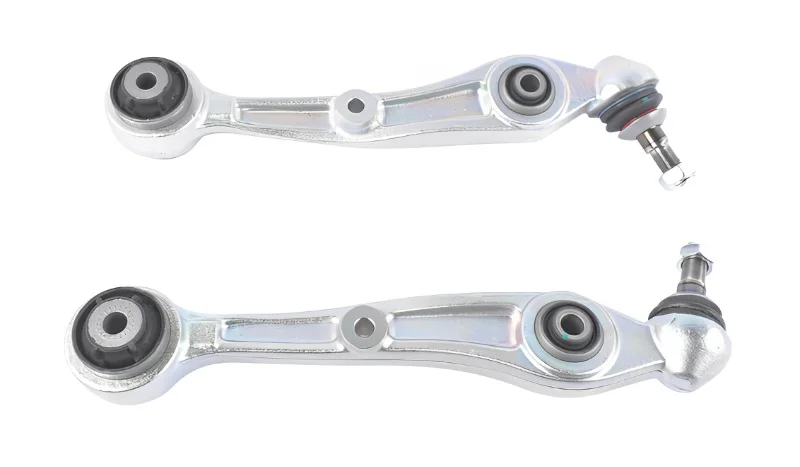
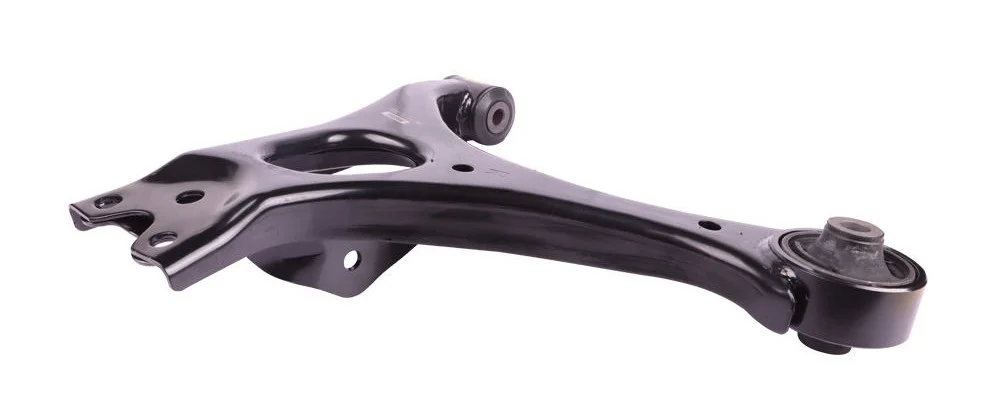
Control arms (also known as A-arms, wishbones, or swing arms) are the “positioning links” of the suspension system. They connect the body/subframe to the steering knuckle, maintaining stable wheel geometry (camber, toe, etc.) while allowing vertical wheel movement.It typically connects to the body via bushings and to the steering knuckle via ball joints; thus, control arm issues often center on these two components.
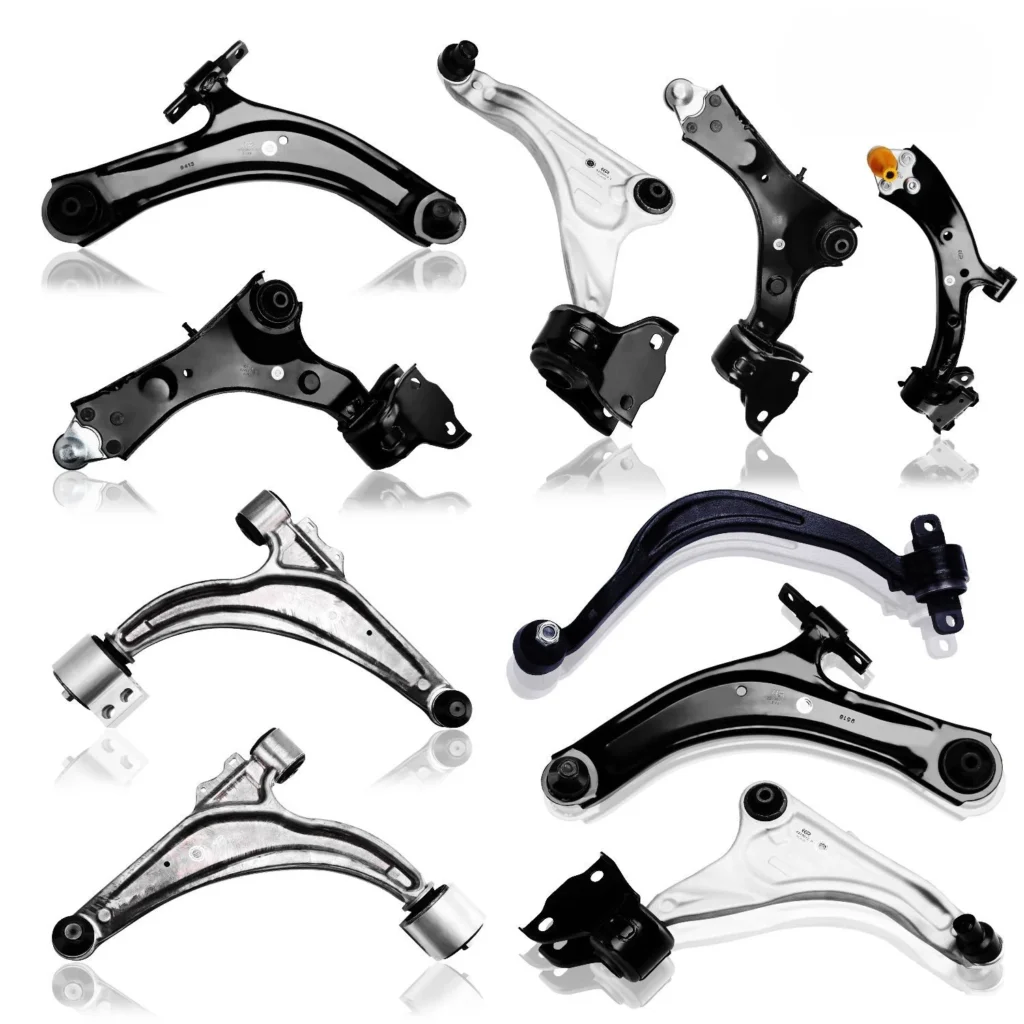
Symptoms of a Faulty Control Arm
The following 10 points cover the most common concerns users search for when looking up “symptoms of a bad control arm / symptoms of a faulty control arm / symptoms of a broken lower control arm / symptoms of a worn control arm bushing / symptoms of a damaged control arm ball joint”:
Control arm rattling
Clunking or rattling metal noises when traversing speed bumps or potholes. This occurs due to metal-to-metal contact or clearance impacts resulting from bushing failure, often more pronounced during acceleration/deceleration, steering maneuvers, or obstacle crossing.
Steering feels loose
The steering wheel feels “loose,” requiring frequent minor adjustments to maintain a straight path. Worn bushings or ball joints weaken geometric locking, causing the vehicle to drift, especially noticeable at high speeds.
Vehicle Pulls to One Side
If the vehicle pulls to one side despite normal wheel alignment parameters, or if the pulling becomes more pronounced during braking/acceleration, suspect dynamic alignment drift caused by control arm bushing elasticity degradation.
Steering wheel/seat vibration
Reduced bushing damping allows vibrations that should be isolated to transmit more directly into the vehicle body.
Abnormal tire wear
Repeated inner/outer single-side wear or sawtooth wear patterns occur when control arm bushings become loose. This allows camber/toe angles to drift under driving loads, causing abnormal tire contact angles and accelerating uneven wear.
More pronounced brake dive and unstable body during braking
Suspension geometry becomes more prone to deviation under braking load transfer, resulting in a subjective perception of reduced braking stability.
Noise during cornering, reduced cornering support, increased body roll
This “diminished handling stability” often coincides with bushing deterioration and increased ball joint play.
Visible damage
Cracked, bulging, or delaminated control arm bushings; damaged ball joint dust boots; bent/corroded control arms are high-risk indicators; damaged ball joint dust boots accelerate wear.
Difficulty returning wheel alignment to standard parameters
If alignment parameters repeatedly drift, it’s often not due to “inaccurate adjustment,” but rather because the suspension’s elastic connection points (especially bushings) can no longer maintain stable geometry.
Noticeable play detected during lift inspection
Professionals often use pry bars to apply force to bushings, observing abnormal displacement, knocking sounds, or gaps; road testing to reproduce symptoms cross-verified with alignment data provides more reliable results.
Recommended actions for these conditions
If experiencing a combination of “severe abnormal noise + noticeable pulling/steering instability/braking instability,” or if severe damage to ball joints/bushings or control arm deformation is observed, treat this as a safety risk. Arrange for immediate repair or towing to prevent further damage to associated components like steering knuckles and wheel bearings.
3-Step Self-Check for Owners (Does Not Replace Professional Inspection)
Step 1: Inspect the tires
Check for uneven wear on one side, sawtooth-shaped wear patterns, or significant differences in wear between left and right tires (often related to alignment drift).
Step 2: Low-Speed Road Test to Reproduce Symptoms
Drive over small potholes/speed bumps at low speed, lightly apply brakes and accelerate, gently turn the steering wheel left and right. Record the conditions and frequency at which abnormal noises occur.
Step 3: Visit a Shop for Combined Diagnosis: Lift + Pry Inspection + Alignment Data
Relying solely on sound can lead to misdiagnosis. Have technicians use pry bars to check bushing displacement/looseness and cross-reference with alignment data to determine dynamic geometry instability.
How to distinguish: Is it a control arm failure or another chassis component?
High-frequency control arm issues typically present as “noise/vibration + geometric drift (drift, uneven wear, repeated alignment drift)”. If only a single symptom is present, it may originate from other components:
- Clunking noise occurring only during rapid acceleration/sharp turns: Rule out driveshaft/CV joint issues.
- Persistent “humming” varying with speed: More likely wheel bearing.
- Noticeable steering play without bumping over curbs: May also indicate steering linkage ends or other steering system components.
Repair Strategy
- Structure determines serviceability: Some models feature “integrated/monoblock” ball joint designs requiring full control arm assembly replacement; others use press-fit or bolted joints allowing individual ball joint replacement.
- Considering consistency and rework risk: If bushings and ball joints age simultaneously, or if assembly angle/press-fit process control is inadequate, direct assembly replacement is often more reliable.
- Post-replacement four-wheel alignment is generally recommended: Control arms/bushings are critical alignment components, and stiffness differences between new and old parts can alter geometry.
- Assembly Notes: Many bushing components require tightening near normal ride height to prevent pre-torqueing, which can cause premature noise and shorten lifespan.
Summary
If you are a brand owner, distributor, aftermarket service provider, or vehicle/modification project manager seeking stable supply of “control arm assemblies/control arm bushings/ball joints and rubber-metal composite components,” we recommend elevating the approach from “part replacement” to a “verifiable engineering closed-loop”:First define load spectra, displacement, frequency, temperature/fluid exposure, target lifespan, and NVH objectives. Then establish material systems (rubber/polyurethane, hardness range, structural constraints) and critical process controls (rubber-metal bonding, vulcanization window, surface treatment, corrosion protection). Build batch-traceable evidence chains through fatigue/stiffness/fluid/salt spray testing.
To expedite your quotation and prototyping phase, submit: 2D/3D drawings with assembly space, critical mounting point tolerances, target vehicle/operating conditions, load/displacement boundaries, target lifespan, NVH requirements, validation standards, and planned production volume. Based on these inputs, we provide material/hardness recommendations, structural optimization directions, prototype validation checklists, and process inspection records to minimize claims and rework risks. Contact Vista Motion.
FAQ
Can I still drive with a broken control arm?
Short-distance “barely drivable” does not equate to safe operation. If noticeable pulling, unstable braking, or loud metallic knocking sounds occur, contact immediately for repair or towing. Ignoring these issues may accelerate uneven tire wear and damage other chassis components.
What are the symptoms of a damaged control arm bushing?
Typical signs include clunking noises over bumps, increased steering wheel/body vibration, vehicle pulling to one side or requiring frequent steering corrections, uneven tire wear on inner/outer edges, and more pronounced brake dive.
What are the symptoms of a damaged lower control arm ball joint? How does it differ from a worn bushing?
Ball joints primarily cause “loose steering, front-end play, rattling noises, and uneven wear.” Severe cases may impair steering and stability. Bushings more commonly exhibit “rattling noises + geometric drift + worsened NVH.” Both components often age concurrently within the same mileage range.
Does a faulty control arm always produce noise?
Not necessarily. Some vehicles first exhibit “drifting steering/tracking deviation/uneven tire wear,” with noise appearing later. Therefore, diagnosis should not rely solely on “presence of noise”; alignment data and inspection with a lift are more reliable.
Can a broken control arm cause steering wheel vibration?
Yes. Reduced bushing damping and increased clearance allow vibrations to transmit more directly to the steering wheel. However, steering wheel vibration can also stem from tire balancing issues or wheel bearings, requiring elimination to pinpoint the cause.
Is wheel alignment mandatory after control arm replacement?
Strongly recommended. Control arms/bushings are critical alignment components. Differences in stiffness and mounting position between new and old parts alter geometry. Skipping alignment risks uneven tire wear and unstable handling.
How much does control arm replacement cost?
Costs vary significantly: vehicle model structure (whether sold as an assembly), labor hours, whether press-fitting is required, and whether wheel alignment is included all affect pricing. We recommend requesting the repair shop to break down costs into “parts + labor + alignment” and assess the risk of rework.
How often should control arms be replaced?
There is no fixed replacement cycle; it depends more on road conditions, impacts, loads, and environmental factors like salt spray, high temperatures, and oil contamination, as well as installation conditions. Based on experience, when a combination of “unusual noise + pulling/uneven wear” occurs, it should be prioritized for inspection. It is not recommended to continue driving with the issue.
Is it more cost-effective to replace just the bushings or the entire control arm assembly?
If the control arm body shows no deformation, the ball joint is in good condition, and the press-fit and angle control are reliable, replacing only the bushings may suffice. However, bushings and ball joints often age simultaneously. Improper press-fit angles or tightening conditions can lead to early failure, making replacement of the entire assembly a more stable choice in many scenarios.
Can a faulty control arm cause uneven tire wear?
Yes. Bushings aging can cause dynamic alignment drift (camber/toe drift under driving loads). Even if static alignment is “corrected,” it may drift again after driving, making uneven wear prone to recurrence. Address the root cause simultaneously rather than just performing alignment.
