
If you work with equipment, engines, pump sets, wind turbine, or any mechanical system that “vibrates,” you’re likely familiar with rubber mounts. Many people know they reduce vibration, minimize noise, and absorb shocks, but when it comes to selecting the right type, a question arises: Why do some rubber mounts make a noticeable difference once installed, while others seem to do little more than “look like they’re there”?
How Do Rubber Mounts Work?
The purpose of rubber mounts is to isolate the vibration source from the supporting structure, reducing the efficiency with which vibrations are transmitted from the source to the mounting surface. A common design involves bonding rubber to a metal component, which is then installed between the equipment and the support surface using threads, flanges, or inserts.
In other words, they are neither simple “pads” nor mere “feet” designed solely for load-bearing; rather, they are engineering components that combine vibration isolation, shock absorption, and structural connection.
The actual working principle is not complicated. When equipment is in operation, it generates periodic vibrations, impact loads, and localized displacements. When subjected to these forces, the rubber deforms and then rebounds.
During this deformation-rebound process, some of the mechanical energy is converted into thermal energy, while the rest is delayed or attenuated, so the vibrations ultimately transmitted to the frame and surrounding structures are reduced. This is why many people group “rubber mounts,” “rubber vibration isolators,” and “anti-vibration rubber mounts” into the same semantic category.
Looking further, rubber mounts primarily handle two types of forces: compression and shear. Vertical loads typically manifest as compression, while horizontal or lateral disturbances are more often expressed as shear.
Some designs can also withstand a certain degree of tension and torsion, but actual performance depends on how the structural form, rubber compound, and metal frame work together.
Precisely for this reason, even though they are all called “rubber mounts,” the operational characteristics and application limits of cylindrical, conical, bobbin mounts, engine mounts, and shear mounts can vary significantly.
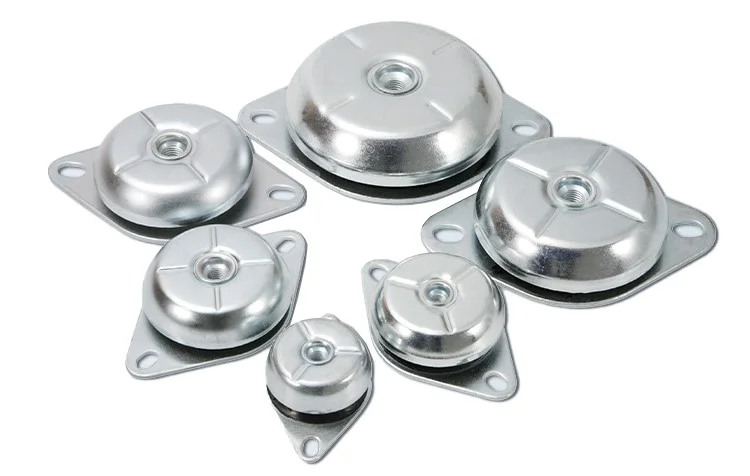
Not all rubber mounts are suitable for your equipment
A common pitfall for many procurement professionals or engineers selecting rubber mounts for industrial machinery for the first time is focusing solely on dimensions without considering operating conditions.
In fact, what truly determines performance is usually not whether the mount “fits,” but whether these variables are properly matched: load magnitude, excitation frequency, installation orientation, stability of the equipment’s center of gravity, and the presence of oil contamination, outdoor exposure to sunlight, ozone, chemical agents, or temperature fluctuations.
Different materials and structures vary significantly in their ability to withstand these conditions. Common materials for anti-vibration mounts listed in public technical documentation include rubber, EPDM, neoprene, and silicone, while many industrial solutions also utilize rubber-to-metal bonded assemblies— —to balance strength and vibration isolation performance.
Here’s a more practical approach to making a decision.
If your equipment primarily experiences stable vertical loads and space is limited, compression-type rubber mounts are often the most straightforward choice; if the equipment exhibits significant lateral movement, wobble, or multi-axis vibration, shear-type or composite designs are typically more suitable; for continuously dynamic operating conditions such as engines, generators, pump sets, fans, and compressors, many engineers will prioritize specialized engine mounts or multi-axis vibration isolation solutions rather than simply using generic rubber pads.
In current public product and technical documentation, high-frequency application scenarios for rubber mounts repeatedly appear in equipment categories such as pumps, motors, compressors, fans, HVAC, engines, generators, and industrial machinery. This indicates that search intent is inherently highly skewed toward the industrial and equipment sectors.
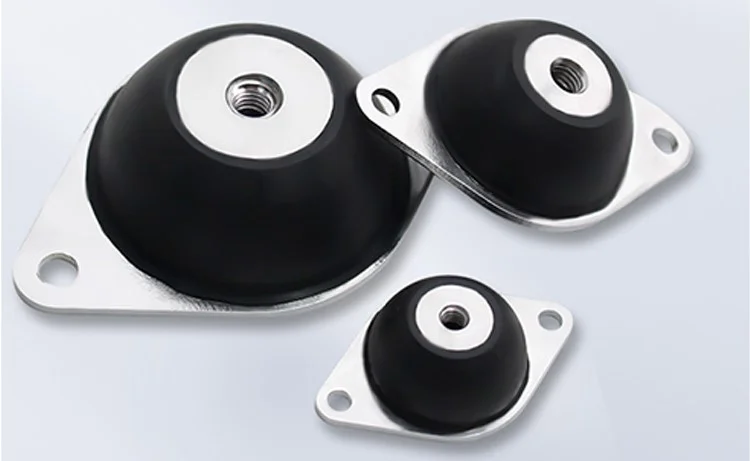
Why does hardness directly affect the performance of rubber mounts?
If you want to grasp the core of this article, remember this: with rubber mounts, harder isn’t necessarily better, nor is softer—the key is to strike a balance between load-bearing capacity and vibration isolation.
Public technical literature generally establishes a direct correlation between rubber hardness and load-bearing capacity as well as vibration isolation performance. Softer rubber typically deforms more easily, often resulting in better vibration isolation; harder rubber, on the other hand, is more conducive to load-bearing and structural stability, but its vibration isolation capabilities are usually compromised.
The Shore A hardness of many industrial rubber mounts falls within the 40–90 range, while specific series are often grouped by 40, 50, or 60 Shore A, corresponding to different load ranges and installation requirements.
This is a critical consideration in real-world projects.
If you install excessively hard rubber mounts on a relatively light-load device that requires quieter operation, the result is usually not “greater stability,” but rather that vibrations are more easily transmitted through the mounts. Conversely, if you select mounts that are too soft for heavy-load equipment, the system may be quiet in the short term, but over the long term, excessive deflection, instability, reduced service life, and even damage to connecting components and surrounding parts may occur.Therefore, the question of “how to choose rubber mounts” is not primarily about selecting a model first, but rather about first considering the load, frequency, displacement, and environment.
The Value of Rubber Mounts Goes Beyond “Noise Reduction”
Many articles focus solely on noise reduction when discussing rubber mounts, which is actually too narrow a perspective. Those who actually operate equipment are more concerned with:
Can they reduce fatigue damage? Can they protect welds, brackets, housings, and fasteners? Can they make motors, pump units, fans, or generators run more smoothly? Can they reduce loosening, abnormal noises, and maintenance frequency caused by long-term vibration?According to publicly available technical data, anti-vibration mounts are widely used to reduce vibration, shock, and noise, while also helping to extend equipment lifespan, protect surrounding structures, and improve operational stability. This is why they have long been essential components in industrial, automotive, marine, HVAC, and power generation applications.
In other words, high-quality rubber mounts don’t just “make the noise a little quieter”; they help make your equipment system more stable. For OEMs, equipment manufacturers, and retrofit projects, this is often more valuable than mere noise control.
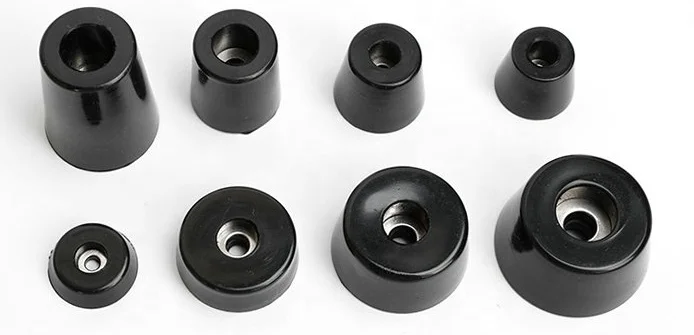
The 5 Most Important Engineering Questions to Ask When Selecting a Product
Before actually issuing an RFQ, I recommend clarifying these 5 questions:
- What is the point load, and are there significant fluctuations in dynamic and impact loads?
- Does the equipment primarily operate under compression, shear, or mixed conditions?
- Are the installation space, thread specifications, mounting method, and center of gravity clearly defined?
- Is the operating environment primarily outdoor, oily, high-temperature, or a standard industrial setting?
- Are you looking for “quieter operation,” or “greater stability, longer durability, and lower maintenance”?
Many rubber mount projects remain undecided not because suppliers lack the capability, but because the initial specifications are incomplete. The closer the data you provide matches actual operating conditions, the easier it is to get the structure, materials, stiffness, and metal connection solutions right.
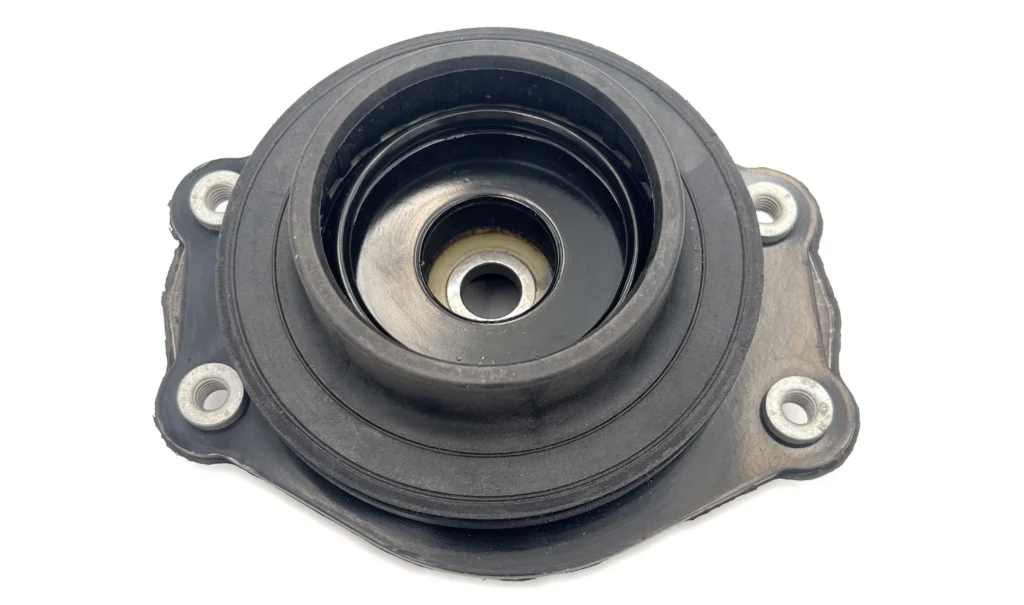
Summary
So, back to the original question: How Do Rubber Mounts Work?
The answer can actually be boiled down to one sentence: Rubber mounts use the elastic deformation, rebound, and energy dissipation of rubber to contain vibrations and impacts as close to the source as possible, preventing them from efficiently transmitting into the frame, base, and surrounding structures.
However, what truly determines the effectiveness is never simply “whether rubber mounts are installed,” but rather whether the structural configuration, hardness range, material system, installation orientation, and real-world operating conditions are properly matched.
If your project involves more than just standard rubber mounts—such as matching metal brackets, machined connectors, or welded structural components—or if you wish to optimize rubber-to-metal components in conjunction with the overall machine structure, then you should consider installation methods, load paths, spatial constraints, and manufacturing feasibility from the outset. By doing so, the result will be not just a mount, but a more stable, mass-producible, and deliverable mechanical solution.
FAQ
What are rubber mounts used for?
Rubber mounts are primarily used to reduce vibration, shock, and noise in mechanical systems. They are commonly found in pumps, motors, compressors, fans, engines, HVAC equipment, and various types of industrial machinery. Their value extends beyond mere “vibration damping” to include protecting surrounding structures, reducing wear, and enhancing operational stability.
How do rubber mounts reduce vibration and noise?
The core principle is isolation and energy dissipation. When subjected to force, rubber deforms and rebounds; during this process, a portion of the mechanical energy is converted into thermal energy, while the efficiency of vibration transmission from the equipment to the mounting surface is reduced, thereby attenuating both noise and structural vibration.
Are rubber mounts the same as vibration isolators?
In many industrial contexts, the two terms are highly interchangeable. Public documentation often uses “rubber mounts,” “anti-vibration mounts,” and “rubber vibration isolators” interchangeably, but whether specific products are entirely equivalent depends on their structural design and application scenarios.
How do I choose the right rubber mount hardness?
First, consider the load and operating conditions, then the hardness. Generally, softer rubber provides better vibration isolation, while harder rubber offers greater load-bearing capacity and higher stability. Many industrial rubber mounts are categorized by Shore A hardness, with different hardness levels corresponding to different load ranges.
What is the difference between compression mounts and shear mounts?
Compression mounts are better suited for applications where vertical forces dominate; shear mounts are better suited for handling lateral displacement or multidirectional vibrations. Many project failures are not due to poor mount quality, but rather a mismatch between the force direction and the mount’s design concept.
Can rubber mounts be used for heavy machinery?
Yes, provided that the structure, hardness, load capacity, and installation method are all appropriate. In publicly available technical documentation, many anti-vibration mounts explicitly cover heavy-duty or industrial machinery applications, but lightweight, general-purpose components should not be used directly as heavy-duty solutions.
Which rubber material is best for rubber mounts?
There is no absolute “best” option—only the most suitable one. Common materials listed in public documentation include natural rubber, neoprene, EPDM, and silicone. Different materials have varying levels of resistance to outdoor conditions, chemical exposure, temperature extremes, and oil contamination, so the material must be selected based on the specific operating environment.
Do rubber mounts wear out over time?
Yes. When rubber components are subjected to prolonged loads, vibrations, temperature fluctuations, oil contamination, or outdoor environments, their performance will gradually degrade; therefore, rubber mounts are not “permanent components.” If the equipment exhibits noticeable abnormal noises, displacement changes, cracking, permanent compression deformation, or reduced vibration isolation effectiveness, it is time to inspect and consider replacement.
Can rubber mounts be customized?
Yes, and many projects are not suitable for standard parts alone. Public supply pages typically offer both standard and custom rubber mounts. Customization is often the more reasonable choice, especially when you have specific installation space constraints, metal connection requirements, load specifications, or application environments.
What information should I provide when requesting a quote for rubber mounts?
At a minimum, prepare the following: equipment type, point load, vibration source, installation orientation, installation space, threading or connection method, operating environment, and whether there are requirements for oil contamination, outdoor use, or high temperatures. Also specify whether you prioritize vibration isolation, load-bearing capacity, or service life.The more complete the information you provide, the easier it is for suppliers to select the right rubber mounts, rather than simply providing a quote for a product that “fits” based solely on its shape. This conclusion is also a key point repeatedly emphasized in current public FAQs and technical selection guides.
